Develop a promotional plan aligned with customer expectations
Set margin and revenue targets , then accurately measure the ROI of each campaign.
Avoid over-promotion and destruction of value
Target the right promotional mechanisms by product, store, and customer segment
Manage order commitments and limit the risk of stockouts or overstocking
Harmonize promotions across all channels (store, e-commerce, drive-through)

Promotional strategies targeted and managed by the data
BOOPER MPS enables you to develop differentiated promotional strategies based on:
• The attractiveness of categories and products
• Store clusters
• Customer types
• Business objectives
AI identifies the most effective mechanics depending on the context:
• Immediate discounts
• Bundles and multi-buy offers
• Seasonal promotions
• Local offers
Result: better targeted, less expensive, and more effective promotions.


Promotional sales forecast and uplift effects
BOOPER MPS models purchasing behavior in promotional contexts using machine learning algorithms capable of predicting:
• Sales by product, store, and period
• Uplift effects by promotion type
• Cannibalization and demand postponement phenomena
• Indirect impacts on related categories
The models are continuously retrained based on actual campaign results.
Result: reliable forecasting of promotional volumes and better control of profitability.
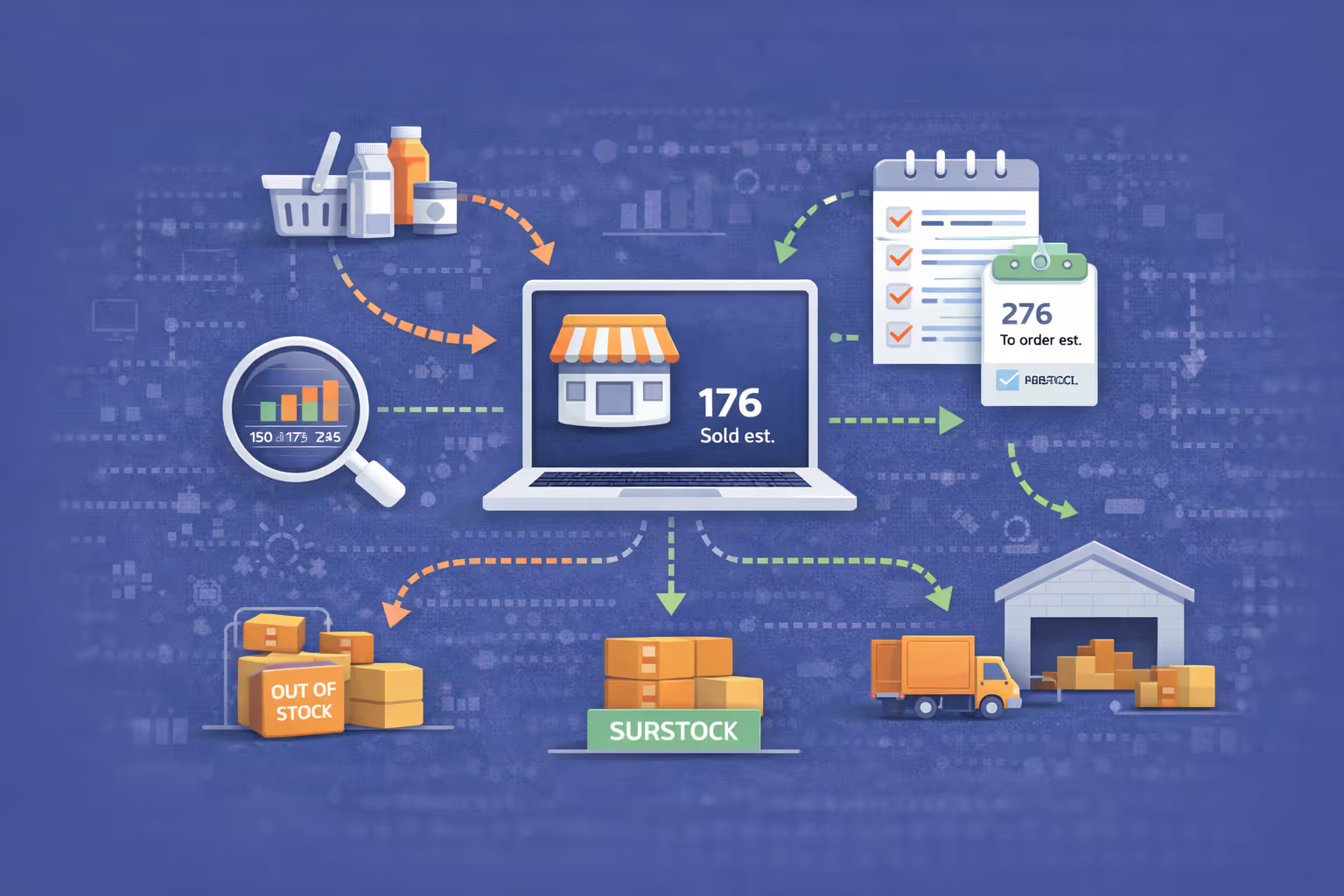
Management of order commitments
BOOPER MPS ensures the operational execution of promotions through:
• Calculating sales forecasts by store
• Anticipating the quantities needed to order
• Limiting stockouts and overstocking
• Synchronization with the supply chain
Teams have a clear understanding of the logistical requirements before each operation.
15 to 30%
in promotional budget saved
-20 to -30%
breakdowns during operations
+1 to +3 points
additional promotional margin

Reporting and analysis promotion performance
The module offers advanced management tools:
• Customizable dashboards
• Monitoring promotional KPIs (ROI, uplift, margin, volumes)
• Comparative analysis between campaigns
• Comparison between stores, regions, and categories
• Performance history
Teams have a clear, shared, and actionable vision of results.

BOOPER MPS incorporates a price simulation engine (PSS) based on elasticity and AI to measure the impact of a pricing scenario on volume, revenue, and margin. It combines historical data, forecasts, and business rules to manage multiple objectives under constraints and support operational decision-making.
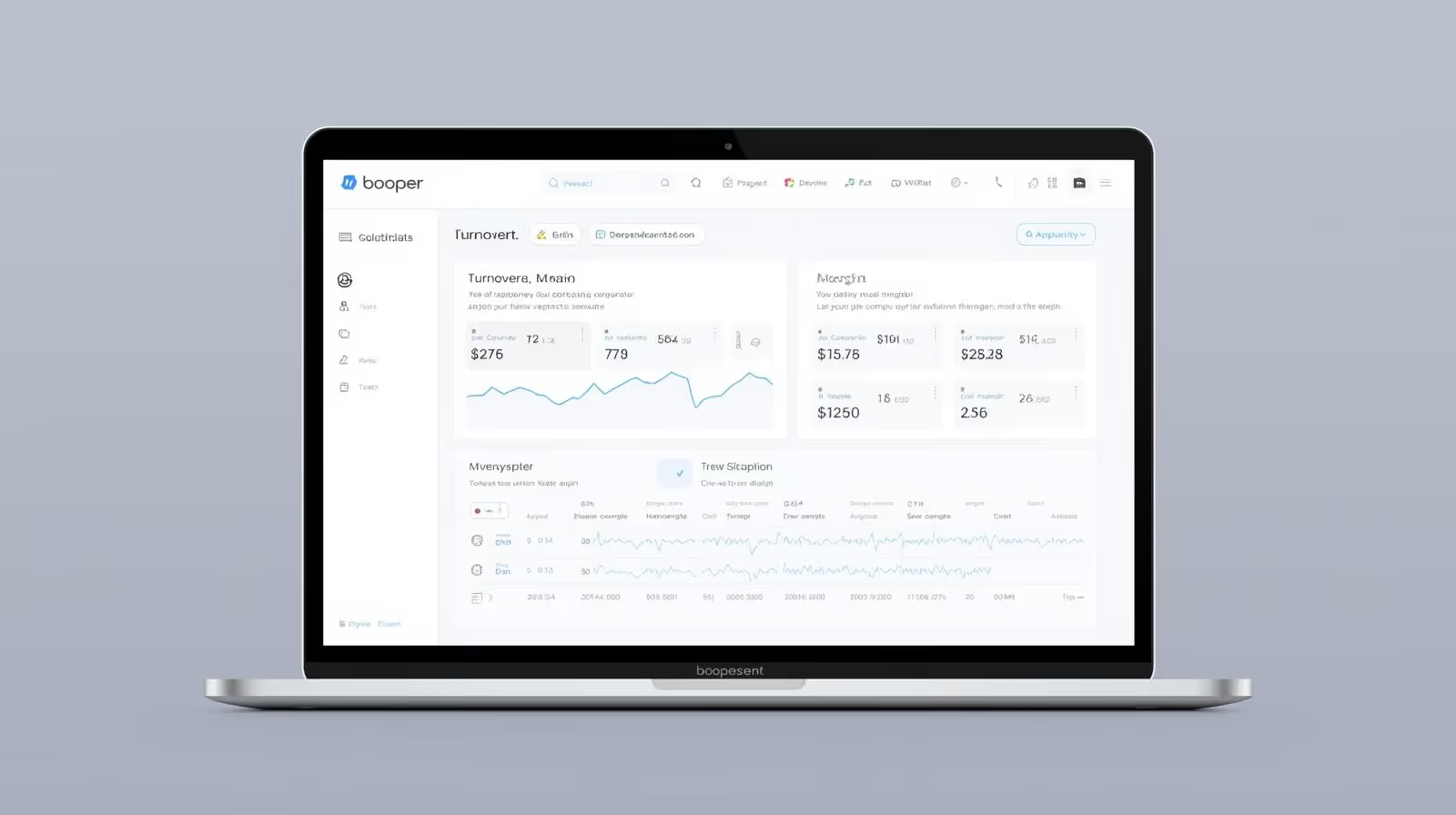

BOOPER MPS manages geo-pricing and price tiers. Prices are simulated and optimized according to elasticity levels, margin targets, and business constraints, ensuring global consistency, local differentiation, and multi-level performance management.


BOOPER manages assortments according to formats, zones, and channels, integrating packaging sizes, sales forecasts, and product life cycles. Margin simulations enable decisions to be made on whether to introduce or withdraw products based on economic performance and profitability targets.


BOOPER secures pricing decisions through structured governance based on explainable models, business rules, and complete traceability of simulations. Multi-level validations ensure strategic consistency, risk control, auditability, and control of margin and performance variances.


AI analyzes past sales, promotional mechanics, prices, seasonality, and customer behavior to predict the actual impact of promotions. It allows you to choose the best mechanics, the right discount level, and the right targeting to maximize ROI.
MPS uses historical sales, promotional calendars, prices, margins, store data, inventory, and external factors (seasonality, events, competition).
Yes. The "What If" simulation module allows you to test different promotional scenarios and measure their projected impact on volumes, revenue, and margin.
MPS identifies unprofitable promotions, measures their actual ROI, and proposes more effective alternatives. Decisions are based on objective data, not just history or intuition.
Yes. MPS is designed for large retail accounts with multi-country, multi-store, multi-category management and centralized governance while maintaining local flexibility.
MPS compares actual sales to expected sales excluding promotions in order to isolate the uplift generated by the campaign. ROI is calculated by incorporating margin, costs, and additional volumes.
BOOPER projects deliver a rapid ROI by optimizing promotional budgets, reducing stockouts, and improving margins. Initial gains are typically seen in less than three months.