Continuously monitor thousands of references and competitors
Ensuring the reliability of collected data despite the diversity of sources
Reduce the time spent on time-consuming manual records
Structure a governed and auditable price monitoring process
Have consolidated indicators by brand, geographic area, and channel
Inform strategic decisions (alignment, repositioning, differentiation)
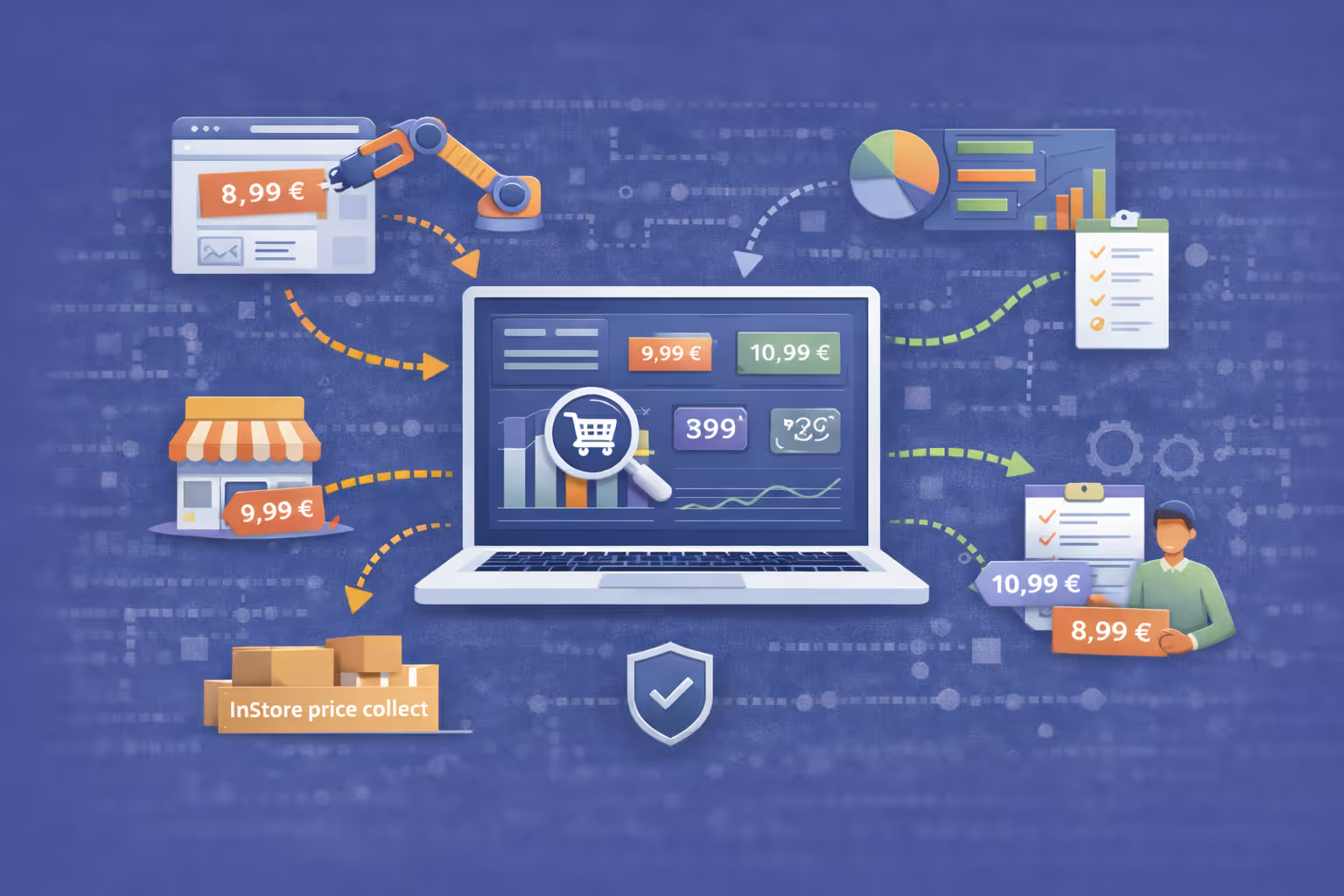
Multi-source collection competitive prices
BOOPER automatically integrates competitive data from various sources:
- Web scraping of e-commerce sites and marketplaces
- Panelist data
- Field store reports
- Internal investigations or external service providers
This multi-source approach covers all channels: online, offline, and omnichannel.
Data is standardized in a single repository to ensure reliable price comparability.

Web scraping intelligent and secure
BOOPER uses advanced scraping technologies to collect:
- Public prices
- Special offers
- Product availability
- Variants (formats, packaging, packs)
The collection is:
- Scheduled automatically (daily, weekly, monthly, etc.)
- Adapted to the specific characteristics of each site according to each business vertical
- Secure and compliant with technical access rules
The result: continuous competitive monitoring without placing an operational burden on your teams and greater responsiveness.

Creation of closed lists of competing products
BOOPER MPS allows you to precisely define the scope of your monitoring:
- Closed lists of products to be surveyed
- Selection of strategic brands and competitors
- Segmentation by category, brand, or universe
You focus your collection efforts on references that are truly decisive for your pricing policy.

Automatic cleaning and correction competitive data
BOOPER MPS incorporates advanced data quality mechanisms:
- Price anomaly detection
- Correction of inconsistencies
- Format harmonization
- Duplicate management
Internal surveys, panelists, and web scraping are consolidated into a single, clean, and usable database.
You guarantee decisions based on reliable and verified data.
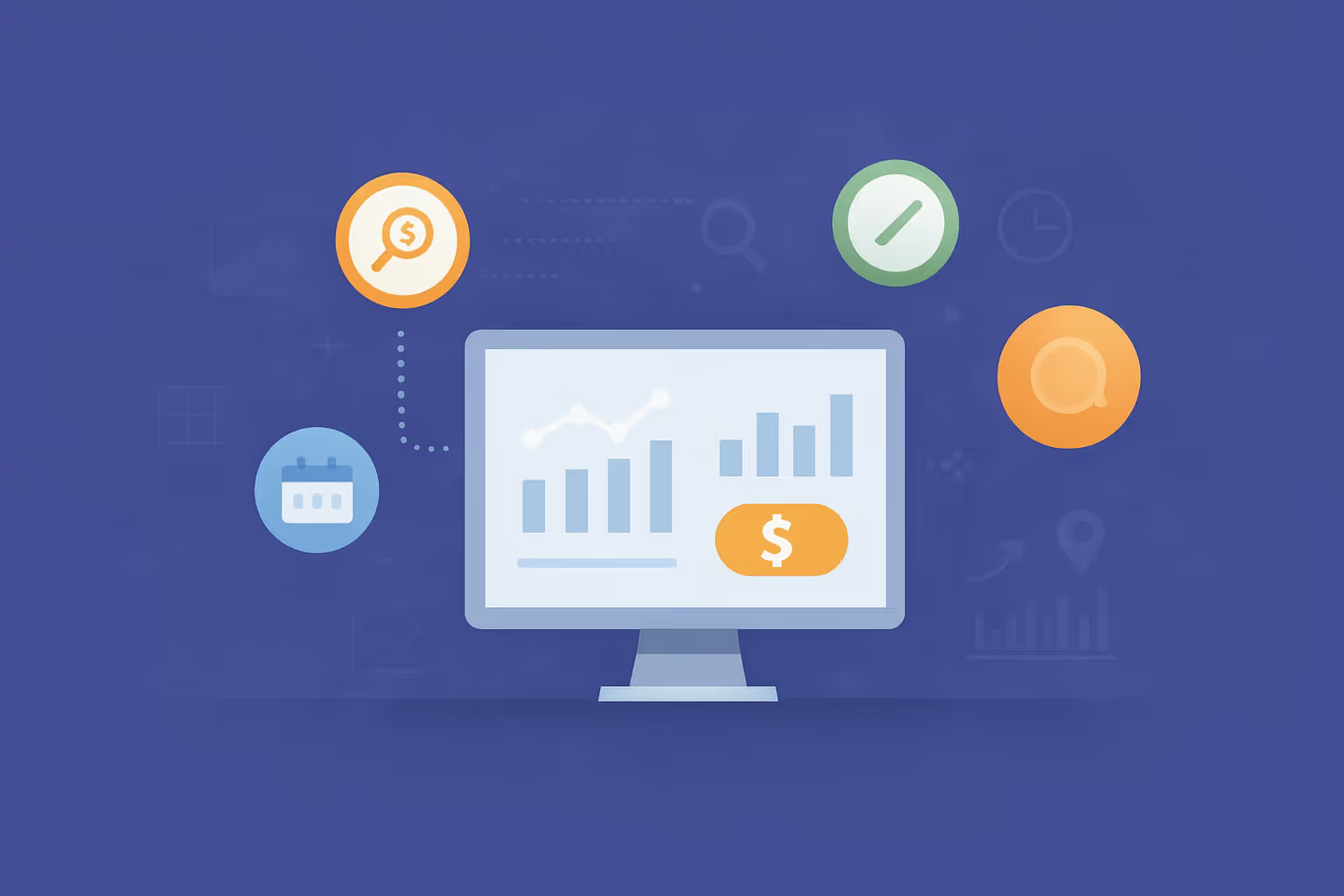
Dashboards and competitive indicators
BOOPER MPS offers advanced management tools:
- Monitoring price differences by competitor
- Analysis by category, brand, store, and region
- History of rate changes
- Identifying market trends
The dashboards can be customized for pricing, marketing, and senior management teams.
 Price simulation
BOOPER MPS incorporates a price simulation engine (PSS) based on elasticity and AI to measure the impact of a pricing scenario on volume, revenue, and margin. It combines historical data, forecasts, and business rules to manage multiple objectives under constraints and support operational decision-making.
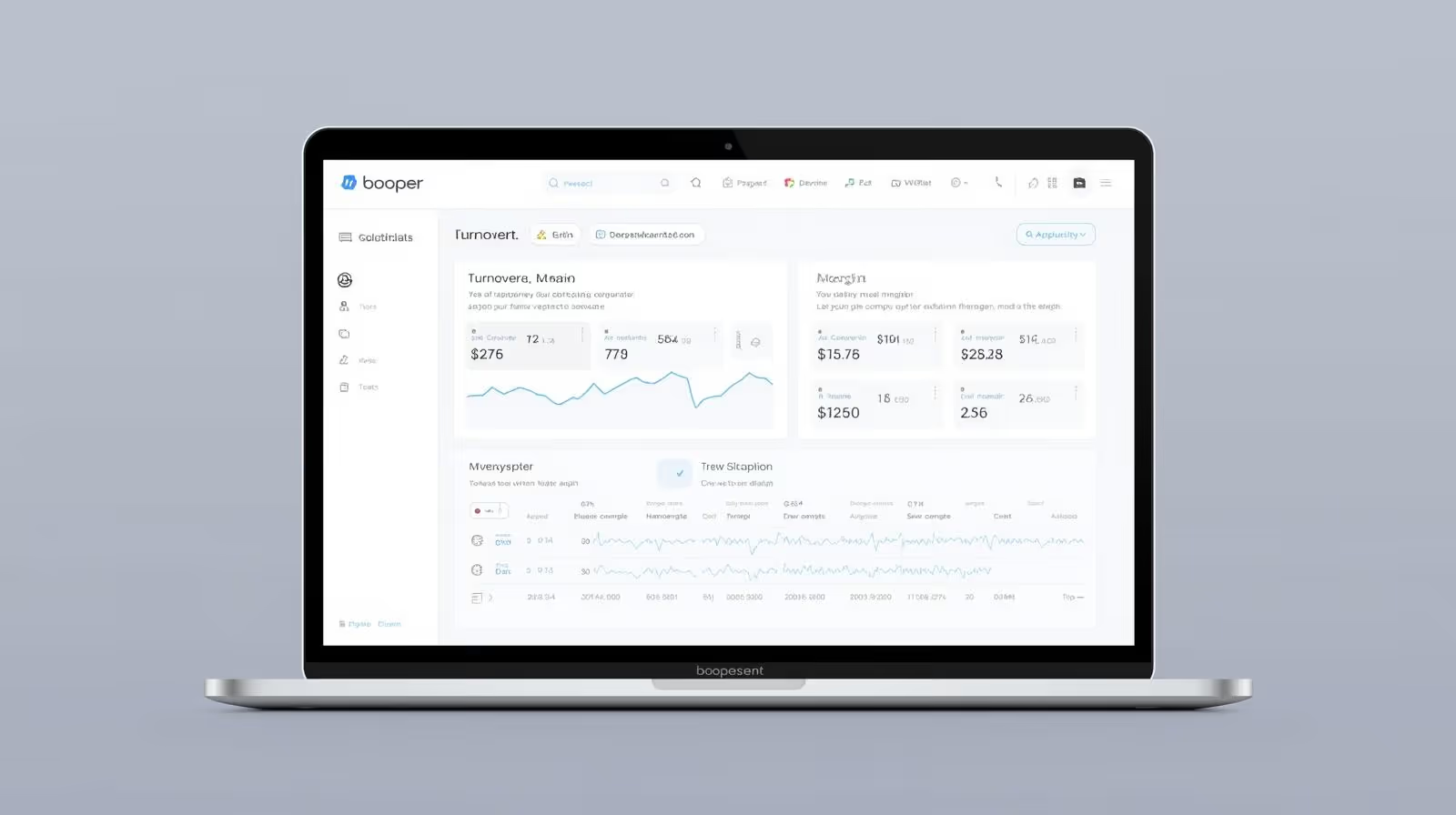
 Geopricing and Price Tiers
BOOPER MPS manages geo-pricing and price tiers. Prices are simulated and optimized according to elasticity levels, margin targets, and business constraints, ensuring global consistency, local differentiation, and multi-level performance management.

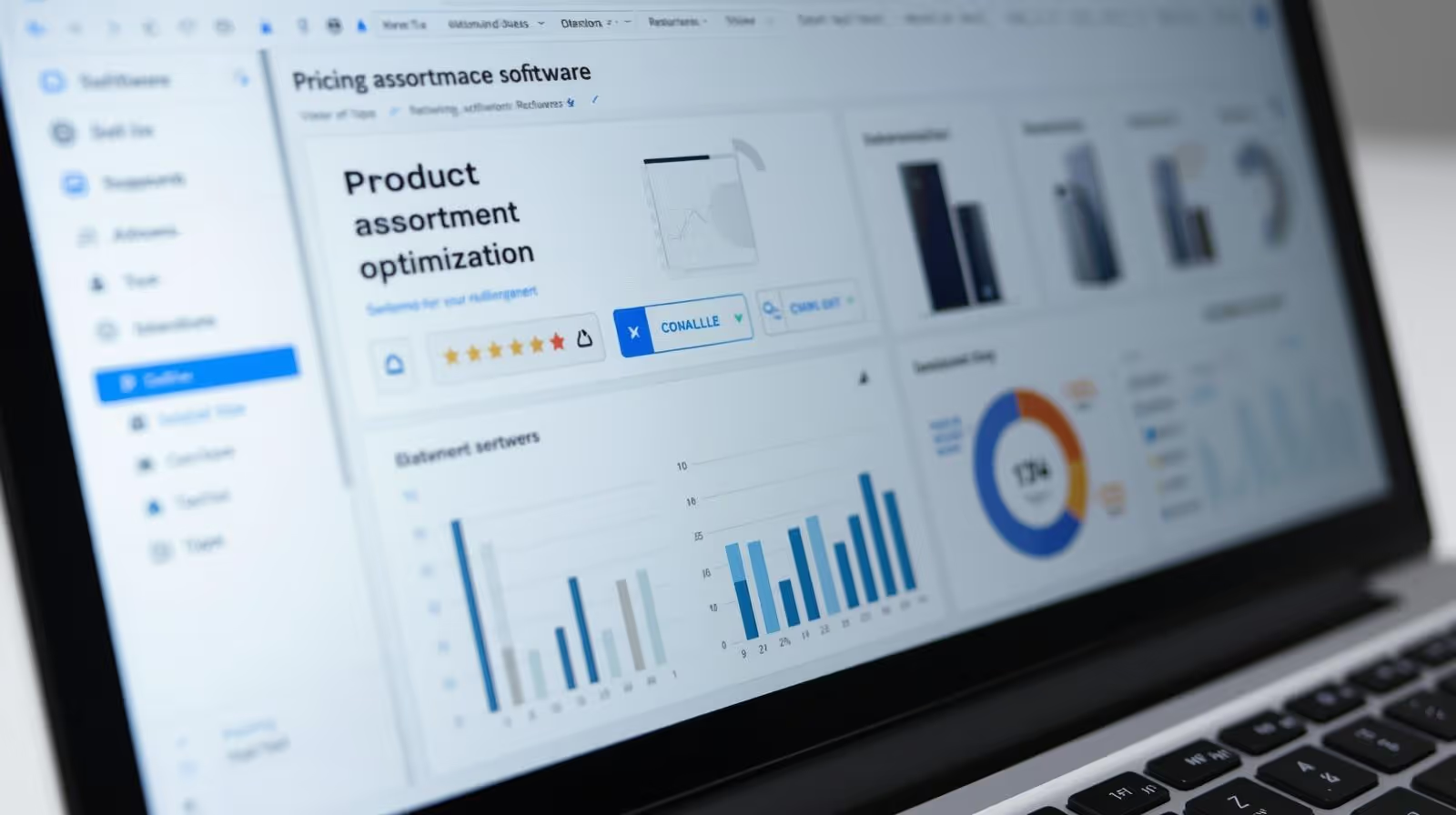
 Assortment management
BOOPER manages assortments according to formats, zones, and channels, integrating packaging sizes, sales forecasts, and product life cycles. Margin simulations enable decisions to be made on whether to introduce or withdraw products based on economic performance and profitability targets.
 Governance and management
BOOPER secures pricing decisions through structured governance based on explainable models, business rules, and complete traceability of simulations. Multi-level validations ensure strategic consistency, risk control, auditability, and control of margin and performance variances.

What is web scraping applied to retail pricing?
Web scraping involves automatically collecting prices listed on competing e-commerce sites and marketplaces, on a large scale and without manual intervention. When applied to retail pricing, BOOPER transforms this raw data into actionable metrics to guide the retailer’s pricing strategy. Specifically, data is collected continuously across a set of competitors and product listings defined by the retailer, allowing it to track changes in listed prices without relying on manual data collection, which is inevitably limited in both volume and frequency. The collected data then undergoes quality checks—including anomaly detection, data cleaning, and format standardization—before being analyzed, to ensure that the recorded price corresponds to the correct product under the appropriate comparison conditions. Web scraping is just one of the sources of competitive data available in BOOPER: it can be supplemented by in-store price checks (relevant when the physical price differs from the online price) and panelist data, to build a more comprehensive view of the market than simply tracking prices displayed online. For a pricing department, automated web scraping changes the scale at which competitive intelligence can be conducted: continuously monitoring hundreds or thousands of SKUs across multiple competitors, rather than sporadically tracking a limited sample, which directly informs decisions regarding price alignment, simulation, and pricing governance.
What data sources can BOOPER integrate?
BOOPER integrates data from web scraping, panelists, in-store price checks, and internal surveys. This multi-source approach ensures a comprehensive view of the competition, rather than relying on a single data collection channel. Web scraping automates the collection of prices displayed on competitors’ e-commerce sites and marketplaces, on a large scale and on an ongoing basis. Data from panelists provides a complementary view of the market, particularly regarding indicators that displayed prices alone do not capture. In-store surveys remain relevant for categories or areas where online prices do not accurately reflect prices at physical retail locations—a common discrepancy in certain retail sectors. This diversity of sources serves primarily to fill the blind spots inherent in each channel when considered in isolation: web scraping does not always capture what is happening in stores, and in-store surveys cannot comprehensively cover an online product assortment. By cross-referencing these sources, BOOPER transforms heterogeneous data into actionable and consistent metrics for guiding pricing strategy. For a pricing team, this ability to integrate multiple data sources reduces the risk of making decisions based on a partial view of the market—an issue that is all the more critical as the number of sales and price communication channels continues to grow (stores, e-commerce sites, marketplaces, apps).
How can the reliability of competitor price surveys be guaranteed?
The reliability of competitor price data relies on a chain of automated checks applied to each piece of collected data: anomaly detection, data cleansing, format standardization, and business validation. Pricing decisions are thus based on verified and audited data, rather than on raw data that may be inaccurate. Anomaly detection identifies inconsistent values before they enter the recommendation models—a price recorded as zero due to a competitor’s out-of-stock situation, a duplicate resulting from a product variant, or a sudden price discrepancy that indicates a matching error rather than a genuine competitive shift. Cleaning and standardizing formats then make it possible to compare data collected from diverse sources—e-commerce sites, marketplaces, field surveys, and panelists—each with its own units, packaging, or product descriptions. Business validation serves as a final layer of control: beyond automated rules, teams can verify and resolve ambiguous cases, particularly regarding product matching—ensuring that a recorded price corresponds to the exact same SKU tracked by the retailer, and not to a similar variant (such as size, color, or packaging) that would skew the comparison. For a pricing department, this reliability directly determines the level of trust placed in the resulting recommendations: poorly cleaned competitive data can lead to unnecessary price alignment or a misjudged competitive gap, with a direct impact on margins and the retailer’s perceived competitiveness.
Can we track price changes over time?
Yes. BOOPER tracks all price data over time to analyze trends, measure price fluctuations, and identify competitors’ strategies over the long term, rather than providing just a snapshot of the market. This historical data makes it possible to distinguish between a one-time price movement—such as a time-limited promotional campaign—and a structural shift in a competitor’s positioning, such as a lasting price repositioning across an entire product category. Without this depth of historical data, a single data point can lead to misinterpretation and an inappropriate pricing response. Historical analysis also helps identify recurring patterns in competitive strategy: the frequency of promotions on certain product families, the seasonality of price adjustments, and a given competitor’s responsiveness to market movements. These insights enrich predictive models for sales forecasting and price elasticity, which benefit from a long competitive history to better anticipate the impact of a future price movement. For a pricing team, this long-term monitoring transforms competitive intelligence from a one-time exercise into a strategic asset: it provides insight not only into where the competition stands today but also into how it behaves over time, thereby enhancing the ability to anticipate rather than simply react.
Is the module suitable for large store networks?
Yes. BOOPER is designed for large retail accounts, offering multi-brand, multi-country, and multi-category management of price data. The platform centralizes the collected data while maintaining local granularity—by store or by catchment area. This centralization provides a group pricing department with a consolidated view of competitive positioning across the entire network, while taking into account the fact that actual competition often varies from one area to another—a dominant competitor in one region may be marginal elsewhere. Web scraping and field surveys are thus configured to track the retailers that are truly relevant to each catchment area, rather than a single list of competitors applied across the entire network. For a large network, the volume of product listings and retail locations to monitor can quickly become unmanageable with manual surveys: automating data collection (web scraping, panelists, in-store surveys) is precisely what makes comprehensive competitive monitoring possible at this scale, without requiring a team dedicated solely to price data entry. For a multi-store retailer, this ability to standardize price collection while maintaining local granularity is what ensures a consistent price image on a national or international scale, while remaining responsive to the local competition specific to each market.
How do price surveys contribute to the overall pricing strategy?
The price survey data collected by BOOPER feeds directly into the platform’s pricing simulation, optimization, and governance modules. This data enables companies to balance competitiveness, margin, and price positioning, rather than treating competitive intelligence as isolated data disconnected from decision-making. In practical terms, a price change detected among a competitor can trigger an impact simulation before any decision to align prices is made: what effect would an adjustment have on volumes, margin, and price image, given the specific price elasticity of the product in question? Without this integration, price tracking remains a simple monitoring indicator—with it, it becomes a signal that can be leveraged by the recommendation engine. This competitive data also enhances pricing governance: it allows a decision to align or differentiate from a competitor to be documented and justified, within the framework of the business rules defined by the retailer (maximum tolerated variances, exceptions by strategic category). It also serves as a basis for tracking, over time, the retailer’s price positioning relative to its market. For a pricing department, this integration transforms price monitoring from a mere surveillance task into a key input for pricing strategy: every observed competitive move can be immediately translated into a scenario, evaluated, and then implemented or rejected based on its actual impact on the retailer’s sales performance.
What is the ROI of an automated price tracking solution?
The benefits of an automated price monitoring solution are primarily measured in three areas: reduced time spent on manual data collection and entry, increased reliability of the resulting pricing decisions, and greater responsiveness to competitive shifts. Reducing manual effort is the most immediate benefit: manually tracking and verifying competitor prices—product by product and retailer by retailer—requires a significant amount of team time that is difficult to scale as the size of the monitored product assortment grows. Automation through web scraping and the integration of complementary sources (panelists, field surveys) frees up this time for analysis and decision-making rather than data collection. The increased reliability, in turn, leads to better-calibrated pricing decisions: competitive alignment based on reliable, up-to-date data prevents both reacting to false signals (matching errors, temporary stockouts) and missing a real market trend. Finally, this increased responsiveness makes it possible to detect a competitor’s price change quickly, rather than discovering it with a delay that would have already impacted sales. The magnitude of the ROI depends on the volume of SKUs tracked and the intensity of competition in the retailer’s market: the greater the number of competitors and products tracked, the wider the gap between manual and automated monitoring becomes, to the benefit of responsiveness and the reliability of pricing decisions.
Solutions
Pricing Optimization Software
A pricing tool focused on margin performance and effective business governance.
Sales forecasting using AI
Anticipate demand and improve your business decisions with AI
Product matching: Cloning and chaining
Make your product comparisons more reliable with AI
Promotion management
Manage your promotions with precision and maximize their profitability
Markdown and Clearance Sale
Optimize your markdowns and accelerate the sale of your inventory
Studies & Data
Price surveys and web scraping
Monitor your competitors' prices online and offline
Diagnosis Price
Optimize your pricing strategy and secure your decisions
Price strategy development
Use your pricing strategy as a lever for creating sustainable value
Council
Operational Pricing Consulting
Bring clarity and control to your pricing decisions
Change management
Make your teams the driving force behind your pricing transformation
Pricing Training
Develop your operational or strategic skills

Lorem ipsum dolor sit amet, consectetur adipiscing elit. Suspendisse varius enim in eros elementum tristique. Duis cursus, mi quis viverra ornare, eros dolor interdum nulla, ut commodo diam libero vitae erat. Aenean faucibus nibh et justo cursus id rutrum lorem imperdiet. Nunc ut sem vitae risus tristique posuere.
Lorem ipsum dolor sit amet, consectetur adipiscing elit. Suspendisse varius enim in eros elementum tristique. Duis cursus, mi quis viverra ornare, eros dolor interdum nulla, ut commodo diam libero vitae erat. Aenean faucibus nibh et justo cursus id rutrum lorem imperdiet. Nunc ut sem vitae risus tristique posuere.
Heading 1
Heading 2
Heading 3
Heading 4
Heading 5
Heading 6
Lorem ipsum dolor sit amet, consectetur adipiscing elit, sed do eiusmod tempor incididunt ut labore et dolore magna aliqua. Ut enim ad minim veniam, quis nostrud exercitation ullamco laboris nisi ut aliquip ex ea commodo consequat. Duis aute irure dolor in reprehenderit in voluptate velit esse cillum dolore eu fugiat nulla pariatur.
Block quote
Ordered list
- Item 1
- Item 2
- Item 3
Unordered list
- Item A
- Item B
- Item C
Bold text
Emphasis
Superscript
Subscript