
See where the margin is lost, without manual extraction
Price and margin performance by product, category, point of sale, or customer, directly within the tool.
Pricing optimization software measures how your sales respond to price, item by item, and recommends the price that best meets your margin goal.
Pricing Analytics Measures the performance of your prices and margins by product, category, store, or customer. Business rules and AI detect anomalies, measurethe price elasticity of each SKU, and prioritize your margin drivers. Each analysis results in a detailed recommendation, whereas a spreadsheet simply presents the findings.
| Product | Elastic. | Reco Award | Margin |
|---|---|---|---|
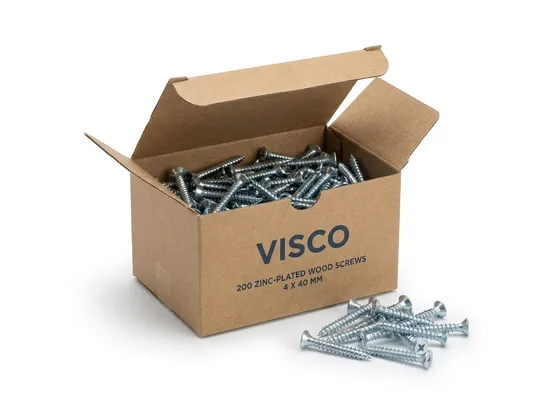
| 4×40 wood screws, box of 200 | −1,2 | 21.00 € + 5.0% | +9,7 % |
| 8 mm nylon anchors, ×100 | −2,4 | €9.90 (priceunchanged) | KVI |
| 310 ml Assembly Adhesive | −0,6 | 7.90 €+ 5.5% | +11,4 % |
| 5-meter tape measure | −3,0 | 12.49€−3.2% | +1,2 % |
Why4×40 wood screws: elasticity −1.2 (excluding promotions); the price increase remains profitable as long as volume declines by less than 14%.
Demo Data
They manage their prices with BOOPER














Measure price sensitivity.Simulate before making a decision.Recommend a price with an explanation.
The BOOPER MPSprice analysis and optimization module.
Pricing and proposal teams, both at headquarters and in the field, as well as sales and finance departments.
Identify where the margin is being lost and which lever to activate first.
Business Rules + AI: Elasticity, Anomalies, Prioritized and Explained Recommendations.
From the aisle to the point of sale, from the zone to the customer segment—all using the same data.
Continuously, leading up to dynamic pricing: before and after each price change.
Four steps, from raw data to an actionable pricing recommendation.
Sales, margins, prices, and—if applicable—competitive positioning. How your data is integrated.
Price elasticity of demand, product by product, not as a category average (elasticity coefficient).
Anomalies, inconsistencies, and opportunities categorized by their impact on the margin.
A well-founded recommendation that your teams should test and then validate.
Sales, prices, costs, and margins in a single database
A standard price, excluding promotions
Drivers Ranked by Impact on Margin
A suggested retail price, with an explanation
Recommended price: €21.00 (excluding tax ), capped by your policies · margin +9.7%
Revenue is down slightly, but the margin is up: this is the calculation that Pricing Analytics performs for each product.
A fastener product is sold for €20 (excluding tax) at a purchase cost of €14. Its price increases to €21 (+5%), and its monthly sales drop from 1,000 to 940 units (−6%).
Three optimal prices, a choice based on the product’s role. The elasticity curve shows the price that maximizes volume, the price that maximizes revenue, and the price that maximizes margin. A loss leader (KVI) focuses more on volume or price image, while a product that is rarely compared focuses on margin; your business rules then set the upper and lower limits. See how to set the right price based on objectives.
Four precautions: measure elasticity excluding promotional items, by retail location or group of retail locations, adjusting for seasonality, and accounting for shifts in sales to similar products (cross-elasticity).
Rounded numbers to illustrate the calculation method, not actual client results.
Leveraging Price Elasticity: The 6-Step Method →A useful price analysis goes beyond reporting: it identifies what needs to be changed, where, and what the benefits will be.
Price and margin performance by product, category, point of sale, or customer, directly within the tool.
Volume and profitability are tracked after every decision: you know what worked.
AI prioritizes the levers based on their potential impact on the margin, including anomalies and inconsistencies.
Each recommendation is accompanied by an explanation (elasticity, competition, inventory, price perception).
Analytics explains pricing; optimization recommends the right price. BOOPER combines both in a single engine. The limitations of Excel for retail pricing.
Pricing Analytics links each recommended price to the factors that justify it: data-driven price optimization, guided by your rules and validated by your teams.
A pricing rule engine translates your pricing policy into written rules that are prioritized and automatically applied to each SKU. In Pricing Analytics, these rules govern the prices recommended by the AI.
Competitors, store and product clusters, price ranges, product lines: each rule has its own priority, and the order in which they are applied is explicit.
Minimum margin by supplier, brand, or category: No quoted price falls below the threshold you have set.
Target, floor, and ceiling prices by store, retail format, or channel, with an alert whenever a price goes outside these limits.
Elasticities and product matching drive the rules: we align ourselves with a competitor in areas where customers actually compare products.
The risk isn't that we'll run out of rules, but that we'll pile them up.
Over the course of several months, conflicting rules end up making decisions for the team: this is the "rule debt" of a pricing engine.
A single platform also ensures consistency between stores and the website: price discrepancies across channels are managed—they aren't simply accepted.
What Retailers Look for in a Rules Engine When Issuing a Request for Proposals: The Specifications for Pricing Software.
BOOPER Pricing Analytics does all three in a single tool: it measures price elasticity by SKU and by store, excluding promotions; simulates the impact of each pricing scenario on volume, revenue, and margin; and then recommends a price for each product and store, within the parameters of your business rules. BOOPER manages 4,000 retail locations.
| Solution | What she highlights | For whom |
|---|---|---|
| BOOPER Pricing Analytics | Elasticity by reference and by store, scenario simulation prior to deployment, recommended price by product and by store, explanation of each recommendation | Retail chains and multi-store networks; an independent French publisher since 2014 |
| PricingHUB (Akeneo Group) | Price Optimization Through Machine Learning, with a Commitment to Explainable AI | Specialty Retail and E-commerce, part of Akeneo since June 2026 |
| Revionics (Aptos) | Base prices, promotions, and markdowns | International Retail |
| Optimix XPA (Maxxing Group) | Pricing, Forecasting, and Replenishment; Product Assortment Benchmarking | Food and Specialty Retail |
| Thank you | AI agents that recalculate prices on a near-continuous basis, geopricing, and promotions | Retailers that prioritize maximum responsiveness |
To distinguish between these demo solutions, three questions are all it takes: Is price elasticity measured excluding promotions and at the store level—not just as a national average? Does the simulation calculate margins and volumes before going live? Does the recommended price comply with your rules (minimum margin, price tiers, maximum price difference between zones)? Details by vendor are available in our comparison of Optimix, PricingHUB, and Mercio, as well as in our overview of retail pricing software.
A home and garden retail chain thought it knew its price positioning. An analysis of its sales history shifted the discussion.
A network of 90 stores that wanted to assess its market positioning and improve its web Markup.
Prices were compared to the market using an index weighted by sales volume, rather than a simple average. The margin gap was measured between products exposed to competition and other products.
A handful of products account for the bulk of sales: that’s where the price image comes into play, and that’s where the analysis must begin.
These products account for 80% of sales across the entire network.
Sales Management · Network of 90 stores. Case study written by Booper based on an actual client project; the client has been anonymized.
Concentration of sales observed within the network
Source: price diagnostic Booper operates a network of 90 stores.
The principle remains the same: measure price sensitivity and manage margins at the level where decisions are made.
Pricing that varies by region, consistent with the strategy implemented at headquarters. Learn about geopricing and why charging the same price everywhere reduces profit margins.
DIY Pricing →Consistency in pricing structures, discounts, and net prices, and identification of customers with insufficient margins. When the list price is no longer sufficient.
Retail and B2B Pricing →Margins and positioning in the health and beauty products and specialty products segments, relative to local and online competitors.
Pricing at the pharmacy →Do you know which SKUs are eating into your profit margin right now?
Let's work together to identify your first price discrepancies within a category.
An analysis that shows where the profit margin really lies.
The retailer thought it knew its market positioning. The analysis compared its prices to the market, weighted by sales volume, and revealed the margin gap between products exposed to competition and the others.
These products account for 80% of sales across the entire network.
Recommended reading: the price diagnostic
Consistent pricing across the entire network, without losing control.
The challenge wasn't simply to have yet another tool. We needed to maintain national pricing consistency across millions of prices, simulate each scenario by category, and leave the final decision to the business teams.
retail locations governed by a single, centralized pricing structure.
Read more: The Modular Pricing Platform
Each price change is measured against a control group.
The new prices were first rolled out in a few pilot stores and compared to control stores. The results are reviewed weekly and supplemented by an in-store price perception survey.
customers surveyed in-store to gauge their perception of the pilot's price.
Read more: Simulate Your Pricing Strategy
Not the lowest price: the right price, plus a little extra margin.
The company used to apply a single " Markup " to the entire store. Now, each category has its own focus: foot traffic, sales, or profit margin. Complaints about prices being too high have disappeared, and competitors are raising their prices.
Markup s on the products tested, over the course of a quarter.
Read: How to Measure Your Price Image
Finally find out which products are really driving the profit margin.
While organizing the product assortment, the team noticed that a small number of items accounted for the bulk of sales and profit. Before discontinuing a product, they first test a price reduction and monitor the impact on sales.
the targeted cash flow, from 20,000 to 12,000 items (ongoing goal).
Read more: Pricing in Garden Centers
Competitive prices that help you make decisions, not just sit on a shelf.
Competitors' prices are imported directly into the tool and matched to the retailer's products by cloning and linking SKUs. The price indices are up to date, and each price alignment is simulated before being approved by the team.
platform availability in 2025, with the platform having been in production since 2022.
Read more: Matching, Cloning, and Chaining
One price per store group, revised every six weeks.
The group used to manage several retail chains using Excel and manual processes. Now, prices are linked, simulated in batches, and applied by store group. Each pricing cycle starts from its own baseline.
by price cycle, simulated in batches across all retail chains.
Read more: The Limitations of Excel for Pricing
Saved, compared, and replayable price scenarios.
The store's strategy: to be the cheapest in the area. Booper serves as a benchmark for comparing prices with competitors, and each scenario is recorded: what was decided, why, and the ability to replay it.
Users are enough to drive the hypermarket's price alignment.
Read: How to Compete Without Sacrificing Profit Margins
Case studies written by Booper based on real client projects. Client identities have been anonymized. See our client list on the "Our Clients" page.
Can't find the answer you're looking for? Ask our team directly.
All questions about pricing →Pricing Analytics encompasses all the methods and tools used to analyze pricing data to inform pricing decisions. In particular, it measures price elasticity, simulates various business scenarios, and assesses their impact on sales and margins, in order to help a company develop a more effective and profitable pricing strategy.
In practice, the “ Pricing Analytics ” draws on sales history, cost and margin data, and often competitive data, to generate actionable metrics: price elasticity (how demand responds to a price change), cannibalization effects between similar products, and store segmentation based on each store’s specific price sensitivity. These metrics replace intuition or generic rules with insights based on actual customer behavior.
At BOOPER, this analytics component isn’t isolated: it directly feeds into the price recommendation engine (Price Optimization) and the simulation modules, making it possible to move from analysis (“What is the impact of a price change?”) to decision-making (“What price should we set?”) without switching tools or losing data. This provides the pricing, category management, and finance teams with a common foundation for making informed decisions.
For a retailer, a robust Pricing Analytics is what enables a shift from managing based on gut feelings or spreadsheets to a measurable approach to margin, competitiveness, and price image—a prerequisite for any structured pricing governance initiative across an entire network.
Pricing optimization software analyzes your sales, costs, and margins to measure each product's price sensitivity, then recommends the price that best supports your objective: margin, volume, revenue, or price image.
It operates in four steps. First, it cross-references sales, price, and cost data—as well as competitive positioning data, if available. It then measures the price elasticity of each SKU, excluding promotions and accounting for seasonality. It identifies and classifies anomalies and opportunities based on their impact on margins. Finally, it recommends a price, along with a rationale, which your teams simulate and then approve.
The difference from a spreadsheet or BI tool lies in the result: an analysis on one hand, and an actionable pricing recommendation on the other, guided by your business rules (minimum margin, pricing tiers, maximum variances). For details on the methods, see our comprehensive guide to retail price optimization.
Pricing Analytics provides an analytical understanding of pricing issues (elasticity models, store segmentation, cross-product relationships), while Price Optimization transforms this analysis into operational recommendations for optimal prices, aligned with a defined strategy (margin, volume, price image, inventory management). BOOPER unifies these two dimensions within a single decision-making engine.
In practice, price Pricing Analytics s answers the question “what is happening and why”: it measures how demand responds to a price change (simple or cross-price elasticity), identifies cannibalization effects among similar products, and segments stores based on their sales behavior. Price Optimization answers the question, “What price should be set?”: it draws on these analyses to calculate—subject to constraints (margin thresholds, rounding rules, competitive positioning)—the price that maximizes the retailer’s objective.
Separating these two steps into distinct tools often creates a disconnect: the analysis yields insights that teams must then manually translate into pricing decisions, with the risk of information loss or delays. By integrating both into a single engine, BOOPER makes the analysis the direct input for pricing recommendations, which speeds up the transition from insight to decision and ensures consistency between what is measured and what is actually recommended.
For a pricing department, this consolidation changes the nature of the teams’ work: rather than juggling between an analytics tool and a separate decision-making process, they manage a continuous workflow in which every pricing recommendation remains traceable back to the analysis that generated it—a direct benefit for the governance and auditability of pricing decisions.
A pricing rules engine is the component of pricing software that automatically applies your pricing policy: minimum margins, competitive alignment, and price differentials between product lines or channels.
It calculates a price in accordance with these rules, in the order of priority you have defined, and flags any rules that cannot be met simultaneously.
Its limitation: a rule doesn't know how your customers will react to the price.
That's why BOOPER combines it with the measurement of flexibility: the AI makes suggestions, the rules provide a framework, and your teams approve.
Rule-based software applies the pricing policy you have defined (coefficient, minimum margin, competitor matching, price tiers), while AI-based software learns from your data how sales actually respond to price and determines the price that best serves your objective.
Rules alone are predictable but do not account for price sensitivity: the same coefficient applies to both a loss leader that is frequently compared with other products and a product with low price sensitivity. AI alone measures this sensitivity—the price elasticity of each SKU—but may suggest a price that is inconsistent with your pricing strategy or product line if there are no guidelines to guide it.
BOOPER combines both approaches: AI measures price elasticity, detects anomalies, and suggests a price, while business rules provide a framework (minimum margin, maximum price differences from competitors, price tiers), and your teams approve sensitive products. To learn more, see how an AI pricing engine works and what safeguards it uses.
At a minimum, the margin (as a percentage and in euros), volumes, and revenue by product, category, retail location, or customer; the price elasticity of each SKU; and the effect of a price change on these metrics.
Added to this are metrics that help avoid seemingly good but actually flawed decisions: cross-elasticity and cannibalization among similar SKUs, the price index and price positioning relative to tracked competitors, and anomalies (inconsistent prices, abnormal margins). After each decision, the software must also measure the actual impact on volume and profitability to determine what worked.
To create this dashboard, see our method for retail pricing KPIs.
Yes, competitor data is not a mandatory requirement for using BOOPER’s “ Pricing Analytics ” module. When competitor data is missing or incomplete, the platform relies on other internal sources to generate consistent pricing recommendations.
These sources include, in particular, sales history, price sensitivity measured through elasticities, product-specific costs and profitability targets, product cycles and seasonality, as well as business expertise derived from comparable projects conducted in similar categories. This combination makes it possible to set prices that are consistent with the market while meeting the margin and volume targets set by the retailer, without relying on external data feeds.
This flexibility is intended as a starting point, not as a definitive limit: when competitive data becomes available (online prices collected via web scraping, panelist data, or field surveys that you provide), it is integrated as an additional component into the recommendation engine, which refines the scenarios and improves the accuracy of the suggested prices, without requiring any reconfiguration of the existing model.
For a retailer launching a pricing project without a mature competitive intelligence system, this approach avoids delaying deployment while waiting for an external data collection initiative: price governance can already be based on solid internal fundamentals (margin, elasticity, turnover), with the competitive dimension subsequently enhancing a system that is already operational.
Enterprise pricing solutions must be able to import a retailer’s point-of-sale data, pricing, and product catalog without requiring a major IT project or a mandatory API connector to get started.
At BOOPER, the Data Loader module imports this data (point-of-sale exports, pricing, and catalog) right from the start-up phase, even when the customer's data is still incomplete or unstructured, before it is gradually validated.
See our article on integrating pricing data without a major IT project.
Yes. BOOPER is designed for multi-store and multi-channel environments: the platform incorporates geopricing, point-of-sale clustering, and the use of local data to set prices that vary by area, while ensuring overall consistency with the pricing strategy established at headquarters.
Clustering groups stores according to criteria relevant to pricing (trade area, competitive intensity, customer profile, store format) rather than treating each store in isolation or, conversely, applying a single national price that ignores local realities. Geopricing then allows prices to be adjusted within ranges defined by the central pricing policy, based on the actual level of competition around each store.
Some clients leverage this dual perspective both at headquarters—to steer strategy and monitor the network’s consolidated performance—and in stores, where local teams can respond more quickly to competitors’ price changes without waiting for central approval for each product. Governance, however, remains centralized: local discretion is exercised within the rules and thresholds defined by the pricing department.
For a complex retail network (multi-brand, multi-format, or multi-country), this balance between centralized management and local flexibility is what makes it possible to reconcile two often conflicting objectives: a consistent price image across the group and genuine competitiveness against local competitors, store by store.
BOOPER improves pricing governance by structuring the decision-making process around traceability: every scenario, every simulation, and every recommendation is documented, transforming previously scattered pricing decisions (Excel files, informal discussions) into a measurable and auditable process.
In practice, decisions go through approval workflows defined by the organization: a price recommendation generated by the engine can be submitted for approval by the pricing teams, shared with the sales department, and then finalized by management before being put into production. Each step is logged (who proposed it, who approved it, based on which database, and according to which business rule), which makes it possible to reconstruct the reasoning behind a price after the fact.
This structure is based on BOOPER’s scenario engine: business rules (margin thresholds, product hierarchies, competitive alignment constraints) are explicitly defined and modeled within the tool rather than applied informally by individual analysts, which reduces discrepancies in practice across teams or geographic regions and facilitates internal audits. This is the approach implemented at one of our clients in the food industry, where the goal was not to add yet another tool but to improve the ability to make consistent pricing decisions on a large scale, by balancing automation, governance, and decision-making control by business teams.
For a pricing department, this enhanced governance reduces the risk of pricing inconsistencies across stores or channels, safeguards the brand’s price image, and provides sales and finance teams with shared visibility into margin-versus-competitiveness trade-offs—an issue that is all the more critical given the extensive network of retail locations and the large number of SKUs.
Yes. BOOPER recalculates its pricing recommendations based on the most recent data (sales, inventory, competitor prices, price elasticity) and applies your business rules: minimum margin, maximum price differences from competitors, price tiers, and allowed frequency of changes.
You choose the frequency and scope. An e-commerce site can update its prices more often than a physical store, where every change requires relabeling. Sensitive products, such as KVI items, still require human approval.
Yes. Before any rollout, BOOPER’s simulations estimate the impact of a price change on revenue, margin, and price image relative to tracked competitors. This allows you to make informed decisions balancing competitiveness and profitability, rather than discovering the effect on your price index after the fact.
Pricing Analytics is one of the modules in BOOPER MPS, our Modular Pricing Solution : use it on its own or integrated with forecasting, promotions, and markdowns.
Our guides for measuring price sensitivity, simulating a decision, and automating processes without losing control.
Each analysis leads to a concrete, well-explained recommendation that is simulated before a decision is made.
30 major clients operating in France, Poland, Vietnam, and Thailand