
Compare only what is comparable
Same volume, same strength, same color, same scent, same positioning: your price differences are based on genuine equivalencies.
Product-matching software automatically matches each of your products with its equivalent from your competitors—down to the specific variant—to ensure accurate price comparisons.
EAN codes, NLP on labels, image recognition: each suggestion is assigned a confidence score. Your teams review and validate any questionable cases.
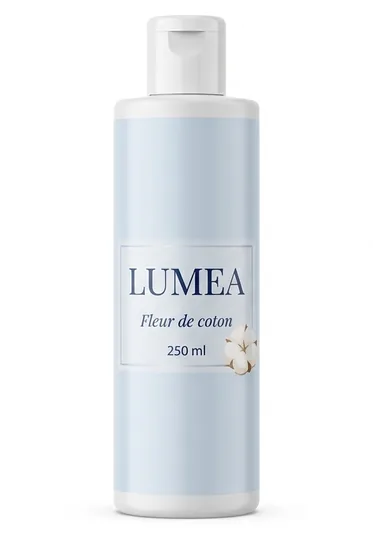

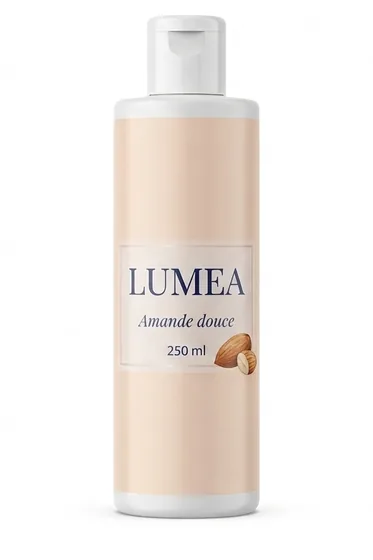
Same brand, same bottle, same volume: different scent—this offer is not associated with your product code.
Demo Data, fictional brand
They manage their prices with BOOPER














Merge without re-entering data.Distinguish between each variant.Compare your prices to the right products.
Matching, cloning, and linking your products with those on the market.
Pricing, category management, market research, and procurement—all of which compare their prices to those of competitors.
A price difference only makes sense if the two products are truly comparable.
EAN, NLP for labels, attributes, and image recognition, followed by human validation.
At retail locations, on websites, on marketplaces, and in competitors' catalogs.
On an ongoing basis, whenever a competitor changes its product lineup or positioning.
An understanding of the wording and the image—not just a literal translation of the text or rigid rules.
When the EAN code is shared, the match is immediate.
Even without an EAN, the AI reads product names, attributes, formats, and brands, and analyzes the web Product photo to suggest the closest match.
Each suggestion has a match rate and a confidence score. Your approvals help the algorithm learn.
Your products are linked to one another (hierarchy, coefficients, history) according to your own rules.
Same EAN code, immediate matching
If there is no common EAN, the product name and photo are analyzed together
Your teams only rule on borderline cases
Your own products linked together, according to your rules
Lumea Cotton Flower Shower Gel, 250 mlInternal Ref. GD-LUM-250-COLumea Shower Gel with Cotton Flower, 250 mlSeller Ref. LUM-FC250Lumea Sweet Almond Shower Gel 250 mlSame brand, same bottle, same volume: different scent—this offer is not associated with your product code.Rejected variantDemo Data, fictional brand
Within the same product line, two products sometimes differ only in scent, color, or size. BOOPER reads the product description and looks at the photo: each competing offer is automatically matched to the correct variant.
Matching is the foundation of any competitive analysis: an accurate comparison makes every price difference actionable.
Same volume, same strength, same color, same scent, same positioning: your price differences are based on genuine equivalencies.
A common, structured, and governed foundation that then feeds into all your other pricing modules.
The AI makes suggestions; your teams only review the borderline cases flagged by a low confidence score.
Changes in a competitor's product lineup or positioning: These are detected as soon as they occur.
Cloning links your products to those of your competitors. Chaining links your products to one another, both vertically and horizontally.
| Criterion | Cloning | Chaining |
|---|---|---|
| Connects | A product from your lineup and its competitor's equivalent | Products from your own product line |
| When | When there is no direct association via EAN | To organize product lines and variants |
| Regarding | Private Label as a National Brand | MN / private label / budget-priced chains, vertical and horizontal |
| Used for | Compare your prices to the market | Maintain consistent price tiers, analyze cannibalization and upselling |
Manual matching is performed on a sample. AI-powered matching applies the same level of rigor to thousands of entries, while taking less time. Scaling up competitive intelligence on a large scale.
Each validation makes subsequent recommendations more accurate. The richer your data repository (descriptions, attributes, price histories), the more precise the matching will be. Ensure your data is reliable before using a pricing tool.
At a national home improvement chain, product matching has become the foundation of the entirePrice Index.
A very extensive catalog, technical products, and product names that vary from one brand to another.
References are matched using text and image recognition, and then cloning and linking connect variants and equivalent products. The team's validations refine the resulting suggestions.
A " Price Index " is only as good as the matching that supports it. That's the first priority—not a technical detail.
platform availability in 2025, with the platform having been in production since 2022.
Competitive Intelligence Division · National home improvement retailer. Case study written by Booper based on an actual client project; client identity has been anonymized.
Before
After
Source: Booper project in production, national home improvement chain.
Anywhere your competitors describe the same product using different words, codes, or formats.
Compare competing stores, curbside pickup locations, and e-commerce sites, and organize your product lines.
Beauty and Health Pricing →Match retailer catalogs with varying product names and manufacturer codes, attribute by attribute.
Retail and B2B Pricing →Look for the same products at online pharmacies, drugstores, and supermarkets.
Pricing at the pharmacy →To what extent is " your catalog " actually comparable to the competition today?
Let's measure your match rate using a sample of your listings.
Sector
DIY
National Brand
Competitive prices that help you make decisions, not just sit on a shelf.
Competitors' prices are imported directly into the tool and matched to the retailer's products by cloning and linking SKUs. The price indices are up to date, and each price alignment is simulated before being approved by the team.
platform availability in 2025, with the platform having been in production since 2022.
Sector
Discount, organic, frozen foods
Multi-brand franchise group
One price per store group, revised every six weeks.
The group used to manage several retail chains using Excel and manual processes. Now, prices are linked, simulated in batches, and applied by store group. Each pricing cycle starts from its own baseline.
by price cycle, simulated in batches across all retail chains.
Read more: The Limitations of Excel for Pricing
Sector
Food Retail
National Network
Consistent pricing across the entire network, without losing control.
The challenge wasn't simply to have yet another tool. We needed to maintain national pricing consistency across millions of prices, simulate each scenario by category, and leave the final decision to the business teams.
retail locations governed by a single, centralized pricing structure.
Read more: The Modular Pricing Platform
Sector
Supermarket
Overseas Territories · Caribbean
Not the lowest price: the right price, plus a little extra margin.
The company used to apply a single " Markup " to the entire store. Now, each category has its own focus: foot traffic, sales, or profit margin. Complaints about prices being too high have disappeared, and competitors are raising their prices.
Markup s on the products tested, over the course of a quarter.
Read: How to Measure Your Price Image
Sector
Garden Center
West Indies
Finally find out which products are really driving the profit margin.
While organizing the product assortment, the team noticed that a small number of items accounted for the bulk of sales and profit. Before discontinuing a product, they first test a price reduction and monitor the impact on sales.
the targeted cash flow, from 20,000 to 12,000 items (ongoing goal).
Read more: Pricing in Garden Centers
Sector
Food
Southeast Asia
Each price change is measured against a control group.
The new prices were first rolled out in a few pilot stores and compared to control stores. The results are reviewed weekly and supplemented by an in-store price perception survey.
customers surveyed in-store to gauge their perception of the pilot's price.
Read more: Simulate Your Pricing Strategy
Sector
Garden & Home
A network of 90 stores
An analysis that shows where the profit margin really lies.
The retailer thought it knew its market positioning. The analysis compared its prices to the market, weighted by sales volume, and revealed the margin gap between products exposed to competition and the others.
These products account for 80% of sales across the entire network.
Recommended reading: the price diagnostic
Sector
Hypermarket
Freelancer
Saved, compared, and replayable price scenarios.
The store's strategy: to be the cheapest in the area. Booper serves as a benchmark for comparing prices with competitors, and each scenario is recorded: what was decided, why, and the ability to replay it.
Users are enough to drive the hypermarket's price alignment.
Read: How to Compete Without Sacrificing Profit Margins
Case studies written by Booper based on real client projects. Clients are anonymous; the avatars are illustrations. See our case studies on the "Our Clients" page.
Can't find the answer you're looking for? Ask our team directly. For the definition only, see the product matching page in the glossary.
All questions about pricing →Product matching—or "matching" in some contexts—involves automatically identifying equivalent products across different brands or product lines in order to compare their prices, performance, and competitive positioning on a consistent basis.
This study addresses a simple yet fundamental issue: comparing prices only makes sense if one is comparing products that are truly equivalent. Without a reliable framework, competitive intelligence may end up comparing similar but different products (a different format, a slightly different composition) and skew the conclusions regarding the retailer’s actual price positioning.
BOOPER MPS organizes this association through several complementary mechanisms: automatic AI-powered matching for cases where matches can be detected based on product names and attributes; cloning when there is no direct match via EAN; and chaining to organize the relationships between the retailer’s own products.
For a retailer, this product pairing is an often-overlooked but essential prerequisite for any serious competitive pricing strategy: it determines the reliability of price monitoring and, consequently, the effectiveness of pricing decisions made in response to or in anticipation of market conditions.
The AI simultaneously analyzes product descriptions, attributes, formats, brands, and pricing patterns to detect similarities that are invisible to human analysis. It continuously learns from user feedback to improve its accuracy. When available, the AI also incorporates image recognition.
The main benefit of AI in this area is its ability to handle heterogeneous product descriptions: two different retailers rarely refer to the same product in the same way, which makes it impossible to reliably match them based solely on text correspondence. Natural language processing makes it possible to recognize that these are the same products despite different names, by relying on attributes, format, and brand in addition to the product name.
This accuracy improves over time thanks to a continuous learning mechanism: each validation or correction made by a user enriches the model, which gradually refines its recommendations for future matches rather than remaining fixed on its initial settings.
For a retailer, this capability changes the scale at which matching can be performed: manual product matching quickly reaches its limits when dealing with an assortment of several thousand References Tracked across multiple competing brands, whereas AI makes it possible to handle this volume while still allowing for human validation in cases of uncertainty.
Manual matching pairs products one by one by comparing product names and product listings, often in a spreadsheet; AI-based matching automatically suggests matches. At BOOPER, the EAN code immediately matches products that share it; if there is no common EAN, the AI reads the product names using natural language processing (NLP), compares attributes, formats, and brands, and analyzes the web Product photo. Each suggestion is assigned a confidence score.
The difference lies primarily in volume and precision. Manually compiling several thousand product References Tracked s across multiple competing brands—and keeping them up to date with every change in the product lineup—takes a considerable amount of time. AI processes this volume and distinguishes between very similar variants within the same product line: capacity, color, and scent.
AI-powered matching does not eliminate human validation: it focuses that validation on uncertain matches—indicated by a low confidence score—and each validation helps the algorithm learn. For more information, see our guide to competitive product matching.
When there is no direct association via EAN, cloning takes over and links the retailer’s products with those of competitors; this applies equally to private-label and national brands. The other type of complementary relationship is chaining: the retailer’s products are grouped together to establish links based on hierarchy, weighting factors, and historical patterns.
These two mechanisms serve different purposes. Cloning is used for competitive comparison: it allows a product from a particular retailer to be matched with an equivalent product from a competitor when automatic matching by standard identifier (EAN) is not possible—for example, in the case of a private-label product that has no direct equivalent listed by the competitor.
The retail chain, for its part, works internally on the brand’s product assortment: it establishes hierarchical relationships between similar SKUs (variations in size and packaging) and uses coefficients that make it possible to reconstruct a coherent history even when SKUs change or are replaced over time.
For a retailer, these two relationships are complementary rather than redundant: cloning ensures the accuracy of external competitive analysis, while chaining ensures the continuity and consistency of internal analysis, particularly when a product’s SKU changes without actually changing its nature.
Yes: BOOPER identifies substitutable products based on their functional attributes and price positioning, allowing you to structure your product chains (national brands, private labels, budget brands) and product lines. The relationships established (hierarchy, coefficients, history) follow your own rules.
Chaining links products within your own product line, whereas cloning links them to those of competitors. It is used to maintain consistent price tiers within a product line and to analyze cannibalization and up-selling between national brands, private labels, and budget brands.
As with matching, the proposal is still subject to your teams' approval: your management rules determine which chains are applied. For an overview of the concept, see the definition of automatic chaining.
BOOPER identifies substitutable products based on their functional attributes and price positioning in order to structure MN/MDD/PPx chains and analyze the effects of cannibalization and up-market positioning.
This structure addresses a key challenge in category management: national brands, private labels, and budget brands are not isolated categories but rather product lines that interact with one another in customers’ purchasing decisions. Linking these products together makes it possible to analyze how a price change for one affects the sales of the others, rather than analyzing each product line in isolation.
Specifically, this analysis highlights cannibalization effects (a customer switching from a national brand to a store brand when the price gap narrows too much) or upmarket effects, when the perceived difference in quality justifies a wider price gap without a loss in volume.
For a retailer, this cross-analysis of national brands, private labels, and PPx is crucial for building a consistent pricing structure within a category: setting the price of a private label without considering its positioning relative to the equivalent national brand amounts to ignoring a large part of the actual dynamics of demand on the shelf.
No, the matching process is not fully automated. Although the recommendations are becoming increasingly intelligent and automated, the matching process requires human validation so that the algorithms can learn.
This choice is not a technical limitation but a methodological principle: an erroneous product-market association subsequently skews all competitive analyses based on it, with a ripple effect on pricing decisions. Maintaining human oversight of uncertain cases helps prevent mismatching errors from silently propagating throughout the pricing management process.
This process is part of a continuous learning approach: the more users validate or correct the AI’s suggestions, the more the model refines its accuracy and, over time, reduces the number of cases requiring manual intervention. Automation thus progresses, but is always accompanied by business-side oversight for the less obvious matches.
For a retailer, this balance between automation and human validation ensures reliability: it prevents the quality of the product database from being sacrificed for the sake of processing speed, even though the accuracy of pricing decisions—which rely on competitive comparisons—depends directly on that database.
MPS leverages product catalogs, product descriptions, technical attributes, price histories, and competitive data. The richer the data, the more accurate the product pairing suggestions.
The product catalog and product descriptions form the basis for product matching: the more comprehensive and structured the available attributes are (format, brand, packaging, category), the more reliable information the AI has to distinguish between products that are truly equivalent and those that are merely similar. Historical price data and competitive data are then used to refine and validate these matches over time.
When product catalogs are incomplete or poorly structured (generic descriptions, missing attributes), the accuracy of the suggested associations suffers directly, which explains why human validation remains necessary in cases where the source data is of poor quality.
For a retailer, this means that the quality of product matching depends in part on a foundational task that is often overlooked: structuring and ensuring the reliability of the internal product database, which determines the performance of all the modules that rely on it—from product matching to competitive analysis.
The benefits stem from reduced manual effort, reliable price comparisons, improved business decisions, and overall competitive performance. The first benefits are typically seen within a few months.
The time saved on manual work is often the first noticeable benefit: reconciling data between competing retailers is traditionally a time-consuming task when done manually, item by item, and is particularly difficult to keep up to date for a broad product assortment with a high product turnover rate.
The gain in reliability, on the other hand, is less directly measurable but has a greater impact over the long term: competitive comparisons based on a reliable product benchmark prevent pricing decisions from being skewed by flawed comparisons, which improves the quality of pricing decisions over the long term rather than just for a single campaign.
For a retailer, this module is often a foundational component that is not very visible but plays a crucial role: while it does not directly generate profit on its own, it determines the reliability of all competitive analyses and pricing decisions that are subsequently based on these product comparisons.
Product matching feeds the BOOPER MPS pricing solution : each competitor’s price is matched to the correct product before any recommendation is made.
Our guides to help you improve the reliability of your competitive comparisons, your product reference system, and your product line architectures.
A reliable framework—down to the smallest detail—that ensures the accuracy of all your competitive analyses.
30 major clients operating in France, Poland, Vietnam, and Thailand