Product Matching and Linking
Make it reliable your product comparisons with AI
BOOPER MPS automates product chaining between your assortments and those of your competitors using AI. You have a reliable, governed repository to confidently drive your pricing strategies, competitive analyses, and business decisions.
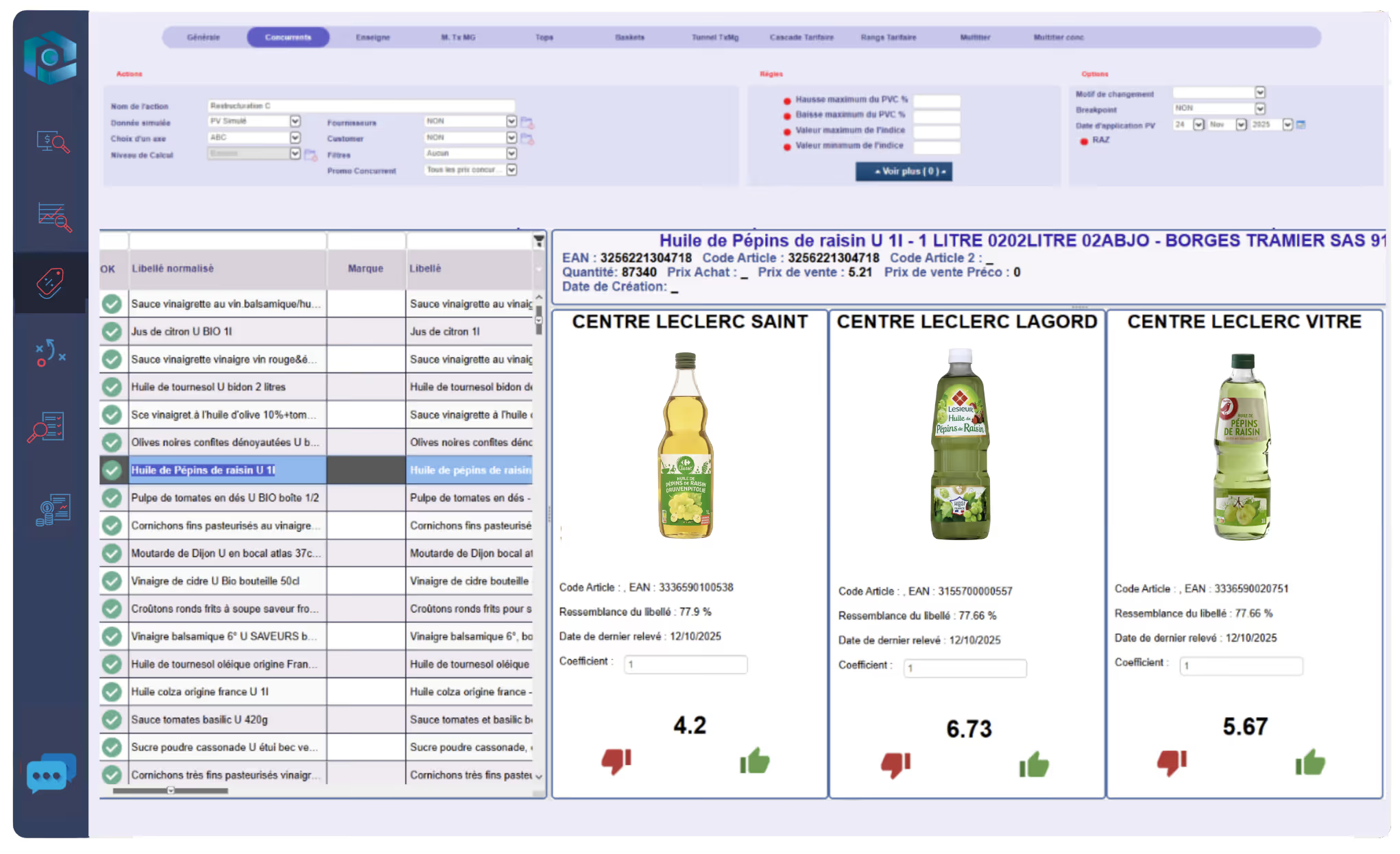















Issues
Your challenges business
Easily identify comparable products despite inconsistent descriptions and multiple reference systems
Maintain reliable and comprehensive competitive intelligence
Structure the product chain over time (new packaging, changes in product codes, innovations)
Managing the complexity of the three-pronged approach: National Brands (NB) / Private Label Brands (PLB) / First Prices (FPx)
Secure pricing decisions through relevant and audited comparisons
Drastically reduce the time spent on manual chaining

Smart association of non-comparable products
MPS relies on visual recognition and machine learning algorithms capable of identifying matches between products even when labels and attributes are incomplete or inconsistent.
The models automatically analyze:
- Product labels and descriptions
- Technical attributes (weight, size, capacity, recipe, composition)
- Categories and subcategories
- Brand and price positioning
- Price behavior history
The association is based on multiple criteria in order to obtain reliable, contextualized associations that can be used by pricing teams.
The result: a consolidated view of product equivalencies across brands, formats, and markets.

Automatic chaining of your products
MPS dynamically links your references to maintain continuity of analysis despite:
- Changes to item codes
- Packaging developments
- Range renovations
- Supplier substitutions
- Product innovations
Each product is linked to a logical chain that allows you to keep track of sales performance and price history.
You avoid breaks in analysis and ensure the temporal consistency of your indicators.

Cloning with competing products
MPS allows you to automatically create product clones between your assortment and that of your competitors in order to:
- Compare equivalent products of the same brand, or simply those with a different EAN.
- Identify pricing positioning gaps
- Identify opportunities for adjustment • Monitor competitive developments over time
Competitive cloning directly feeds into pricing analytics and simulation modules.
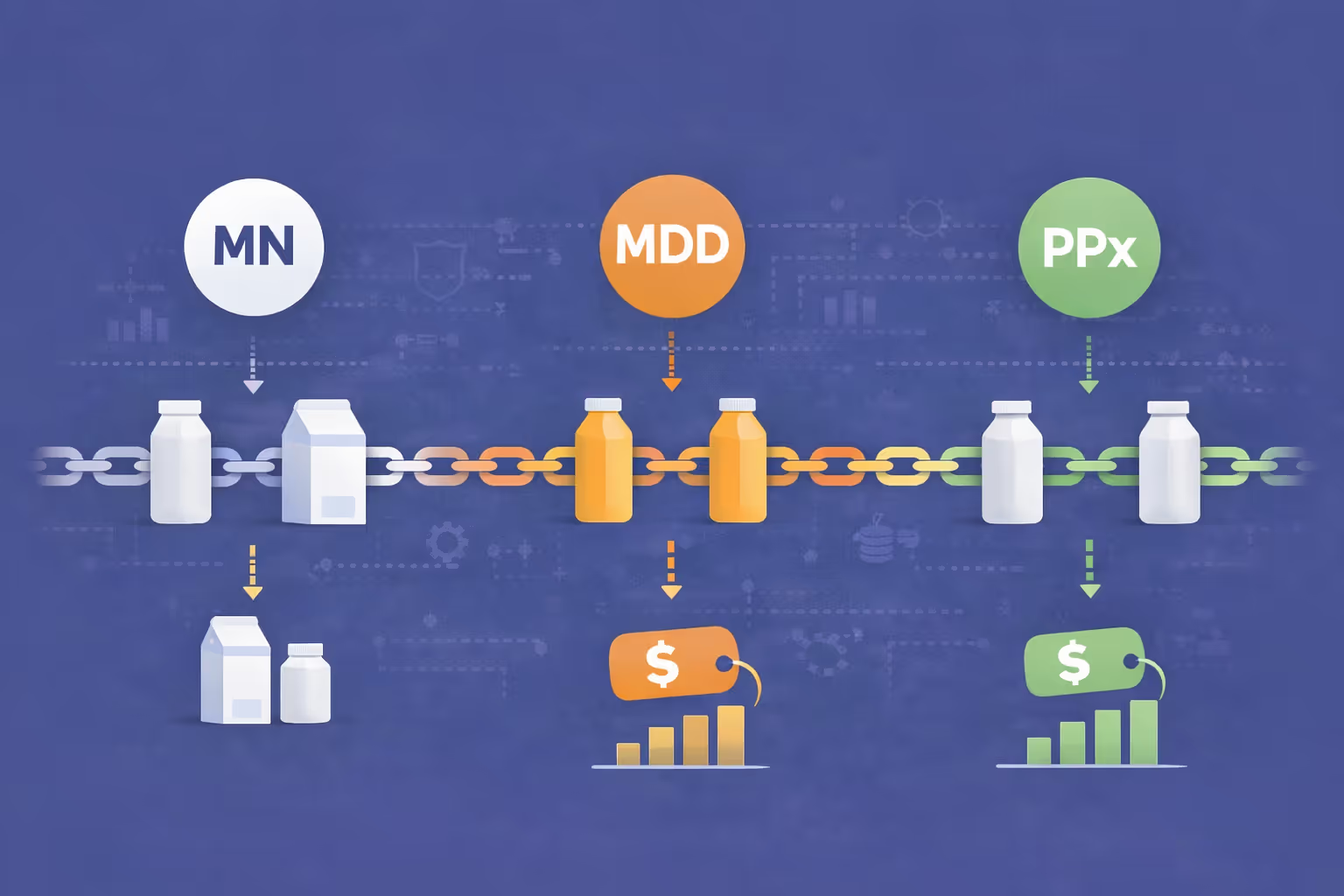
Chaining of the MN / MDD / PPx triptych
MPS structures relationships between:
- National Brands (NB)
- Private Label Brands (PLB)
- First Prizes (PPx)
AI identifies substitutable and comparable products based on their functional attributes and price positioning.
This modeling allows:
- Analyze cannibalization effects • Optimize pricing architectures
- To steer strategies for moving upmarket or defending prices
Key figures
Profits measurable
+90 %
reliability of competitive comparisons
-70 %
time spent on manual associations
+100 %
competitive coverage across strategic categories

Statistics and indicators of quality of associations
MPS incorporates advanced statistical tools to manage the quality of associations:
- Competitive coverage rate
- Correspondence reliability rate
- Number of active chained products
- Product volumes matched by category
- History of human validations
These indicators ensure complete control over the data used for pricing decisions.

Dynamic dashboard and operational management
The platform offers interactive dashboards that enable you to:
- View product matches
- Filter by category, store, brand, or geographic area
- Monitoring product line developments
- Identify unmatched products
- Prioritize validation actions
The pricing, purchasing, and data teams have a clear, shared, and actionable view of the product repository.

Visual recognition products
To go beyond the limitations of text labels and attributes, MPS incorporates AI-based image recognition capabilities.
The algorithms automatically analyze:
- Packaging and product design
- Distinctive shapes, colors, and visuals
- Variations in format and appearance
This approach is particularly effective when:
- Product descriptions are incomplete or inconsistent
- References differ between brands
- The products are visually similar but described differently.
Visual recognition enhances the reliability of associations and ensures competitive comparisons across complex categories (food, non-food, fresh produce, DIY, gardening, etc.).
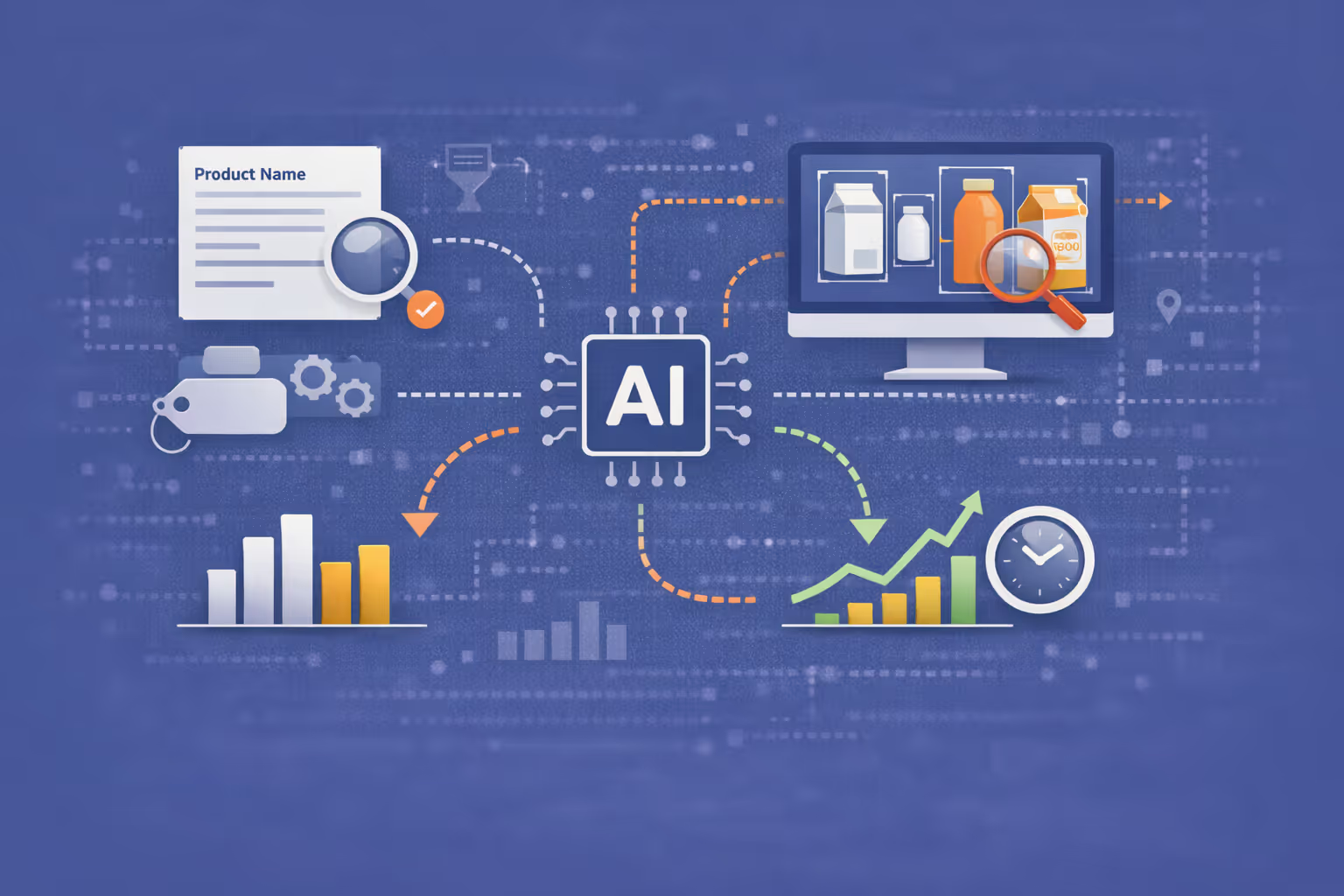
Associations multimodal (text + image + attributes)
MPS combines multiple sources of analysis in a single engine:
- Semantic analysis of product labels
- Technical and categorical attributes
- Visual recognition by image
- Price and behavior history
This multimodal technology enables:
- To reduce false positives and false negatives
- Identify substitutable products that are not strictly identical
- Improve overall competitive coverage
The models continuously learn from business validations in order to increase accuracy over time.

Advanced identification substitutes and purchasing behaviors
Visual similarity directly influences consumer perception and substitution mechanisms.
By integrating images into associations, MPS enables:
- Identify products that are truly competitive from the customer's perspective
- Anticipating cannibalization effects
- Better model interactions between MN, MDD, and PPx
- To enrich elasticity and pricing analyses
This approach improves the relevance of pricing decisions in highly competitive environments.
Solutions tailored to each pricing challenge
Why choose BOOPER ?

BOOPER integrates a price simulation engine (PSS) based on elasticity and AI to measure the impact of a pricing scenario on volumes, revenue, and margin. It combines historical data, forecasts, and business rules to manage multiple objectives under constraints and secure operational decisions.


MPS manages geo-pricing and price tiers. Prices are simulated and optimized according to elasticity levels, margin targets, and business constraints, ensuring global consistency, local differentiation, and multi-level performance management.


BOOPER manages assortments according to formats, zones, and channels, integrating packaging sizes, sales forecasts, and product life cycles. Margin simulations enable decisions to be made on whether to introduce or withdraw products based on economic performance and profitability targets.


BOOPER secures pricing decisions through structured governance based on explainable models, business rules, and complete traceability of simulations. Multi-level validations ensure strategic consistency, risk control, auditability, and control of margin and performance variances.


Customer testimonials
Our customers share their feedback
Discover how our customers leverage Booper's artificial intelligence to structure their pricing decisions, secure their margins, and accelerate their sales performance.
We have made our entire pricing decision-making process more reliable thanks to Booper. Teams now have a clear, shared view of price performance by category and by store, with recommendations backed up by data. The platform allows us to anticipate the impact of our choices on margins and justify our decisions to management with concrete, measurable indicators.

Pricing Department
Food Industry
The predictive scenarios offered by Booper have transformed the way we prepare promotional campaigns. We can compare several pricing scenarios before launch, measure their impact on volumes and profitability, and make more confident business decisions. This has enabled us to become more responsive while improving consistency between our offering strategy, price image, and economic performance.

Senior Category Manager
DIY sector
Booper has enabled us to industrialize our pricing approach without losing strategic control. Teams have access to shared tools for analyzing the competition, simulating decisions, and aligning field actions with business objectives. We have structured cross-functional governance that improves coordination between sales, marketing, and finance while generating tangible results in terms of margins.

Sales Management
Luxury sector
Frequently Asked Questions - BOOPER MPS - Product matching: Cloning and chaining
Product matching, or matching in certain situations, consists of automatically identifying equivalent products between different brands or ranges in order to compare their prices, performance, and competitive positioning on a consistent basis.
AI simultaneously analyzes labels, attributes, formats, brands, and price behaviors to detect similarities invisible to human analysis. It continuously learns from user validations to improve its accuracy. When available, AI also takes image recognition into account.
When there is no direct association by EAN, cloning takes over and links the retailer's products with those of its competitors; this applies to both private labels and national brands. The other type of complementary relationship is chaining: the retailer's products are grouped together to establish links in terms of hierarchy, coefficients, and historical models.
BOOPER identifies substitutable products based on their functional attributes and price positioning in order to structure MN/MDD/PPx chains and analyze the effects of cannibalization and upmarket positioning.
No, although recommendations are becoming increasingly intelligent and automatic, the association requires human validation in order to train the algorithms.
MPS uses product databases, descriptions, technical attributes, price histories, and competitive data. The richer the data, the more accurate the association proposal.
The gains come from reduced manual time, reliable price comparisons, improved business decisions, and overall competitive performance. The first benefits are usually seen in less than three months.