Price optimization solution
Manage your accurate pricing thanks to AI
MPS is pricing software that combines a business rules engine with predictive modeling using AI. It enables teams to define, simulate, and optimize their pricing decisions in line with their commercial strategy and financial objectives, without compromising their price image.















Issues
Your challenges business
Understanding the real impact of price variations on volumes and margins
Implement differentiated strategies (price image, margin, traffic, stock turnover)
Integrate local complexity (catchment areas, competition, store types)
Simulate the effects before marketing
Ensuring consistency and governance in decision-making


Engine business rules and automated scenarios
Users can define automated simulation rules that align with their pricing strategy:
- Alignment with competitor prices
- Impact of a war list
- Convergence toward a price that maximizes either quantity, margin, or revenue
- Etc.
These rules can be combined to build complex scenarios that integrate both strategic vision and operational constraints.

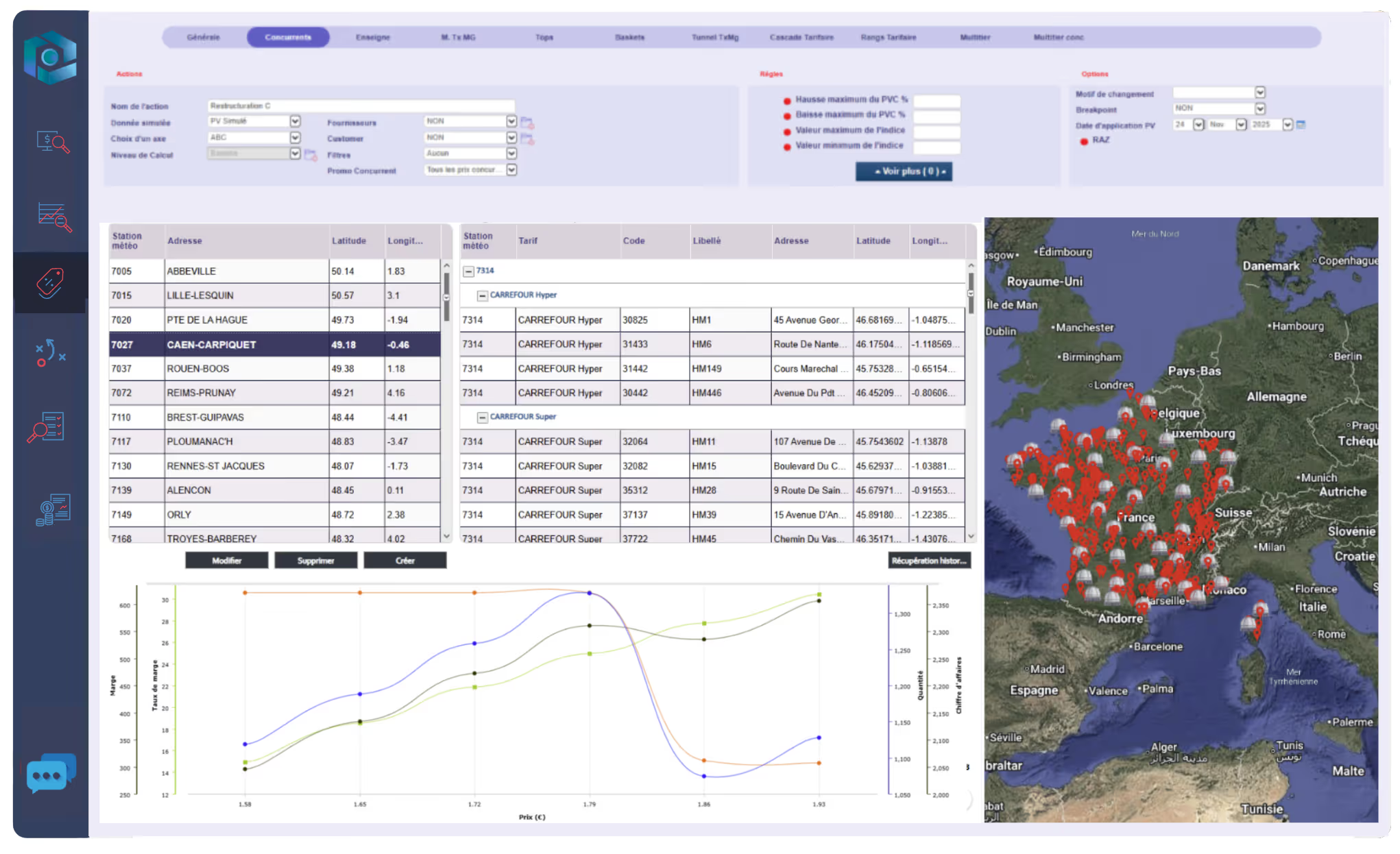
Competitive intelligence and strategy analysis market price
MPS incorporates an advanced competitor price monitoring and analysis solution that enables you to:
- Monitor market price trends
- Identify positioning gaps
- Analyze competing strategies by geographic area
- Feed simulations and price recommendations
Competition becomes an analytical lever integrated into the decision engine.

Advanced simulations and "What If" scenarios
The module allows different strategies to be tested before their actual deployment:
- Business simulations (based on your internal rules)
- Combinatorial simulations (crossing of several price assumptions)
- What If scenarios (increase, decrease, alignment, local differentiation)
- Continuous price optimization and re-optimization
Each scenario measures the projected impact on:
- The volumes
- Revenue
- The margin
- Profitability by product, department, store, or channel
Key figures
Profits measurable
+1 to +3 points
gross margin
-70 to -90%
price preparation time
90 %
pricing errors


AI simulation with rules and business constraints
BOOPER MPS will define three strategic prices that will maximize margins, revenue, or volume depending on the commercial ambition:
- Brand strategy
- Legal constraints
- Merchandising rules
- Minimum/maximum price
- Range consistency
You remain in control while benefiting from the computing power of AI.

Alerts intelligent and proactive management
MPS identifies and alerts users in the event of:
- Price variation: purchase, competitor price,
- Deviation from objectives: Significant margin deviation, inconsistency in product range
- Optimization opportunities detected by AI
Pricing becomes a proactive rather than reactive process.
Reporting and comparative analysis simulations
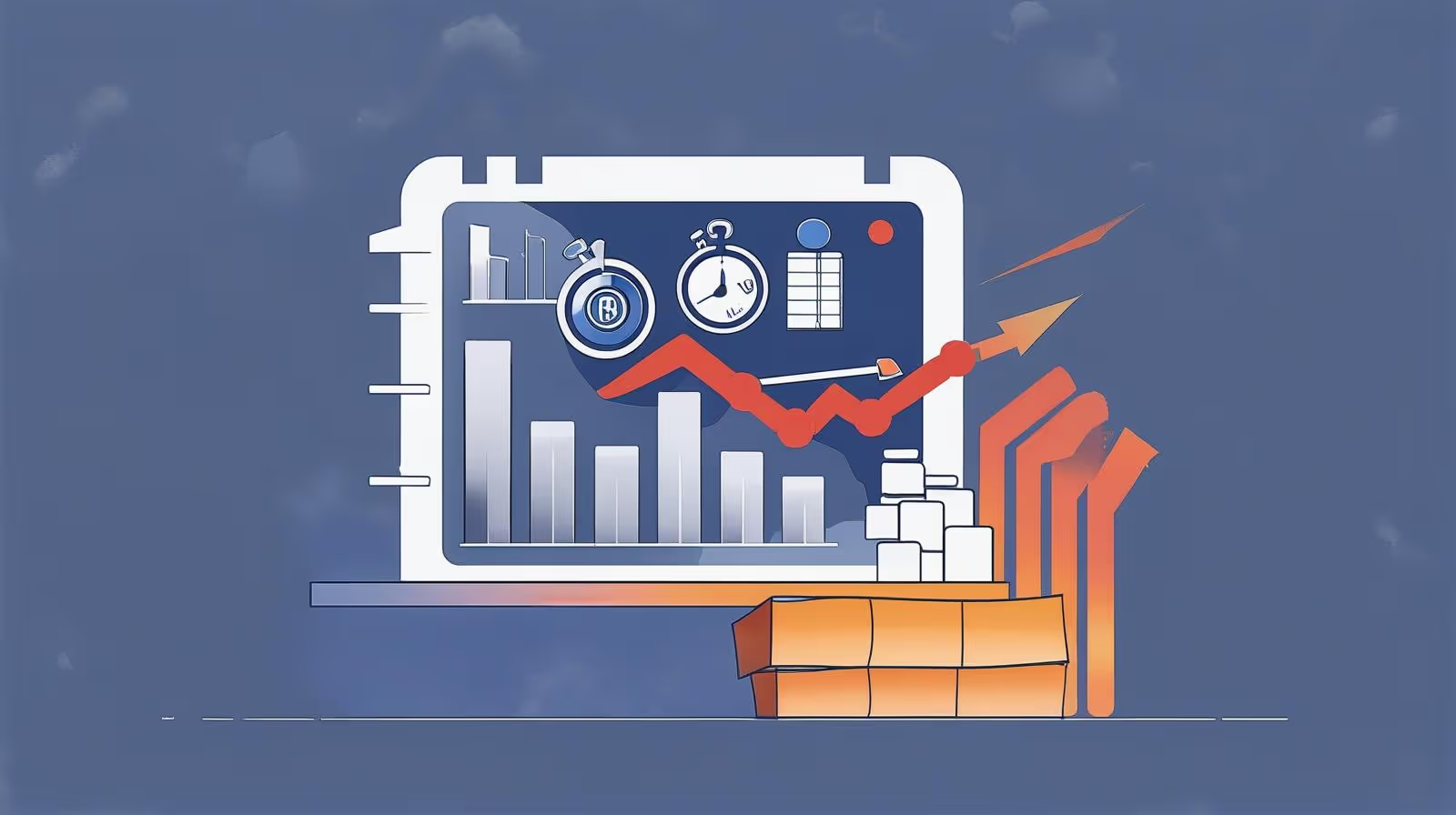
MPS offers advanced reporting tools:
- Creating custom reports
- Monitoring key performance indicators (KPI pricing)
- Comparison of performance between points of sale
- Analysis by department, category, and period
Teams have a clear, shared, and actionable view of pricing performance.
Solutions tailored to each pricing challenge
Why choose BOOPER ?

BOOPER integrates a price simulation engine (PSS) based on elasticity and AI to measure the impact of a pricing scenario on volumes, revenue, and margin. It combines historical data, forecasts, and business rules to manage multiple objectives under constraints and secure operational decisions.
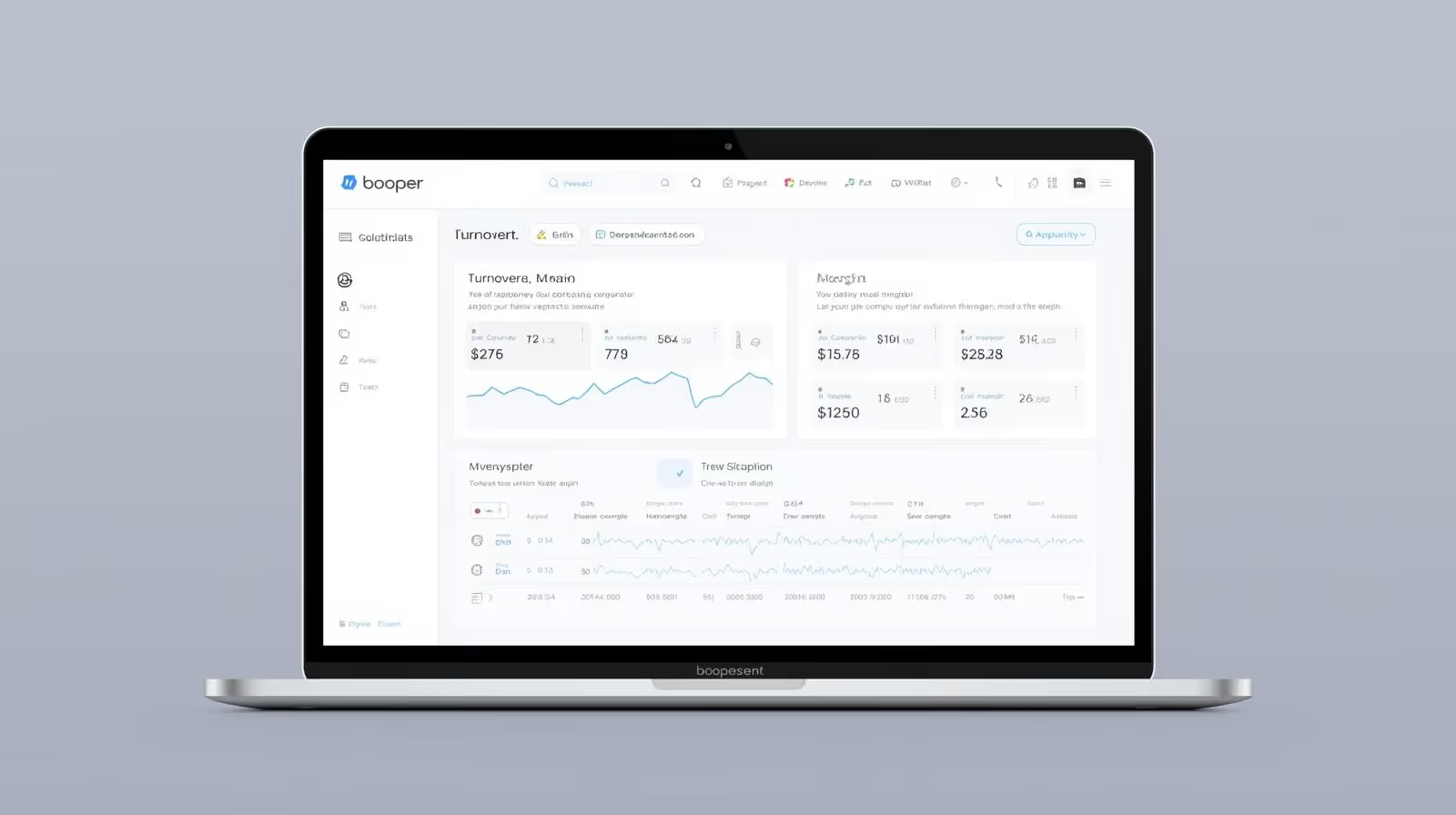

MPS manages geo-pricing and price tiers. Prices are simulated and optimized according to elasticity levels, margin targets, and business constraints, ensuring global consistency, local differentiation, and multi-level performance management.


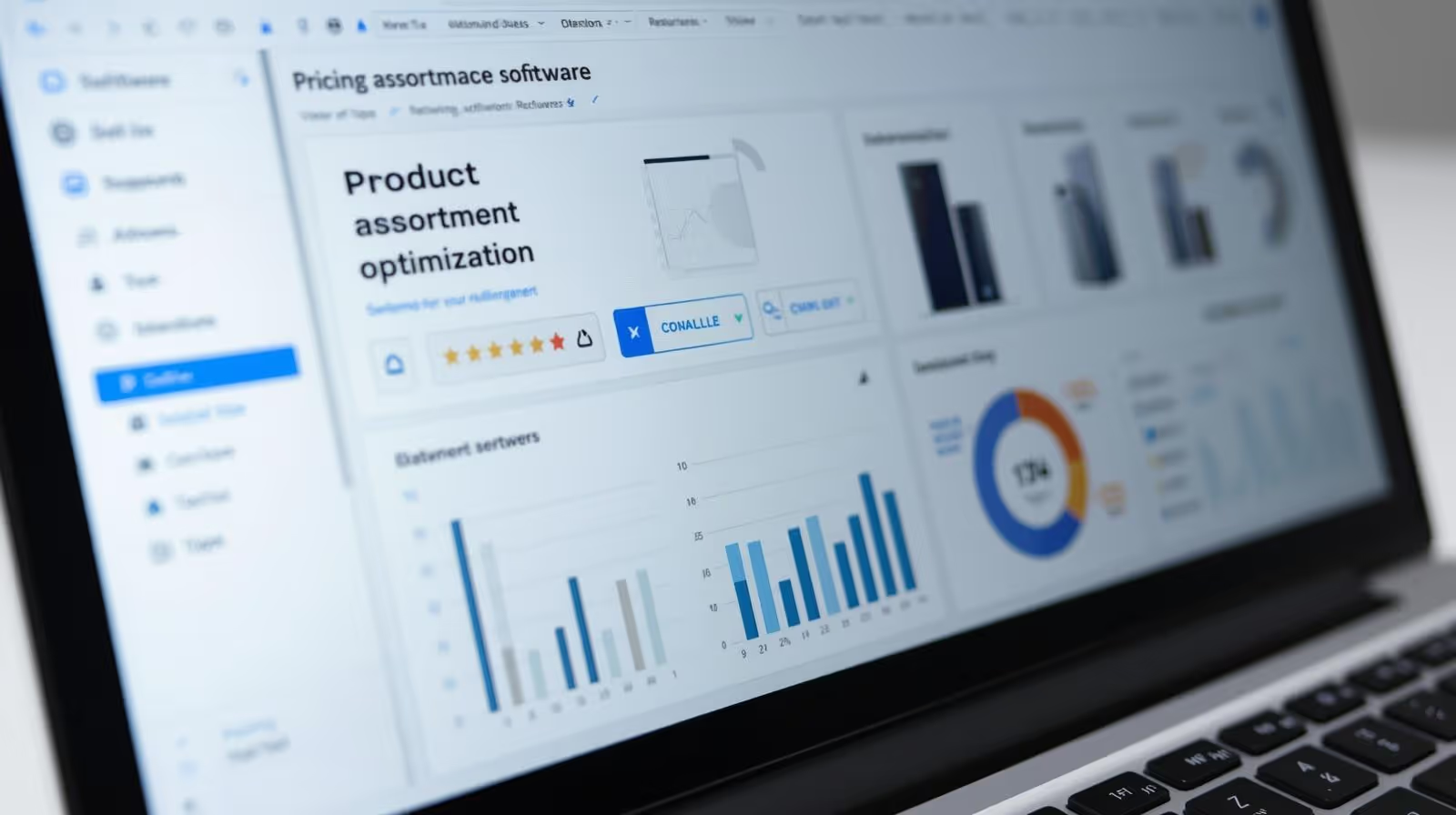
BOOPER manages assortments according to formats, zones, and channels, integrating packaging sizes, sales forecasts, and product life cycles. Margin simulations enable decisions to be made on whether to introduce or withdraw products based on economic performance and profitability targets.

BOOPER secures pricing decisions through structured governance based on explainable models, business rules, and complete traceability of simulations. Multi-level validations ensure strategic consistency, risk control, auditability, and control of margin and performance variances.


Customer testimonials
Our customers share their feedback
Discover how our customers leverage Booper's artificial intelligence to structure their pricing decisions, secure their margins, and accelerate their sales performance.
We have made our entire pricing decision-making process more reliable thanks to Booper. Teams now have a clear, shared view of price performance by category and by store, with recommendations backed up by data. The platform allows us to anticipate the impact of our choices on margins and justify our decisions to management with concrete, measurable indicators.

Pricing Department
Food Industry
The predictive scenarios offered by Booper have transformed the way we prepare promotional campaigns. We can compare several pricing scenarios before launch, measure their impact on volumes and profitability, and make more confident business decisions. This has enabled us to become more responsive while improving consistency between our offering strategy, price image, and economic performance.

Senior Category Manager
DIY sector
Booper has enabled us to industrialize our pricing approach without losing strategic control. Teams have access to shared tools for analyzing the competition, simulating decisions, and aligning field actions with business objectives. We have structured cross-functional governance that improves coordination between sales, marketing, and finance while generating tangible results in terms of margins.

Sales Management
Luxury sector
Frequently Asked Questions - BOOPER MPS - Pricing Analytics
Pricing Analytics brings together all statistical, econometric, and artificial intelligence methods used to measure the impact of prices on demand, margins, and commercial performance. It draws on sales histories, competitive data, customer signals, and contextual variables (seasonality, weather, catchment area) to produce actionable indicators: elasticity, cannibalization, threshold effects, and performance scenarios.
Pricing Analytics provides analytical insights (elasticity models, store segmentation, inter-product relationships), while Price Optimization transforms these analyses into operational recommendations for optimal prices according to a defined strategy (margin, volume, price image, inventory). BOOPER unifies these two dimensions in a single decision-making engine.
Dynamic pricing involves continuously adjusting prices based on various internal and external factors: changes in demand, inventory levels, seasonality, competitive positioning, price elasticity, margin targets, and commercial constraints. Unlike a static approach (one-off price review), dynamic pricing is based on business rule scenarios and optimization algorithms that enable companies to offer the "right price, at the right time, on the right product," while remaining aligned with the brand's commercial strategy and price image.
No, the solution works in the form of scenarios combining an unlimited number of business rules. Each customer can model their own constraints and decision-making logic:• margin thresholds,• rounding rules,• product hierarchies,• price positioning by universe or by brand,• promotional constraints,• rules for alignment or deviation from certain competitors. The scenario-based approach allows you to test several strategies in parallel (e.g., defensive vs. offensive strategy) and measure their impact before going live. This ensures flexibility, risk control, and consistency with your pricing policy.
Yes. The solution integrates with existing IT environments thanks to a Data Loader that can adapt to your current information flows (flat files, ERP exports, databases, APIs). The goal is not to transform your IT system, but to connect to it in a pragmatic way: • retrieval of necessary data (prices, costs, sales, inventory, repositories), • processing and optimization within the solution, • return of price recommendations to your business tools. This approach limits the impact on your IT organization and allows for gradual deployment, even in technically constrained contexts.
Yes, competitor data is not mandatory. When competitor data is missing or incomplete, the solution relies on: • sales history, • price sensitivity (elasticity), • costs and profitability targets, • product cycles and seasonality, • business expertise gained from comparable projects. This allows us to set prices that are consistent with the market while meeting your margin and volume targets. When competitive data becomes available, it can be integrated as an additional building block to refine scenarios and enhance the accuracy of recommendations.
Yes. BOOPER is designed for multi-store and multi-channel environments. It integrates geo-pricing, point-of-sale clustering, and local data mining to set differentiated prices by area while ensuring overall pricing strategy consistency. Some customers use it both at headquarters and at the point of sale to optimize pricing decisions and improve responsiveness to local competition.
Yes. The module enables ex-ante simulations based on your historical store and e-commerce data. You can compare several scenarios (price increases, competitive alignment, local strategy) and measure their projected impact on volumes, revenue, and margin before going live.
BOOPER structures the decision-making process through complete traceability of assumptions, simulations, and recommendations. Each decision is documented, shared between pricing, sales, and management teams, and validated according to defined workflows. Pricing becomes a measurable, auditable, and data-driven process.