Sales forecasting using AI
Anticipate demand and improve your decisions commercial opportunities thanks to AI
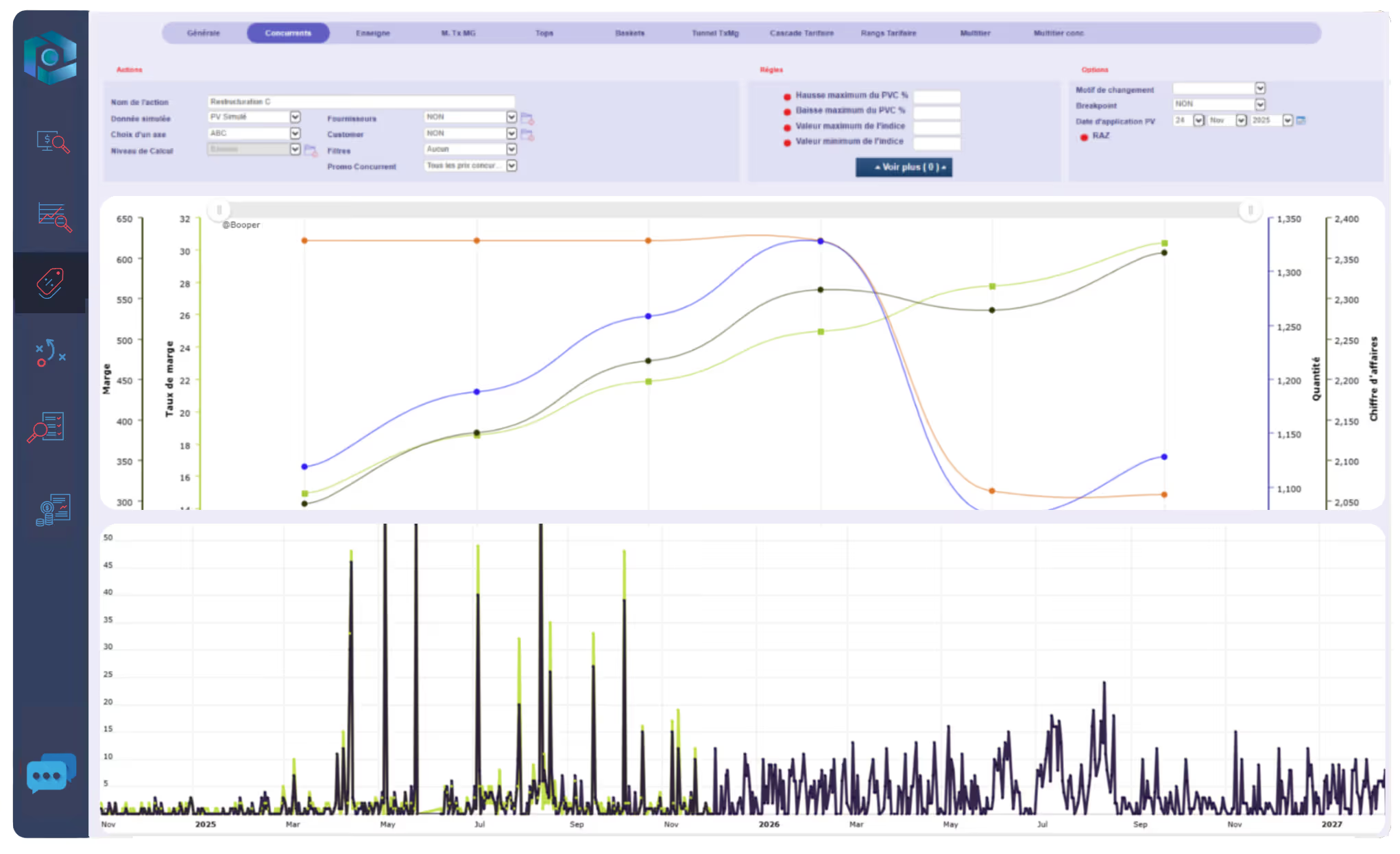
BOOPER MPS takes your strategy into account and anticipates your sales. You guide the scenarios and steer your decisions toward growth and profitability without compromising your price image. Reliable, explainable, and immediately actionable forecasts.















Issues
Your challenges business
Accurately forecast sales volumes despite market volatility
Integrate the impact of exogenous and endogenous factors
Optimize inventory and procurement in line with reality
Adapt strategies starting with the finest level: product and store
Simulate the impacts of business decisions before implementing them
Ensuring the reliability, traceability, and governance of forecasts

Forecast of the request AI-assisted
MPS models purchasing behavior using machine learning and deep learning algorithms capable of predicting:
- Sales by product, category, point of sale, and period
- The effects of seasonality and business cycles
- The impact of promotions and price variations
- All this, taking into account competition, trend reversals, and weak signals.
The models are continuously retrained to improve their accuracy over time.
Result: a reliable and dynamic view of future volumes to guide commercial and logistics activities.

Integration factors endogenous and exogenous
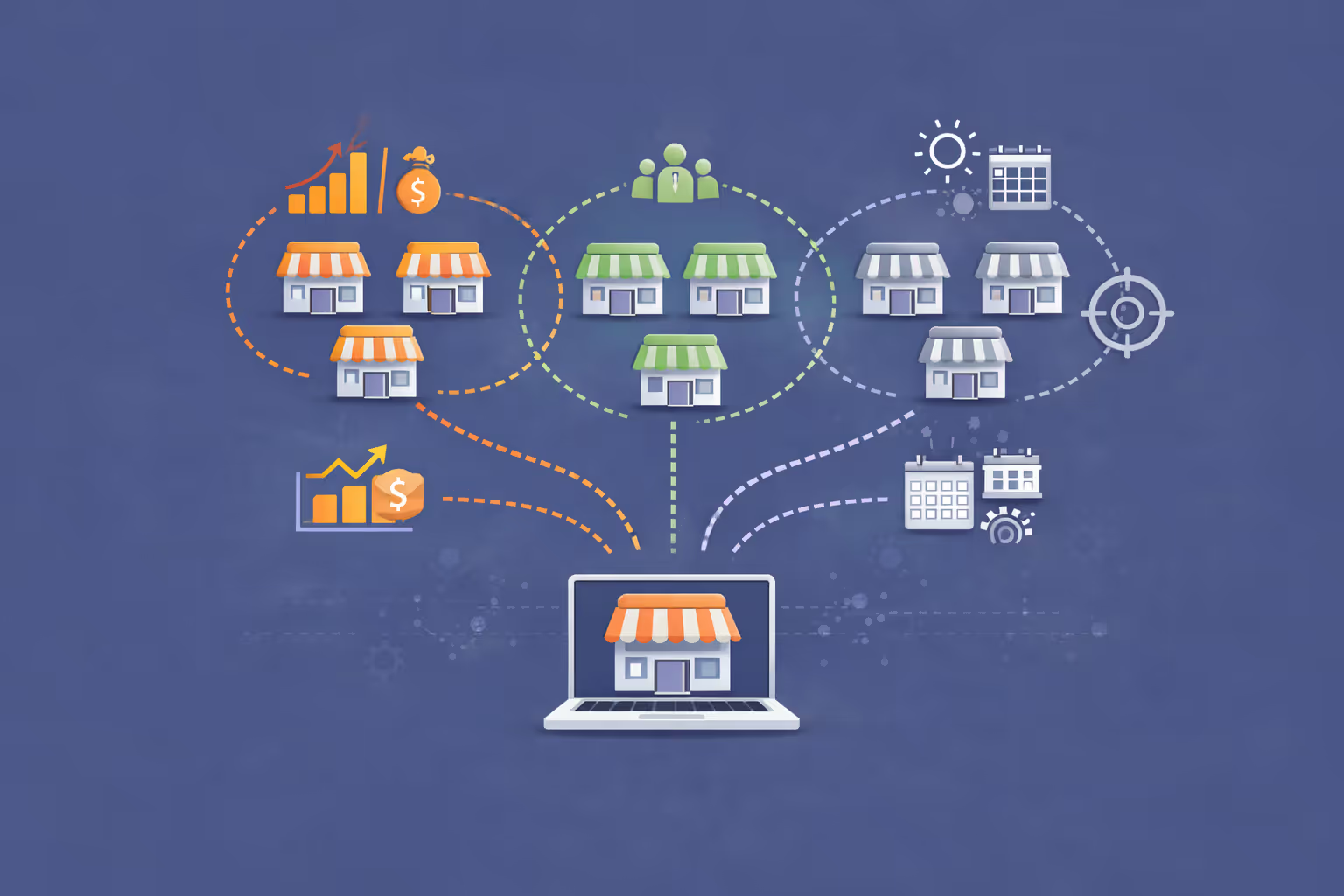
The performance of forecasts relies on the intelligent integration of multiple data sources:
- Interns
- Sales history
- Promotional plans
- Prices and price changes
- Store locations
- Etc.
- External:
- Competitive data
- Weather, sunshine
- Special days
- Exchange rates, inflation
- Etc.
BOOPER consolidates these factors to produce realistic and contextualized scenarios.

Key figures
Profits measurable
+2 to +5%
accuracy of sales forecasts
-20 to -30%
stock shortages
-15 to -25%
of excess stock
-50 %
time spent on manual forecasting

Simulations with rules
MPS allows different hypotheses to be tested before their actual deployment:
- Alignment with the competition
- Price or margin variation
- Price corridor
- Impact of chaining
- What If Scenarios
- Etc.
Each simulation measures the projected impact on:
- Competitive positioning
- Revenue
- The margin

Simulations assisted by AI
MPS combines:
- The rules of the trade
- Artificial intelligence
- Decision governance
Examples of built-in rules:
- Minimize expenses while maximizing positioning
- Maximize quantities in one category and margins in another
You retain control over your budget and strategy while benefiting from the power of AI.
Reporting and comparative analysis performance
The module offers advanced management tools:
- Standard and advanced dashboards
- Monitoring of forecast KPIs (accuracy, bias, deviations)
- Comparisons between stores, regions, and categories
- Competitor analysis
- Export for finance, supply chain, and senior management
Teams have a clear, shared, and actionable vision of future demand.
Solutions tailored to each pricing challenge
Why choose BOOPER ?

BOOPER integrates a price simulation engine (PSS) based on elasticity and AI to measure the impact of a pricing scenario on volumes, revenue, and margin. It combines historical data, forecasts, and business rules to manage multiple objectives under constraints and secure operational decisions.
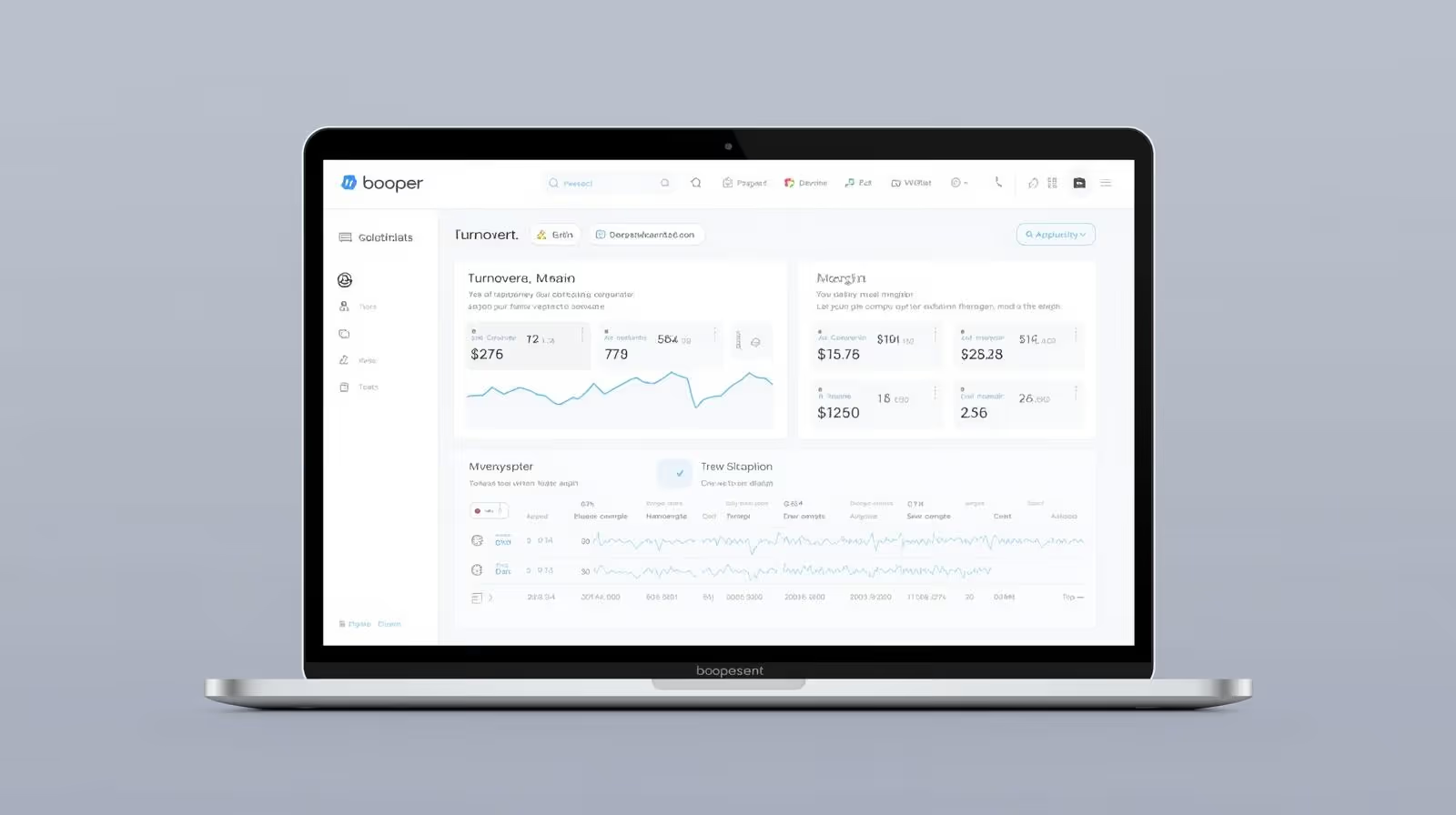

MPS manages geo-pricing and price tiers. Prices are simulated and optimized according to elasticity levels, margin targets, and business constraints, ensuring global consistency, local differentiation, and multi-level performance management.


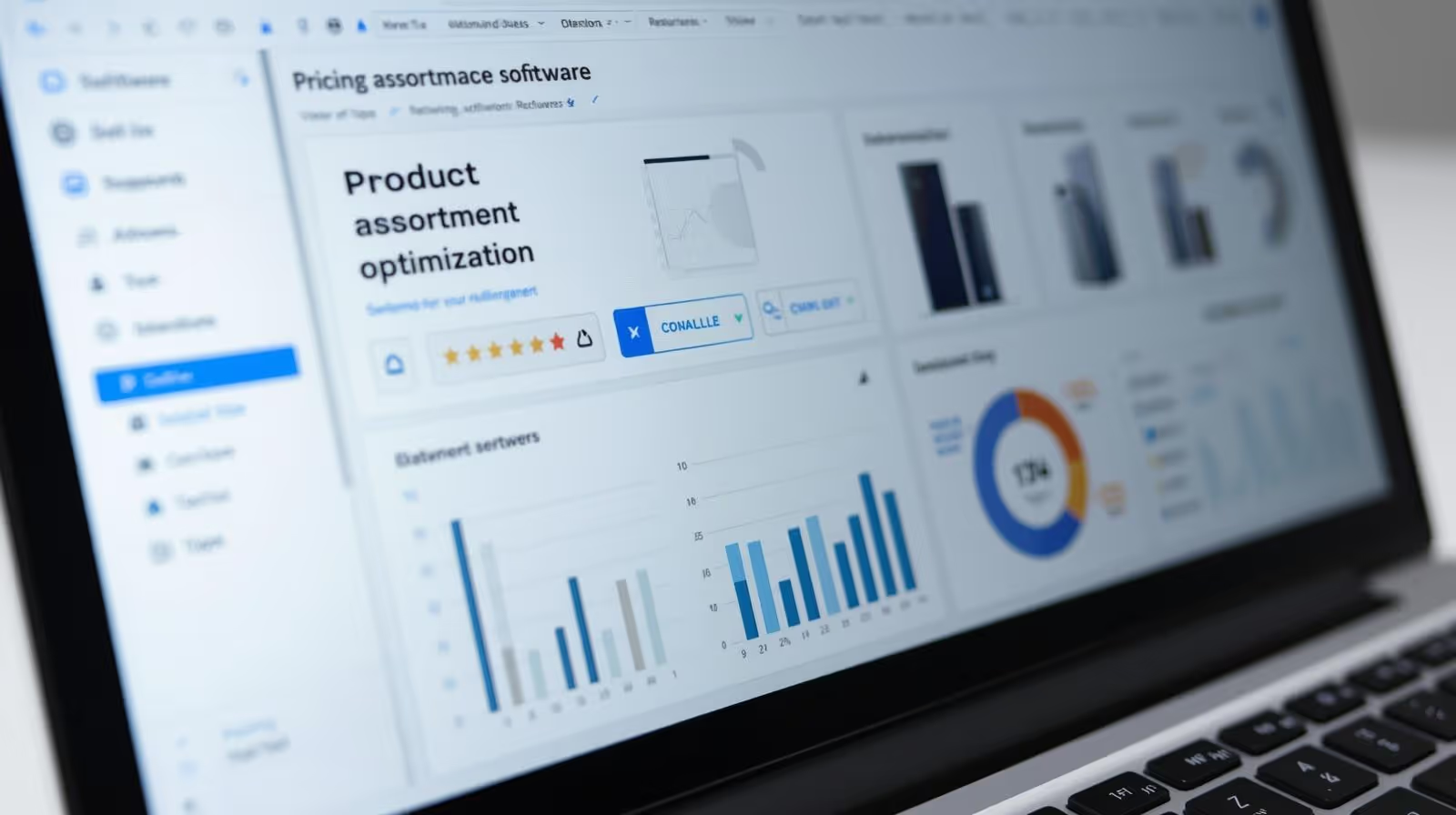
BOOPER manages assortments according to formats, zones, and channels, integrating packaging sizes, sales forecasts, and product life cycles. Margin simulations enable decisions to be made on whether to introduce or withdraw products based on economic performance and profitability targets.

BOOPER secures pricing decisions through structured governance based on explainable models, business rules, and complete traceability of simulations. Multi-level validations ensure strategic consistency, risk control, auditability, and control of margin and performance variances.


Customer testimonials
Our customers share their feedback
Discover how our customers leverage Booper's artificial intelligence to structure their pricing decisions, secure their margins, and accelerate their sales performance.
We have made our entire pricing decision-making process more reliable thanks to Booper. Teams now have a clear, shared view of price performance by category and by store, with recommendations backed up by data. The platform allows us to anticipate the impact of our choices on margins and justify our decisions to management with concrete, measurable indicators.

Pricing Department
Food Industry
The predictive scenarios offered by Booper have transformed the way we prepare promotional campaigns. We can compare several pricing scenarios before launch, measure their impact on volumes and profitability, and make more confident business decisions. This has enabled us to become more responsive while improving consistency between our offering strategy, price image, and economic performance.

Senior Category Manager
DIY sector
Booper has enabled us to industrialize our pricing approach without losing strategic control. Teams have access to shared tools for analyzing the competition, simulating decisions, and aligning field actions with business objectives. We have structured cross-functional governance that improves coordination between sales, marketing, and finance while generating tangible results in terms of margins.

Sales Management
Luxury sector
Frequently Asked Questions - BOOPER MPS - Sales forecasting using AI
AI analyzes large volumes of historical and contextual data to identify patterns that are invisible to human analysis. For example, it takes into account seasonality, promotions, prices, weather, and competition to produce dynamic and continuously adjusted forecasts.
MPS primarily uses historical sales, prices, promotions, commercial calendars, store data, and external drivers (weather, events, competition). The richer the data, the more accurate the models. We recommend a minimum of one year of historical data.
Traditional methods rely on averages and past trends. Machine learning integrates hundreds of variables simultaneously, detects non-linear relationships, and automatically adapts to changes in consumer behavior.
By more accurately anticipating future demand, MPS makes it possible to adjust order volumes, reduce shortages and overstocking, improve service levels, and limit the financial immobilization associated with inventory.
Yes. With the AI-assisted simulator, users can test different business scenarios (promotions, price variations, changes in product range) and measure their projected impact on volumes, revenue, and margins.
BOOPER projects show a rapid ROI thanks to reduced investment in pricing, increased volumes, inventory optimization, reduced time spent on manual forecasting, and overall improvement in price image. The first gains are seen immediately.
Yes. MPS is designed for large retail accounts with multi-country, multi-store, multi-category management and centralized governance while maintaining local flexibility.
Yes. MPS is also designed to be adopted by simpler organizations. The vocabulary and indicators remain those of the client. The quality of the algorithms is the same as in larger structures.