Implement a pricing tool: Methodology.

Fabrice Decroo
Director of Consulting
April 16, 2026
The success of a pricing project depends not only on the tool, but on a rigorous methodology that combines data quality with team buy-in. This structured approach allows you to move away from risky manual management and implement automated rules, thereby ensuring long-term profitability and commercial consistency. Talk to a pricing expert (Booper demo).
Are your margins quietly eroding due to outdated manual processes and haphazard pricing management handled in Excel spreadsheets that have spiraled out of control?
To halt this erosion of value, this article outlines the exact methodology for implementing a high-performance pricing tool like BOOPER, guiding you from strategic planning through to go-live. Discover how to structure your governance, clean your data, and automate your business rules to transform your profitability in the long term and ensure every sales decision made by your teams is sound.
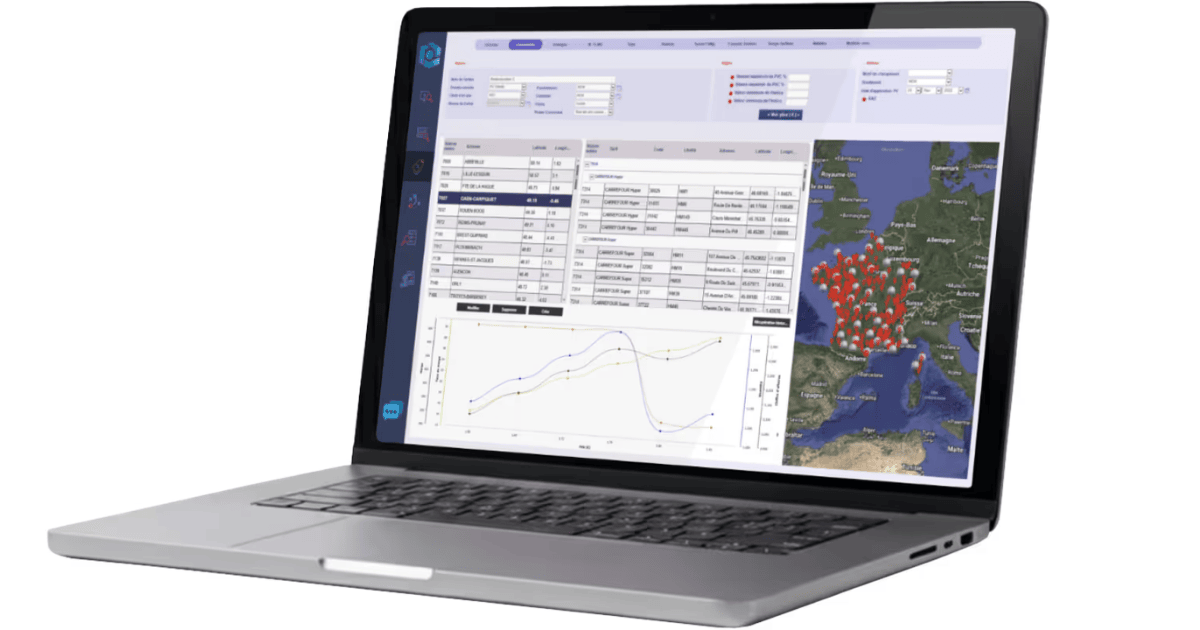
Setting up a pricing project with a tool like Booper: from concept to implementation
Are you seeing your margins erode without any clear explanation? That’s a classic warning sign. It’s time to streamline your approach and implement a pricing strategy to stem the bleeding and secure your future profitability.
Purpose of the article
This guide details every critical step in deploying a high-performance pricing tool. We cover everything from the initial scoping and data preparation to the final adoption by your teams. The goal is to move from risky, manual chaos to precise, industrial-scale management.
This article is aimed directly at decision-makers looking to boost their margins quickly and efficiently. We’ll explore how a solution like Booper can facilitate this necessary transition. The focus remains on operational efficiency and profitability.
However, the tool alone isn't enough, because strategy must come before technology. Successful implementation depends above all on very clear business objectives.
This approach ensures long-term success for your business. Follow these steps to boost your revenue.
When a pricing project becomes a priority (and when a tool is needed)
Before we get into the technical details, let’s identify the warning signs that indicate your current system is overloaded.
Symptoms: eroding margins, uncontrolled discounts, inconsistencies
You’re experiencing an invisible decline in profitability due to excessive discounts. Sales representatives sometimes grant discounts inconsistently, which has a significant negative impact on your bottom line. Imagine offering different prices to two similar customers: these inconsistencies undermine the credibility of your sales pitch.
Your profit margin is shrinking out of control. You need to take action before the decline becomes irreversible.
The Limitations of Excel: Traceability, Collaboration, Speed, and Errors
Let’s be honest about how fragile Excel is. A single formula error can throw off thousands of quotes, turning collaboration into a nightmare of outdated versions. What’s more, there’s no record of past decisions: we can’t tell who approved what.
Excel slows you down, while your competitors are already automating their processes to gain an edge.
Typical scenarios where a tool adds value (B2B/B2C)
Managing volatile markets requires more than just a spreadsheet. In B2B, Booper centralizes these business rules to help you implement a pricing strategy and manage complex contracts. Automation becomes essential as soon as you encounter these factors of complexity:
- Catalogs featuring over 1,000 items
- Frequent changes in costs
- Decentralized sales teams
The tool then becomes the driving force behind your agility and makes life easier for your teams.
Step 1 — Define the project (objective, scope, KPIs, sponsor)
Once the need has been confirmed, the first step is to lay a solid foundation so we don’t have to fly by the seat of our pants.
Define the baseline (margin, discount leakage, price realization, win rate)
Before implementing a pricing tool, you need to know where the money is going. Calculate your actual margin and track revenue leaks. "Price realization" is your litmus test: it reveals the stark gap between the target price and what actually ends up in the bank. Without a baseline, it’s impossible to prove success. Quantify your current losses.
Set realistic and measurable goals
Set a clear goal, such as a 1% increase in gross margin. Avoid vague promises and focus on tangible metrics. These objectives will guide every technical decision. Involve senior management in approving these figures: a strong sponsor ensures that resources will be available. Be ambitious, but keep your feet on the ground. Success is built step by step.
Define the scope (products, segments, countries, channels)
Carefully select specific product lines or geographic regions. Avoid trying to tackle everything at once to prevent becoming overwhelmed. A narrow scope makes initial oversight easier. Identify the relevant channels, such as e-commerce, as each has its own specific rules. A clearly defined scope prevents the project from veering off course. Focus your efforts where the impact is greatest.
Step 2 — Assess the current state (processes, rules, organization)
Now that the framework is in place, we need to understand how pricing decisions are actually made in practice.
Map the current pricing process (from request to final price)
Track the exact path of a request, from the buyer to the sales representative. Identify every person involved and every Excel file used during this process. This diagram often reveals unnecessary steps that slow everything down.
Next, document the unwritten rules governing current discounts. Often, these rules aren’t written down anywhere, but are followed everywhere out of habit.
Visualize the workflow to identify bottlenecks. A clear map drastically simplifies the future automation process for implementing a pricing tool project.
Identify areas of friction (exceptions, validation issues, slow performance)
Identify the points where the process grinds to a halt while waiting for a signature. Too many exceptions unnecessarily burden managers. These bottlenecks seriously hinder the sales team’s ability to respond quickly to customers.
Ask your field teams about the challenges they face on a daily basis. Their feedback is essential for designing a tool that is truly useful and widely adopted.
Eliminate steps that don't add value. Operational efficiency is the primary benefit expected from Booper.
Aligning Pricing, Sales, and Finance (Governance & RACI)
Clearly define who makes decisions, who implements them, and who monitors pricing. A RACI matrix helpsprevent toxic power struggles between departments. Finance wants profit margins; sales wants volume. Find the right balance.
Step 3 — Prepare the data (ERP/CRM/BI) and ensure data quality
Let’s be clear: without reliable data, even the most sophisticated algorithm will fail. It’s time to do a thorough cleanup.
What data is essential (transactions, costs, catalog, customers)?
To implement an effective pricing tool, you need to gather your complete sales history and accurate cost of goods sold data. Your customer data must include current segmentation and actual purchase volumes to feed the models.
If available, incorporate competitor data. It allows youto fine-tune your market positioning with surgical precision.
Data is Booper's raw fuel. Be meticulous about this initial inventory.
Data Cleaning & Quality Standards (Standards, Mapping, Data Dictionary)
Eliminate duplicates and correct data entry errors lingering in your ERP system. A rigorous data dictionary ensures that everyone is finally on the same page. Quality always trumps raw quantity.
Set up automated cleanup scripts to save valuable time. Clean data ensures accurate pricing recommendations.
"Garbage in, garbage out." Never let errors cloud your strategic decisions.
Defining ownership: Who is responsible for what?
Designate business unit managers to update costs and customer records. IT manages the infrastructure, but the business unit ensures the accuracy of the figures. This responsibility must be clear and long-term.
Schedule regular database audits. This prevents quality from gradually deteriorating after launch.
Data is dynamic and ever-changing. Appoint custodians to ensure its ongoing reliability.
Step 4 — Model the pricing strategy (rules and safeguards)
Now that the data is ready, let’s move on to the heart of the matter: defining your business rules.
Customer/Product/Channel Segmentation
To implement an effective pricing strategy, group your customers by purchasing behavior and your products by strategic value. Detailed segmentation allows youto apply differentiated and tailored pricing. This is the foundation of smart pricing.
Use criteria such as volume, frequency, or industry. Each group should have a dedicated pricing strategy.
Don’t treat everyone the same. Segmentation reveals opportunities for profit.
Define price corridors and a discount policy
Set minimum and maximum prices for each product category. This discount policy provides sales representatives with some flexibility without completely restricting their autonomy. Price ranges ensure consistency in pricing.
Automate the calculation of discounts based on the customer's profile. This drastically reduces the time spent on face-to-face negotiations.
Set clear and fair boundaries. Your profitability depends on this strict framework.
Establish rules for exceptions (thresholds, justification, traceability)
Establish protocols for cases that fall outside standard procedures. Every exception must be justified by a valid and documented business reason. Traceability then becomes your greatest asset.
Set alert thresholds that trigger immediate manual verification. This protects your margins on large contracts.
The exception should not become the rule. Keep a record of every exception.
Step 5 — Set up workflows and governance in the tool
The strategy has been defined, but it’s worthless without execution. Now we need to implement it in Booper so thatit becomes an automated operational reality.
Approval workflows (who approves, at what threshold, within what timeframe)
Set up automatic approval workflows directly within the pricing tool. A manager receives a notification only if the proposed price exceeds their approval limits, which greatly streamlines daily sales operations.
Set strict response deadlines to avoid holding up transactions. Speed of execution remains a major competitive advantage.
Automate routine tasks. Reserve human intelligence for complex strategic decisions.
Permissions, roles, audit trail (decision tracking)
Assign specific permissions to each user based on their position in the hierarchy.The audit trail records every price change to ensure complete transparency, which is an essential safeguard for internal security.
Ensure that sensitive data is accessible only to authorized individuals. This safeguards the confidentiality of margins.
Who did what? You’ll finally get the exact answer with just one click.
Alerts and checks (non-policy-compliant deals, margins at risk)
Enable real-time notifications for sales with insufficient margins. These alerts allow you to take corrective action before the final signature; the system acts as a safeguard.
Monitor price deviation indicators using dynamic dashboards. You can immediately identify problem areas.
Don't let bad deals slip by anymore. This tool keeps an eye on your profits 24/7.
Step 6 — Conduct a proof of concept (POC) before rolling out the initiative
Before we go full steam ahead, let’s test the engine on a closed circuit to validate our assumptions without breaking anything.
Select a pilot scope (segment or product line)
Select a specific business unit or product family for the test. This scope should be broad enough to be meaningful, but narrow enough to remain manageable, while avoiding atypical areas.
Enlist volunteer users to help set up a pricing tool project. Their enthusiasm will make it easier for other teams to adopt the tool in the future.
Start small, learn fast. The pilot program significantly reduces the risk of overall rejection.
Define success criteria (go/no-go) and metrics
Set clear metrics to validate the completion of the pilot phase, such as improved margins and time saved. This concrete evidence will reassure skeptics.
Assess how easy it is for sales representatives to use the Booper interface. The tool must be adopted without significant friction to ensure its success.
Be ruthless when it comes to results. If the pilot fails, adjust the strategy before continuing.
Adjust policies and processes before global deployment
Use driver feedback to refine the price ranges. Sometimes, on-the-ground realities require adjustments to the approval thresholds.
Simplify workflows that testers have found too complex. Agility means being able to pivot quickly to make the user experience more seamless.
Perfection doesn't happen overnight. Keep refining until you have a smooth and robust system.
Step 7 — Change Management and Adoption (the real key to success)
Even the best tool in the world is useless if no one uses it; people are the key to your success. If your teams aren't on board, you're wasting time.
Train the teams (sales, pricing, finance) and clarify the benefits
Don’t make it feel like a classroom lecture. Organize hands-on training sessions tailored to each role. Show salespeople how the tool helps them close more profitable deals. The individual benefit must be clear.
- Hands-on workshops
- Follow-up webinars
- Q&A sessions
Training isn't an option. It's the most cost-effective investment for establishing a sustainable pricing strategy.
Create documentation (playbook, FAQ, runbook)
Creating short, visual guides to help users get started is essential. A comprehensive FAQ section allows users to find answers to common questions without having to contact support.
We also need to create a "runbook" for the IT team to handle technical maintenance. Each procedure must be clear.
Avoid 200-page manuals. Opt for concise, to-the-point reference sheets instead.
Communication: Who announces what, when, and how?
Scheduling regular updates to maintain interest in the project is essential. The sponsor must convey the message of transformation with conviction.
Be sure to celebrate the first successes achieved with Booper. This helps build credibility with the teams.
Communicate the "why" before the "how." Give meaning to the change.
Step 8 — Go-live, monitoring, and continuous improvement
The big day has arrived, but the launch is just the beginning of a cycle of continuous optimization.
Launch Checklist (testing, permissions, KPIs, support)
Check data integrity and user access before opening the valves. Make sure support is ready to step in immediately. This thorough approach prevents stressful false starts.
Make sure your dashboards display the right KPIs right from the start. You need to see real-time activity so you can respond quickly.
Don't overlook any technical details. A smooth launch builds lasting trust.
Post-go-live schedule: weekly monitoring, monthly review, quarterly strategy
Establish routines for reviewing weekly performance. Monthly reviews address tactical deviations, while strategy is reassessed every quarter. That’s the rhythm of success.
Take advantage of these meetings to share best practices across regions. Collective intelligence boosts overall results.
Pricing is like a muscle: work on it regularly to stay sharp.
Iteration cycle: new rules, simulations, iterations
Test new hypotheses using simulations to safeguard your margins. Learn from each cycle to refine your rules and better implement a pricing strategy. Continuous improvement is what sets leaders apart.
Incorporate market feedback to adjust your positioning in real time. Your agility becomes your greatest strength.
Never stand still. The market is changing, and your pricing needs to keep up.
Real-world examples of use cases (using a tool like Booper)
Standardize discounts and reduce discount leakage
Imagine standardizing your discounts across the board. Thanks to strict price corridors, unjustified discounts disappear instantly. Your margin automatically increases without driving customers away.
Analyze the data to identify salespeople who are too generous. Targeted coaching can quickly get things back on track, backed by facts.
Every euro you save goes straight into your pocket. It’s simple math.
Simulate a price increase and assess the impact on margins and volume
Test the impact of a 3% price increase on your sales before implementing it. Implementing a pricing tool like Booper allows you to predict how sales volumes will react based on historical price elasticity.
Avoid making decisions based on intuition. Numbers speak louder than subjective impressions.
Back up your price increases with reliable data. Don’t leave your future to chance.
Set up alerts for high-risk deals and speed up approvals
The system automatically detects an irregular contract. An alert is sent to the CFO for a quick review. The approval process is reduced from several days to just a few hours.
You provide your key clients with a decisive level of responsiveness. Response speed is often the key factor in closing a deal.
Protect yourself from critical errors. This tool is your safety net.
Summary table: steps, deliverables, and responsible parties
Here is a visual summary to help you keep track of your pricing transformation project.
Key deliverables by phase (baseline, RACI matrix, policy updates, dashboards, runbook)
This table summarizes the essential documents that must be produced for each phase. It serves as a practical roadmap for the project manager. Each deliverable confirms that a stage has been successfully completed. Be sure not to skip these steps; the risk of failure is very real.
In short, a clear structure prevents teams from becoming scattered. This is an essential prerequisite for implementing a robust pricing tool.
To take your project to the next level, feel free to Talk to a pricing expert (Booper demo).
Common mistakes (and how to avoid them)
Finally, let’s learn from others’ mistakes to chart your own path to success.
Starting without a baseline or clear goals
Trying to implement a pricing tool project without knowing what you want to improve is a classic mistake. Without a baseline for comparison, you’ll never be able to justify the investment. Set your target metrics from day one.
Clarity leads to success. Ambiguity leads to budget problems.
Underestimating data quality
Thinking that the tool will magically "fix" your messy data is a fallacy. Cleaning up is a thankless but essential step for achieving results. Don't hesitate to devote the necessary time to it.
Clean data is your greatest asset. Don’t compromise on this.
Deploying without governance or business buy-in
Imposing a system without listening to those who use it is a surefire recipe for rejection. Governance must be accepted and understood at every level. Ensuring its adoption is a constant struggle.
Keep users in the loop. Their buy-in will make all the difference.
Trying to do everything at once (no pilot)
The "Big Bang" syndrome often spells disaster for complex projects. A pilot project allows you to test, refine, and demonstrate value quickly. Take it one step at a time to stay in control.
Patience is a virtue in pricing. Build a solid foundation.
FAQ (6 questions)
Here are the key points for setting up a pricing tool project and addressing any remaining concerns you may have.
Articles similar

Building a high-performing pricing team requires adopting a hybrid model that combines centralized strategy with local agility. This transition replaces intuition with data-driven decisions, guided by specialized roles and strict governance.
This proactive management directly improves financial performance, enabling companies to aim for an increase in profitability of between 100 and 500 basis points.

In response to the radical price transparency of 2026, the retail sector is adopting automated management. This strategy protects margins against inflation by ensuring immediate responsiveness across all channels.
A high-performance tool guarantees a return on investment in less than six months, making pricing a cornerstone of net profitability.

Product matching is the foundation of competitive monitoring because it prevents the comparison of non-equivalent products. Reliable product matching safeguards margins by basing repricing on real-time, multi-source data.
Key finding: According to the Diamart study, 50% of French retailers still consider this challenge to be unresolved.