










Industry · Food Service

Restaurant Pricing: Set the Right Price Per Dish, Per Channel, and Per Location

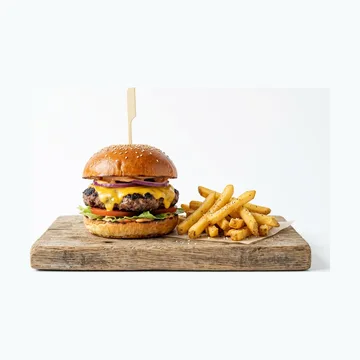
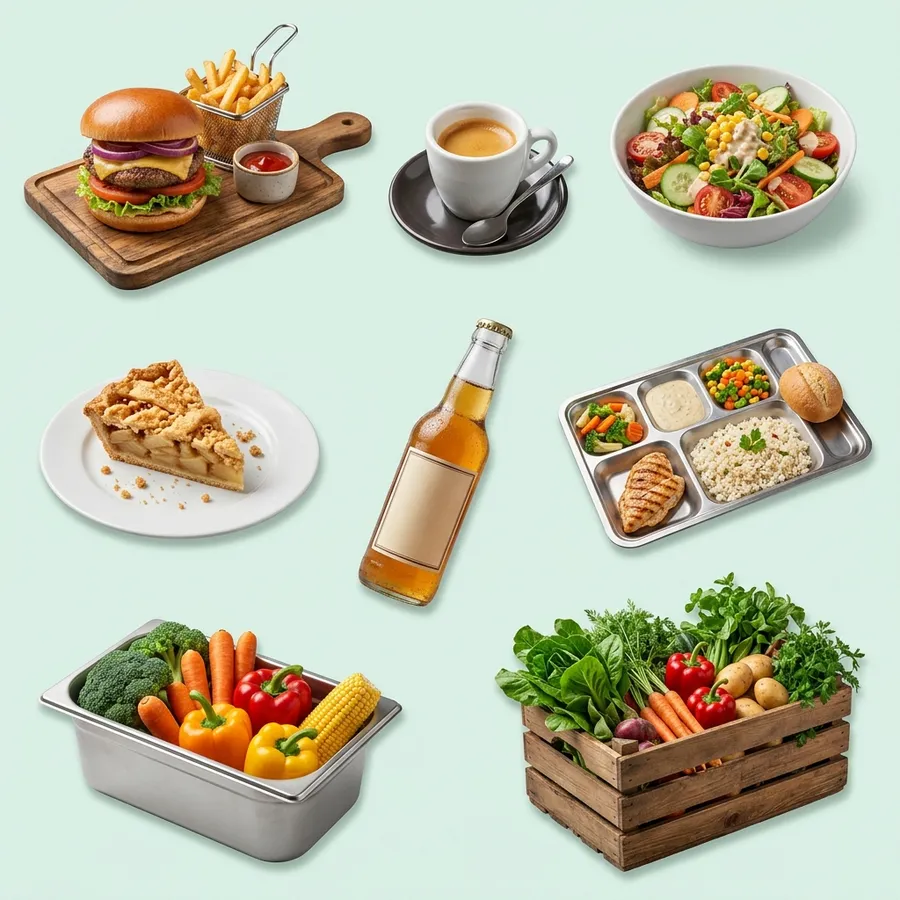
Restaurant chains, multi-brand groups, institutional food service companies, and food service distributors: by 2025, the out-of-home market had grown by 4.2% in revenue without serving a single additional meal. The past trend of raising prices across the entire menu has reached its limit. BOOPER helps foodservice operators assign a specific role to each item, maintain different prices by channel and location, and identify discrepancies before their customers do.

Foodservice Products: BOOPER Pricing Example
Price Alert · AI Booper: Actual marginbelow the target for 12 dishes following a rise in material costs
Recommendation: Unexplained price discrepancybetween two establishments in the same area
black "U" store logo
Advitam Group logo (black)
black Mega Market logo
black kingfisher logo
Black Creo Store logo
Magasions Go Vietnam logo (black)
Gamm Vert Stores logo in black
Black Leclerc Stores logo
black centraRetail store logo
Castorama stores' black logo
Barbotteau Group logo (black)
Bricorama stores' black logo
Black Brico Depot store logo
Bricocash stores' black logo
black Bricomarché store logo
Pricing Challenges in the Industry

What Makes Dining Out So Special

Material costs that vary by SKU, the same dish sold through three different channels, multi-site networks, and multi-year contracts: pricing decisions in these situations are rarely a one-time decision.

In a Nutshell:Pricing in the restaurant industry involves setting a price for each product that balances sales, profit margins, and price perception, while taking into account the industry’s unique characteristics. BOOPER, a French pricing software provider since 2014, combines AI and business rules to recommend these prices, simulate them before implementation, and measure their impact.

01

Material costs that are spiraling out of control

Over a 12-month period, the costs associated with a particular item can rise by 12 percent, while the price of a beverage may increase by 60 percent. An average price increase across the entire menu results in some items being underpriced and others overpriced.

02

One product, several equations

Dine-in, takeout, delivery: service fees and commissions change the equation without changing the product. Posting dine-in prices on a platform is the same as giving away your commission.

03

Networks Where a Single National Price Comes at a High Cost

Between a dense downtown area, a shopping district, and a captive site, neither the immediate competition nor price sensitivity are the same.

04

Contractual prices, sometimes for several years

In both institutional food service and food service distribution, the price is specified in a price adjustment clause or a customer term, and is subsequently adjusted only within that framework.

What's Eroding Profit Margins Today

Three situations that eat into profits every week

A past increase in the coefficient that damages the price image

Since the margin isn't calculated on a per-item basis, the increase is applied as a multiplier: it affects the items the customer is comparing and leaves the ones they ignore untouched.

With BOOPER

The actual margin per reference, cross-referenced with sales, to drive growth where it isn't evident and maintain it where it pays off.

Prices by channel copied rather than reconstructed

The price listed for delivery is the restaurant's price, including the service charge: the most frequently ordered dish ends up being the most expensive to serve.

With BOOPER

A price recalculated by channel, with a floor price that incorporates the actual service cost and an alert when that cost is no longer covered.

Differences between schools that no one decided on

In a network, each manager makes adjustments locally; after a few months, two neighboring locations show discrepancies that the customer notices before headquarters does.

With BOOPER

Pricing rules by retail location, with target, minimum, and maximum prices by zone, and automatic reporting of any prices outside the specified range.

BOOPER in Action

Your products in the market, all in one view

Monitoring competitors' prices, comparing products, and tracking price changes: this is the day-to-day work of a pricing team using BOOPER, tailored to your industry.

Competitive Intelligence · Food ServicePrice Surveys
ProductYour priceRetailer ARetailer BGapStatus
Signature burger + fries
€16.90€15.50€17.90+9.0%Above the market
Espresso
€2.20€1.90€2.40+15.8%Above the market
Lunch Salad
€13.50€12.90€14.00+4.7%Above the market
Dessert of the Day
€7.50€6.90€7.90+8.7%Above the market

Illustration, fictional products and prices

Product MatchingAI Matching
Your reference number

Signature burger + fries

Retailer A

Homemade steak and cheddar burger with fries

  • Format: single-plate
  • Served with: French fries
  • Channel: Room
  • Area: Downtown
Confidence Score:97%RejectAccept

Illustration, fictional data

Price for 10 weeks · EspressoFollow-up
1,66 €1,95 €2,24 €2,53 €S36S39S42S45
Your priceSign ASign B

Illustration, fictional data

BOOPER Solutions

BOOPER Building Blocks for Restaurant Pricing

A single platform—the BOOPER MPS pricing software—where you can activate the modules relevant to your business, supported by a team of pricing experts.

BOOPER's AI measures what your customers are willing to pay

The models estimate each household’s real price sensitivity: where a price increase has no effect on volume, where it causes a drop in foot traffic, and the extent to which a promotional offer cannibalizes full-price sales. Each recommendation is explained and validated by your teams.

What's New with BOOPER

LocationWithout a special toolWith BOOPER
Mark a rise on the mapA coefficient applied to all rowsA price increase based on the role and actual margin of each product
Open a delivered channelThe ticket price as listed on the platformA recalculated price, including commission and service fees
Managing a network of sitesA national standard, or local practices that aren't followedCorridors by Zone: Local Autonomy Within a Controlled Framework
Detect an abnormal deviationNoted in the monthly reportAlert as soon as the terminals are released, including the location and date

Would you like to manage your prices dish by dish, channel by channel, and location by location?

30 minutes with a pricing expert to review your challenges and see the platform in action using a case study similar to yours.

Let's discuss your pricing
+0.5 to +3 pointsmargin in just a few months
70% to 90%in pricing preparation time
95%reliability of our sales forecasts
+4,000managed retail locations

Results observed among our clients across all industries. We have supported approximately 50 companies since 2014, 30 of which are major clients still working with us today.

A proven method for multi-site networks

Multi-brand group · food retail

+1 point

Markup 's stock price rose by one point in a quarter

After testing BOOPER on products in one of its stores, this food retail group rolled it out across all four of its chains. The process is the same for multi-site restaurants: rules by point of sale, kiosks by zone, and discrepancies reported in real time.

White Papers · Food Service

Three White Papers to Help You Manage Your Prices

For restaurant chains, contract food service companies, and food service distributors: an industry guide and two in-depth articles on the decisions that have the greatest impact on profit margins. Free, with verified and dated sources.

Get started without changing everything at once

  1. price diagnostic s based on your own data

    We analyze your sales and costs within a test scope (a menu item, a channel, or a few locations) to quantify the potential before making any commitments.

  2. A phased rollout, spread out over 2 to 4 months

    Your data (sales, pricing, catalog, purchases) is uploaded via the Data Loader—no connector is required to get started—and then validated. Pricing rules are developed in collaboration with your teams.

  3. Pricing management that improves week after week

    The AI's recommendations are validated by your teams, their effects are measured, and the rules are adjusted. You retain control over every decision.

Frequently Asked Questions About Restaurant Pricing

What pricing software is best for the restaurant industry?

Pricing software tailored to the restaurant industry must be able to calculate the actual margin for each item after accounting for fluctuations in ingredient costs, maintain separate prices by channel and by location, and issue alerts as soon as a price falls outside its specified range. The BOOPER MPS pricing software sets pricing rules by location (target, minimum, maximum) and automatically flags deviations, while AI-powered sales forecasting measures the price sensitivity of each product category before any decisions are made. Your point-of-sale data, price lists, and product records are imported as-is, with no connector required to get started. BOOPER, a French pricing software provider since 2014, supports approximately 50 companies in France, Poland, Vietnam, and Thailand, across more than 4,000 points of sale and €44 billion in managed revenue. Our pricing software comparison details the selection criteria.

How can restaurants raise their prices without losing customers?

By targeting the price increase rather than applying it across the board: only a few SKUs carry the price image, and these are precisely the ones that need to be spared. The working rule is to assign a unique role to each line (comparison SKU, margin, volume), then to focus pricing efforts on SKUs with no comparable equivalents at competitors. AI-driven sales forecasting estimates price elasticity by product family, and the BOOPER MPS pricing software applies these trade-offs while simulating the impact on sales before implementation. A blanket average price increase across the board does the opposite: it raises prices on the items customers are watching and leaves those they ignore untouched.

Should the price be the same for dining in, takeout, and delivery?

No: The platform commission applies to the listed price, not to the margin, so copying the store price effectively means operating at a loss on the most frequently ordered items. Each channel has its own service costs (packaging, commission, shelf space, cross-selling), and therefore its own gross margin floor. The BOOPER MPS pricing software allows you to set a price and price ranges by channel, and to decide which SKUs are available for the delivered channel. This is the arbitrage that pays off the fastest when it’s not done.

Can prices vary depending on the location within a chain?

Yes, and this is generally necessary: between a dense downtown area, a shopping district, and a captive location, neither the immediate competition nor price sensitivity are the same. The appropriate level of granularity is not the individual store but a group of comparable stores: four to six zones are sufficient to capture the bulk of the variation while remaining manageable. The BOOPER MPS pricing software applies distinct rules per retail location and alerts managers as soon as a local price falls outside its target range, which allows site managers to operate autonomously without straying from the target range. Price surveys and web scraping simultaneously track the prices charged in the vicinity of each location.

How can you manage pricing in institutional food service, where prices are set by contract?

By refining the price adjustment formula before signing the contract, since it is this formula—and not a business decision—that will drive price changes throughout the contract term. A robust formula consists of three components (food, labor, and operations), uses the index corresponding to the actual production method (on-site or delivered), and provides for at least semiannual adjustments, applicable both upward and downward. In terms of implementation, the challenge is to continuously monitor the gap between the actual cost of goods sold and the adjusted price, site by site: the BOOPER MPS pricing software incorporates these rules and flags discrepancies as they arise. Our white paper on price adjustments in institutional foodservice details the method.

How can a food service distributor maintain its profit margin on a catalog of 10,000 items?

By focusing on the net price actually paid by each customer rather than the general rate—which almost no one pays. Between the rate and what the distributor actually receives lie product line terms, the annual agreement, one-time exceptions, and service costs; it is within this cascade that the margin is lost, often due to terms agreed upon several years ago and never reviewed. The BOOPER MPS pricing software sets a floor per product family and a ceiling per customer segment, and flags each instance where these limits are exceeded, noting the customer and the date; the web Pricing Analytics calculates the actual margin per customer, including service costs. Our white paper on net prices in foodservice distribution details the process.

How long does it take to implement a pricing solution for the restaurant industry?

A deployment typically takes 2 to 4 months and can begin on a test basis: a single store, a channel, or a few locations. The first step requires only a POS export: recalculating the actual margin by SKU using up-to-date material costs, rather than those from the original product data sheet. This single step usually reveals two or three situations that no one would have intentionally chosen, and it determines the value of everything that follows. A price diagnostic allows you to quantify the potential before making any commitments.

Other sectors supported by BOOPER

Scroll down to discover the other 15 industries: each page details the pricing challenges in that industry and BOOPER’s solution.

1 / 16
Sector

Food Pricing

Pricing for loss leaders, the Egalim framework, promotions, and markdowns on fresh produce.

View the sector →
Sector

Retail and B2B Pricing

Retailers, wholesalers, cash-and-carry stores: net prices by customer, discounts, passing on purchase price increases.

View the sector →
Sector

FMCG Pricing / Brands

Shelf prices by retailer, promotional performance, annual negotiations, and price increases.

View the sector →
Sector

Pricing for Cars and Motorcycles

Parts, tires, and accessories: long list of product codes, instant comparison, seasonality.

View the sector →
Sector

Beauty and Health Pricing

Price per milliliter, multiple channels, a packed promotional schedule, and a brand image to protect.

View the sector →
Sector

DIY Pricing

Huge product ranges, business and retail customers, and volatile raw material prices.

View the sector →
Sector

Pricing for Home Appliances

Consistent product listings across all channels, promotional highlights, and product line updates.

View the sector →
Sector

Pricing Office Supplies

List prices and key account contracts, back-to-school season, generic catalog.

View the sector →
Sector

High-Tech Pricing

Prices that drop every week, complete transparency, and product end-of-life.

View the sector →
Sector

Pricing for Garden Centers

Extreme seasonality, perishable produce, multiple categories, and product assortments that need to be streamlined.

View the sector →
Sector

Pricing: Furniture and Decor

Products that are rarely identical, seasonal collections, and carefully curated, high-quality selections.

View the sector →
Sector

Pricing: Baby Products and Toys

A crucial Christmas, closely compared deals, thoughtful baby-care purchases, and the post-holiday cleanup.

View the sector →
Sector

Pricing: Sports and Recreation

Seasonal collections, sizes and colors, national brands, and private labels.

View the sector →
Sector

Pricing for Pharmaceutical Companies

Unregulated pricing (OTC, drugstore, dermocosmetics), network consistency, online competition.

View the sector →
Sector

Pricing Bio

Organic retailers and organic sections: perceived price premium, flagship products, fresh produce, bulk items, and seasonality.

View the sector →
Overview

The 16 sectors supported by BOOPER

Retail, B2B distribution, brands, pharmacies, food service: Find all these sectors on a single page.

View all sectors →

Would you like to manage your prices dish by dish, channel by channel, and location by location?

Let's talk about your menu, your sales channels, and your price differences across locations with a pricing expert.

Let's discuss your pricing

« Pricing restauration » expliqué par Edouard Calliati, CMO-CRO de Booper · vidéo publiée le 12 novembre 2026