
FMCG and brand pricing: track your shelf prices and prepare for negotiations
Manufacturers of consumer goods, food, hygiene, beauty, or beverage brands: you set a price, but it's the distributor who sets the price on the shelf. BOOPER helps you track actual prices charged by retailer and online, measure the impact of your promotions, and prepare your commercial negotiations based on facts.
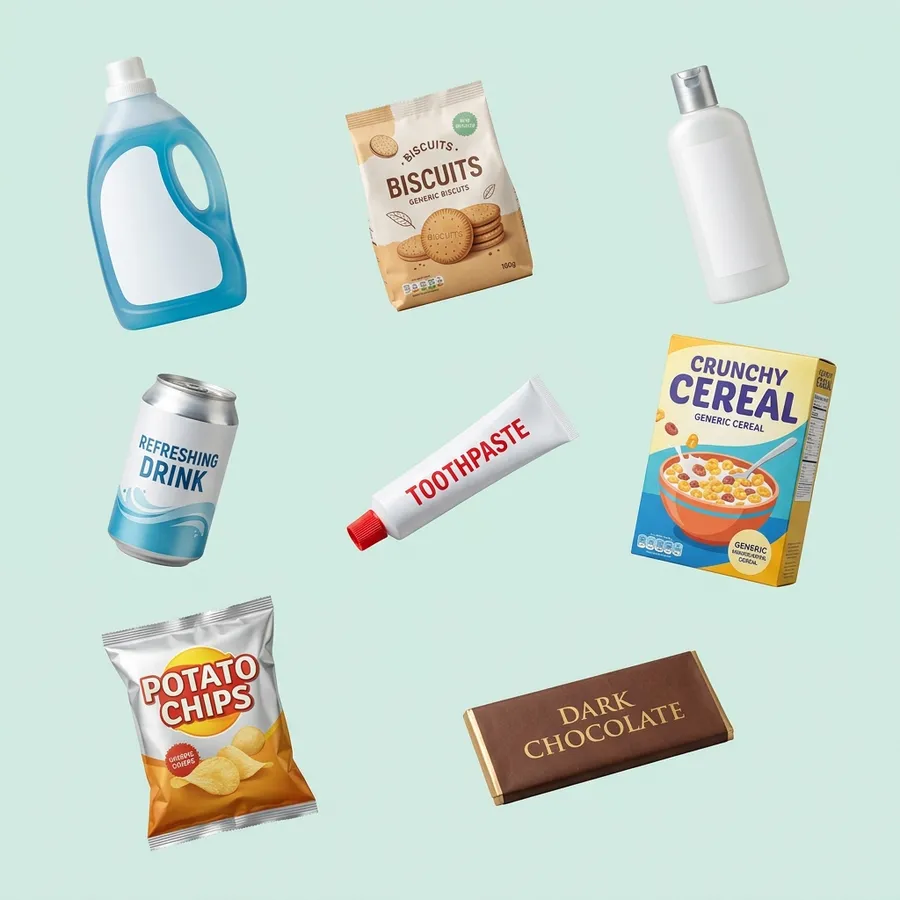














A brand does not set its price on the shelf
Between the negotiated price and the price paid by the consumer, there is the policy of each brand, its promotions and the competition in the department.
In short, for a brand, pricing involves setting its prices, recommended retail prices, format architecture, and promotions based on actual shelf prices and product elasticity. BOOPER, a French pricing software publisher since 2014, combines AI and business rules to track these prices store by store, simulate the impact of price changes, and measure the return on investment of promotions.
01
A consumer price set by the distributor
In France, distributors are free to set their own resale prices; brands can suggest a price, but not impose it. However, it's still necessary to know what prices are actually being charged.
02
Structured annual negotiations
General terms of sale, single agreement, Egalim promotion caps (34% in value and 25% in volume on food): the framework is strict and the schedule tight.
03
A portfolio of formats
Formats, lots, multipacks: the price architecture of the range must remain legible, at the unit price, in the face of competing brands and private label brands.
04
Expensive promotions
Promotional budgets weigh heavily on the profit and loss statement, for an effect that is rarely measured on a transaction-by-transaction basis.
Three blind spots in sales management
Partial visibility of shelf prices
Spot checks and aggregated panel data do not tell us what price each brand displays, each week, in store and for drive-through.
Continuous monitoring of prices for your products and your competitors, brand by brand, online and in store.
Promotions with unknown returns
The promotional budget is renewed from one year to the next without knowing which operations actually create additional sales.
Measuring the actual gain from each operation, including cannibalization, to reallocate the budget towards what generates revenue.
Price increases that are difficult to defend
When dealing with buyers, a price increase justified by costs is not enough: it is necessary to know the effect on volumes and shelf positioning.
Simulation of the effect of an increase on volumes based on elasticity, to trade based on facts.
Your products facing the market, all in one view
Monitoring competitor prices, comparing products and tracking price movements: this is the daily life of a pricing team with BOOPER, applied to your sector.
| Product | Recommended price | Retailer A | Retailer B | Gap | Status |
|---|---|---|---|---|---|
Liquid laundry detergent 1 L · 20 washes | €5.49 | €4.59 | €5.39 | +19.6% | Shelf under the advisor |
Shortbread biscuits 300g | €1.99 | €1.99 | €2.29 | 0.0% | Compliant |
Gentle shampoo 250 ml | €2.59 | €3.39 | €2.79 | -7.2% | Radius above |
Crispy cereals 375g | €3.29 | €3.15 | €3.35 | +4.4% | Shelf under the advisor |
Illustration, products and prices are fictitious.
Liquid laundry detergent 1 L · 20 washes
Concentrated liquid laundry detergent 1L 20 washes.
- Volume: 1 L
- Dosage: 20 washes
- Format: liquid
- Usage: white and colored
Illustration, fictitious data
Illustration, fictitious data
BOOPER bricks for brands and manufacturers
A unique platform, the BOOPER MPS pricing software , where you activate the building blocks useful to your business, with a team of pricing experts.
Monitor the prices of your products and those of your competitors at each retailer.
Discover the Price Surveys and Web Scraping offer →2 AI BooperProduct matchingCompare formats, batch sizes and competitor product references, including private label brands, at the unit price
Discover the Product Matching offer →3 AI BooperPromotion managementMeasure the performance of each promotional campaign
Discover the Promotions Management offer →4 AI BooperAI-powered sales forecastingEstimate the elasticity and simulate the effect of a price increase on volumes
Discover the AI-powered Sales Forecasting offer →BOOPER's AI measures the elasticity of your brands
The models estimate, reference by reference, how volumes react to price, promotions, and competitor pricing. You enter negotiations with quantified scenarios rather than assumptions.
What changes with BOOPER
| Location | Without a dedicated tool | With BOOPER |
|---|---|---|
| Shelf price tracking | Spot checks, aggregated data | Continuous monitoring by brand, online and in store |
| Price increase | Argued solely on the costs | Simulated effect on volumes before the trade |
| Special offers | Overall assessment at the end of the year | Yield measured operation by operation |
| Format Architecture | Built on the historical | Unit price compared to competitors and private label brands |
Do you want to know what price your products are really being sold at?
30 minutes with a pricing expert to review your challenges and see the platform on a case close to yours.
Results observed among our clients, across all sectors. Around fifty companies supported since 2014, including 30 major accounts currently active.
Expertise built on the distributor side
BOOPER has been managing the prices of major retailers since 2014. This knowledge of the pricing methods of distributors directly informs the decisions of the brands that sell to them.
Start without changing everything at once
A price diagnosis based on your data
We monitor a selection of your references and those of your competitors at your main retailers and analyze your latest promotional campaigns.
Deployment in 2 to 4 months
Your data (sales, prices, catalog, purchases) is loaded via the Data Loader, without a mandatory connector to start, and then validated. Pricing rules are developed in collaboration with your teams.
A piloting technique that is constantly improving
The AI's recommendations are validated by your teams, their effects measured, and the rules adjusted. You retain control over every decision.
Frequently Asked Questions about FMCG and Brand Pricing
Can a brand dictate its retail price in stores?
No. In France, distributors are free to set their own resale prices, and imposing a minimum resale price is prohibited. A brand can, however, provide a recommended retail price , which remains indicative. BOOPER is therefore used to observe the prices actually charged by each retailer, to measure the difference with your recommended price, and to inform your pricing and promotional decisions; it is never used to impose a price. Our article on recommended retail prices and distributors' pricing freedom details the framework.
Which brands and channels can we follow?
All channels where your products are sold online, supplemented if necessary by in-store data collection. Price surveys and web scraping cover drive-through pickup, retailer websites, and marketplaces. The scope of retailers, product references, and competitors is defined in collaboration with you, with increased data collection frequency during peak periods (promotional campaigns, product launches, back-to-school season). This provides you with a consolidated view of your shelf prices, retailer by retailer, without the need for manual data collection.
How to compare formats, lots and private label products at unit price?
By comparing each price to the unit of consumption (liter, kilo, wash, dose) after comparing equivalent products, product matching brings your SKUs together with competitor products and equivalent private label brands , taking into account volume, number of doses, or weight, and identifying promotional packs and formats. This allows you to manage the pricing structure of your product range in relation to the actual shelf space, and to see where the price difference with private label brands becomes too significant for the customer to accept.
Does BOOPER help prepare for annual negotiations?
Yes, by providing data-driven scenarios rather than abstract positions. AI-powered sales forecasting estimates the elasticity of your product range and simulates the impact of price changes on sales volumes and shelf positioning, store by store. You enter negotiations with real-time pricing data and documented promotional reports, within the Egalim framework (general terms and conditions of sale, single agreement, promotional limits). See also our article on front and back margins .
How do we measure the effectiveness of our promotions?
By isolating the true gain from each promotion—that is, the sales that would not have occurred without it— promotion management measures additional sales, cannibalization of your other product lines, and the effect of delayed purchases after the promotion. You can then identify the strategies and retailers where the promotional budget creates value, and those where it merely subsidizes sales that would have happened anyway.
Which pricing software should a FMCG brand or manufacturer choose?
Pricing software tailored to a consumer goods brand must be able to track the actual prices charged by each retailer and across each channel, compare unit prices to private label prices, measure the return on investment of promotions, and simulate the impact of price increases. BOOPER combines these capabilities in a single platform, the BOOPER MPS pricing software , which includes the following essential components: price tracking and web scraping , product matching , promotion management , and AI-powered sales forecasting . BOOPER, a French pricing software publisher since 2014, supports around fifty companies in France, Poland, Vietnam, and Thailand, covering more than 4,000 points of sale and €44 billion in managed revenue. Our clients typically see a 0.5 to 3 percentage point increase in margin within a few months. To compare market solutions, see our retail pricing software comparison .
How long does it take to start?
Generally, it takes 2 to 4 months, depending on the scope of product references and retailers. Starting a few months before annual negotiations allows you to arrive with shelf-side pricing data and documented promotional reports. An initial scope (one category, a few retailers) is sufficient to gauge the value of the approach, and then expand it. Your sales data and pricing are loaded via the Data Loader, without a mandatory connector to begin with.
Other sectors supported by BOOPER
Car and motorcycle pricing
Parts, tires and accessories: long tail of references, instant comparison, seasonality.
View sector →Beauty and Health Pricing
Price per millilitre, multiple channels, dense promotional calendar and brand image to protect.
View sector →DIY Pricing
Huge product ranges, professional and individual clients, volatile raw materials.
View sector →Home Appliance Pricing
Identical product references everywhere, promotional highlights, product range renewal.
View sector →Pricing Office Supplies
Catalogue prices and major account contracts, back to school, standard catalogue.
View sector →High Tech Pricing
Prices that fall every week, total transparency, end-of-life of products.
View sector →Do you want to know what price your products are really being sold at?
Let's talk about your shelf prices, your promotions, and your upcoming negotiations.
Let's talk about your brand pricing