











BioNo. 1 · 2026Specialized Organic Products: Selling the Right Way in a Market on the Rise
After three years of decline, the French organic market is returning to growth, driven—more than any other channel—by specialty retailers.
DownloadSpecialized organic retailers, organic sections in major supermarkets, and farmers’ markets: the organic sector must maintain a price premium over conventional products, despite a fragmented market with multiple labels and small suppliers, and a focus on fresh produce that leaves little room for error. BOOPER helps organic businesses set justifiable prices, monitor key competitors, and differentiate themselves at the right time.



A customer who cares as much about quality as about price, a diverse selection of brands and producers, and a high proportion of fresh produce: in the organic section, every price must be justifiable.
In a Nutshell:Organic pricing involves setting a price for each product that balances sales, profit margins, and price image, while taking into account the specific characteristics of the industry. BOOPER, a French pricing software provider since 2014, combines AI and business rules to recommend these prices, simulate them before implementation, and measure their impact.
01
The price difference compared to conventional products varies widely depending on the product category and specific items. A few popular best-selling products shape the store's price image; the rest of the product lineup can drive the margin.
02
Labels, bulk goods, small producers without structured data exchange, seasonal pricing: building and maintaining a reliable price database is more challenging here than elsewhere.
03
Ultra-fresh fruits and vegetables, sold in bulk: With such a short turnover cycle, it’s essential to mark down prices at the right time and at the right level to minimize losses without selling at a loss.
04
Supermarkets, specialty stores, farmers' markets, and online retailers: the same organic product is priced very differently depending on the retail channel, and customers shop across all of them.
Without a structured monitoring system, the difference between your organic products and their conventional or competing equivalents is known only through occasional surveys; the perception that they are “too expensive” takes hold.
Online price monitoring, integrated store data, automatically matched products, and continuous tracking of price differences for your benchmark products.
Every time the season changes or a supplier adjusts its prices, hundreds of prices are recalculated in Excel, with no insight into the impact on sales and margins.
Pricing rules by product family and season, applied to the entire product line, with a simulation of the impact prior to implementation.
According to the store team, products with short shelf lives are marked down too late or at too deep a discount; waste is eroding an already tight margin.
A recommended markdown on a per-item basis, based on the store's inventory, date, and sales pace.
Monitoring competitors' prices, comparing products, and tracking price changes: this is the day-to-day work of a pricing team using BOOPER, tailored to your industry.
| Product | Your price | Supermarket organic section | Organic Store B | Gap | Status |
|---|---|---|---|---|---|
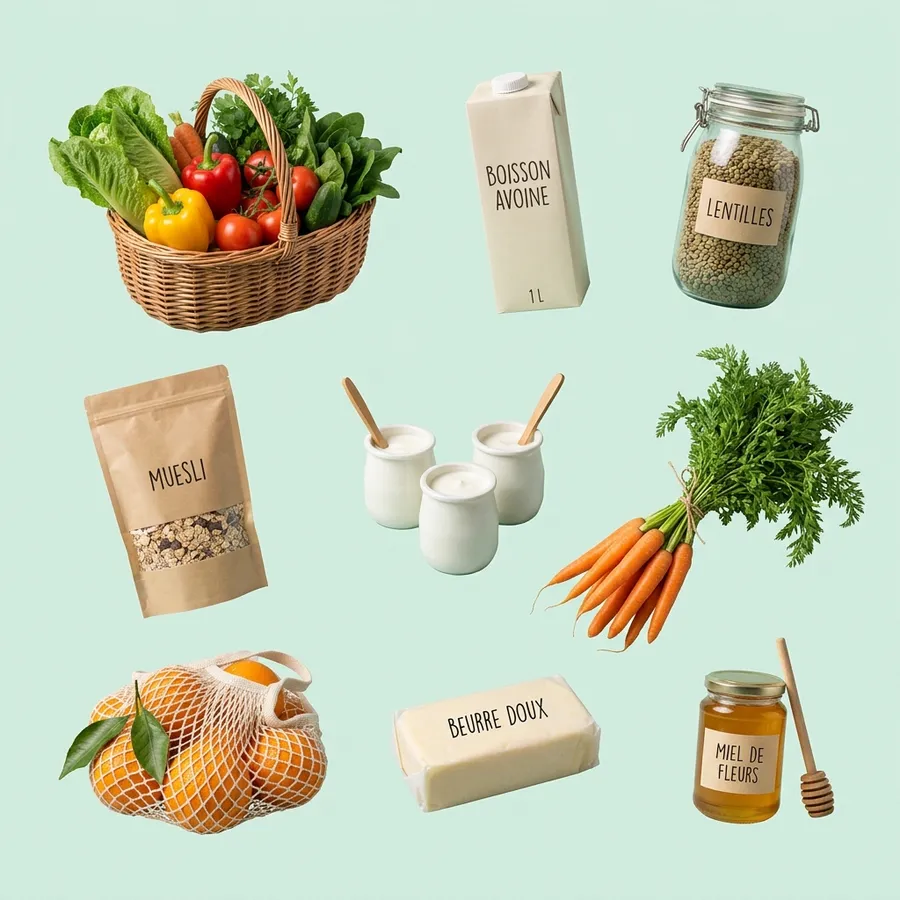
Organic Oat Drink, 1 L | €2.19 | €1.99 | €2.35 | +10.1% | Above the market |
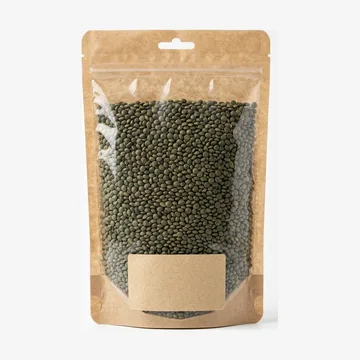
Organic Green Lentils, 500 g | €2.49 | €2.29 | €2.69 | +8.7% | Above the market |
Organic Plain Yogurt, 4 x 125 g | €2.39 | €2.15 | €2.49 | +11.2% | Above the market |
Organic Unsalted Butter, 250 g | €3.45 | €3.49 | 3.75 € | -1.1% | Aligned |
Illustration, fictional products and prices
Organic Oat Drink, 1 L
Organic Oat Plant-Based Milk, 1L Carton
Illustration, fictional data
A single platform—the BOOPER MPS pricing software—where you can activate the modules relevant to your business, supported by a team of pricing experts.
The models estimate the actual price sensitivity of each organic household: where the price premium over conventional products can be sustained, where it causes sales to drop, and the extent to which a promotion cannibalizes full-price sales. Each recommendation is explained and validated by your teams.
| Location | Without a special tool | With BOOPER |
|---|---|---|
| Track the gap compared to conventional methods | Selective surveys of a few products | Ongoing monitoring and alerts for benchmark products |
| Pass on a producer price | Row by row in Excel, over several days | Rules applied by family; simulated impact prior to validation |
| Distinguish between fresh and bulk items | Fixed rate determined in-store | Recommended inventory level based on stock, date, and sales rate |
| Defend a product's price | Based on intuition, without measurement | Measured price sensitivity, calibrated deviation on a universe-by-universe basis |
Do you want to stand up for a fair price for your organic products without sacrificing your profit margin?
30 minutes with a pricing expert to review your challenges and see the platform in action using a case study similar to yours.
Results observed among our clients across all industries. We have supported approximately 50 companies since 2014, 30 of which are major clients still working with us today.
+1 point
After testing the product in one of its supermarkets ( Markup s increased by one point in a quarter, and price image improved), the group rolled out BOOPER across all four of its retail chains, including a local organic chain.
We analyze your sales, prices, and deviation from standard pricing across one or two categories (groceries, fresh produce, etc.) to quantify the potential before making any commitments.
Your data (sales, pricing, catalog, purchases) is uploaded via the Data Loader—no connector is required to get started—and then validated. Pricing rules are developed in collaboration with your teams.
The AI's recommendations are validated by your teams, their effects are measured, and the rules are adjusted. You retain control over every decision.
By proactively managing this price gap product by product rather than passively accepting it: the premium for organic products varies significantly by product category and SKU, and customers perceive it only through a few benchmark products. Price surveys and web scraping continuously track prices at supermarkets, specialty stores, and online retailers in your area, and product matching compares each organic SKU to its equivalents—including conventional ones—down to the unit of measurement. You’ll then know where the price difference is justifiable and where it’s driving down sales. Our articles on the perception of organic price premiums and the organic price image by product category detail the method.
By analyzing the purchase frequency, the percentage of shopping carts that contain them, and local competitive pressure, it is these products—often fresh items and grocery staples—that shape the store’s overall price image. With Pricing Analytics, BOOPER identifies these items based on your sales data, and then your teams approve the list. These products are then prioritized for competitive monitoring to detect any discrepancies before they impact your foot traffic. Our guide to pricing organic products explains how to build this list.
Not across the board: a blanket price cut erodes an already tight margin without any guarantee of sales volume. The right approach is to target products where price sensitivity is high and where the price difference compared to conventional products or competitors exceeds what the customer is willing to accept, while letting the others maintain their margins. The BOOPER MPS pricing software applies these trade-offs by product category, simulating the impact on sales and margins before implementation. Our article on which organic price cuts to prioritize provides a decision-making framework.
By comparing truly equivalent products, item by item: the same organic product is sold at very different prices in supermarkets, specialty stores, directly from the producer, or online. Price surveys and web scraping collect prices from these channels, and product matching identifies comparable items—including labels and sizes—to ensure a reliable price comparison. You then decide how to proceed: align prices with the products being compared, or accept a price difference and explain it elsewhere. Our article “Comparing Organic Prices Across Channels” details the pitfalls of this exercise.
By marking down items at the right time and at the right level, item by item, rather than using a fixed rate set at the end of the day. Using Markdown and markdown, BOOPER recommends discounts based on remaining inventory, the expiration date, and the sales pace of each store: the goal is to sell out before the expiration date without discounting items that would have sold at full price. Promotion management also measures the extent to which a promotion cannibalizes full-price sales. Our article on promotions and markdowns for organic fresh produce explores these trade-offs in greater depth.
Pricing software tailored to the organic retail sector must be able to track the price difference compared to conventional products for benchmark items, account for fluctuating producer and seasonal prices, compare products across multiple labels and formats, and mark down fresh items at the right time. BOOPER brings these capabilities together in a single platform—the BOOPER MPS pricing software—where users can activate the relevant modules: price surveys and web scraping, product matching, the BOOPER MPS pricing software, and markdown and markdown. BOOPER, a French pricing software provider since 2014, supports approximately 50 companies in France, Poland, Vietnam, and Thailand, across more than 4,000 retail locations and €44 billion in managed revenue. Our clients generally see margin increases of +0.5 to +3 points within a few months. To compare solutions on the market, check out our retail pricing software comparison.
Typically 2 to 4 months, starting with a test environment (grocery or fresh produce) to measure the benefits before rolling it out more broadly. Your data (sales, prices, product catalog, purchases) is uploaded via the Data Loader, with no connector required to get started—an important point when some of your suppliers are small producers without structured data exchange. A “ price diagnostic ” on one or two categories allows you to quantify the potential before making any commitments. Our article on the organic pricing grid by store and catchment area shows what the target looks like.
Scroll down to discover the other 15 industries: each page details the pricing challenges in that industry and BOOPER’s solution.
Chain restaurants, institutional food service, and foodservice distributors: prices per dish, per channel, per location, and per customer.
View the sector →SectorPricing for loss leaders, the Egalim framework, promotions, and markdowns on fresh produce.
View the sector →SectorRetailers, wholesalers, cash-and-carry stores: net prices by customer, discounts, passing on purchase price increases.
View the sector →SectorShelf prices by retailer, promotional performance, annual negotiations, and price increases.
View the sector →SectorParts, tires, and accessories: long list of product codes, instant comparison, seasonality.
View the sector →SectorPrice per milliliter, multiple channels, a packed promotional schedule, and a brand image to protect.
View the sector →SectorHuge product ranges, business and retail customers, and volatile raw material prices.
View the sector →SectorConsistent product listings across all channels, promotional highlights, and product line updates.
View the sector →SectorList prices and key account contracts, back-to-school season, generic catalog.
View the sector →SectorPrices that drop every week, complete transparency, and product end-of-life.
View the sector →SectorExtreme seasonality, perishable produce, multiple categories, and product assortments that need to be streamlined.
View the sector →SectorProducts that are rarely identical, seasonal collections, and carefully curated, high-quality selections.
View the sector →SectorA crucial Christmas, closely compared deals, thoughtful baby-care purchases, and the post-holiday cleanup.
View the sector →SectorSeasonal collections, sizes and colors, national brands, and private labels.
View the sector →SectorUnregulated pricing (OTC, drugstore, dermocosmetics), network consistency, online competition.
View the sector →OverviewRetail, B2B distribution, brands, pharmacies, food service: Find all these sectors on a single page.
View all sectors →Let's talk about your flagship products, how you stand out from conventional offerings, and your pricing strategy with a pricing expert.
Let's discuss your pricing« Pricing bio » expliqué par Edouard Calliati, CMO-CRO de Booper · vidéo publiée le 11 novembre 2026