
When the law capped discounts, the household goods, cosmetics, and personal care department lost 535 million euros in revenue in 2024: those sales were bought, not earned. Customers have learned to wait for the next sale, and the listed price for the rest of the year no longer convinces them. Breaking free from this dependency starts with measuring what each promotion actually brings in.
White paper
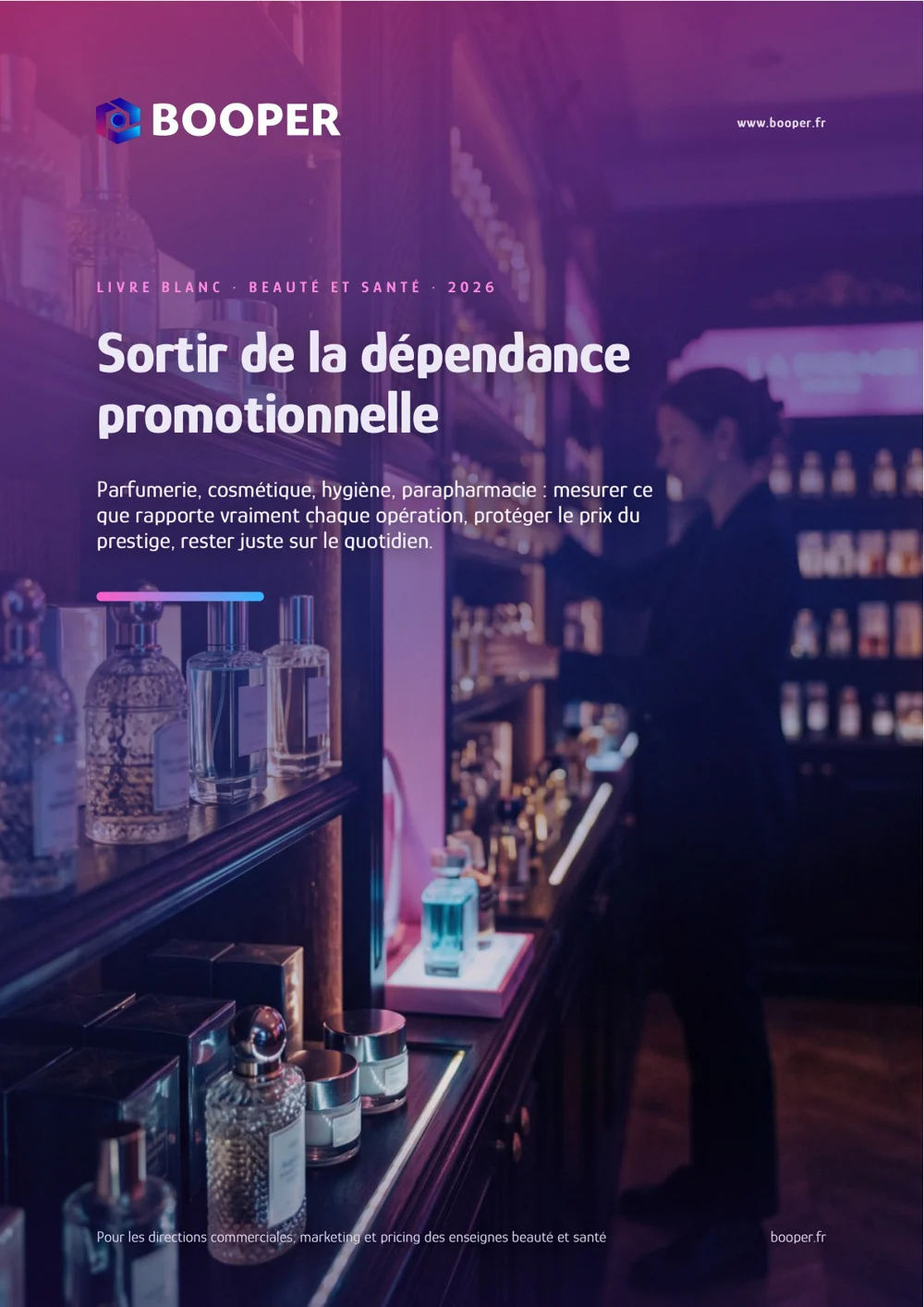
Beauty and Health: Breaking Free from Promotional Dependence
This white paper explains why peak sales aren’t the goal, and how to manage beauty and health promotions based on actual added margin: the break-even point for a discount, comparison by milliliter, 30-day reference price, pricing rules by category role, and a calendar of key events. Verified figures from 2023 to 2026 (NielsenIQ, DGCCRF, FEBEA, OpinionWay, INSEE, Simon-Kucher).
By downloading it, you will discover
- Why a 30% discount must increase sales by a factor of 2.5 to break even, assuming a 50% margin
- How to isolate the actual profit from a transaction, after deducting anticipated purchases and cannibalization
- How to compare your prices per milliliter—including gift sets—across stores, websites, and marketplaces
- How to ensure that every discount offer complies with the 30-day reference price and the 40% cap
- Why a luxury perfume and a shower gel have two different pricing strategies
Free download
Get the white paper by email.
Thank you! We'll send you the white paper by email very soon.
Oops! Something went wrong while submitting the form.
By downloading, you agree to be contacted by Booper regarding this content. Your data will never be shared with third parties.