
63% of consumers do not believe that high-end beauty products perform better than mass-market ones (BoF and McKinsey, June 2025). Private-label beauty has earned its place in the market. However, many retailers still list it under the main brand with a single percentage, without taking into account the product size, the role of each SKU, or the sales it takes away from national brands.
White paper
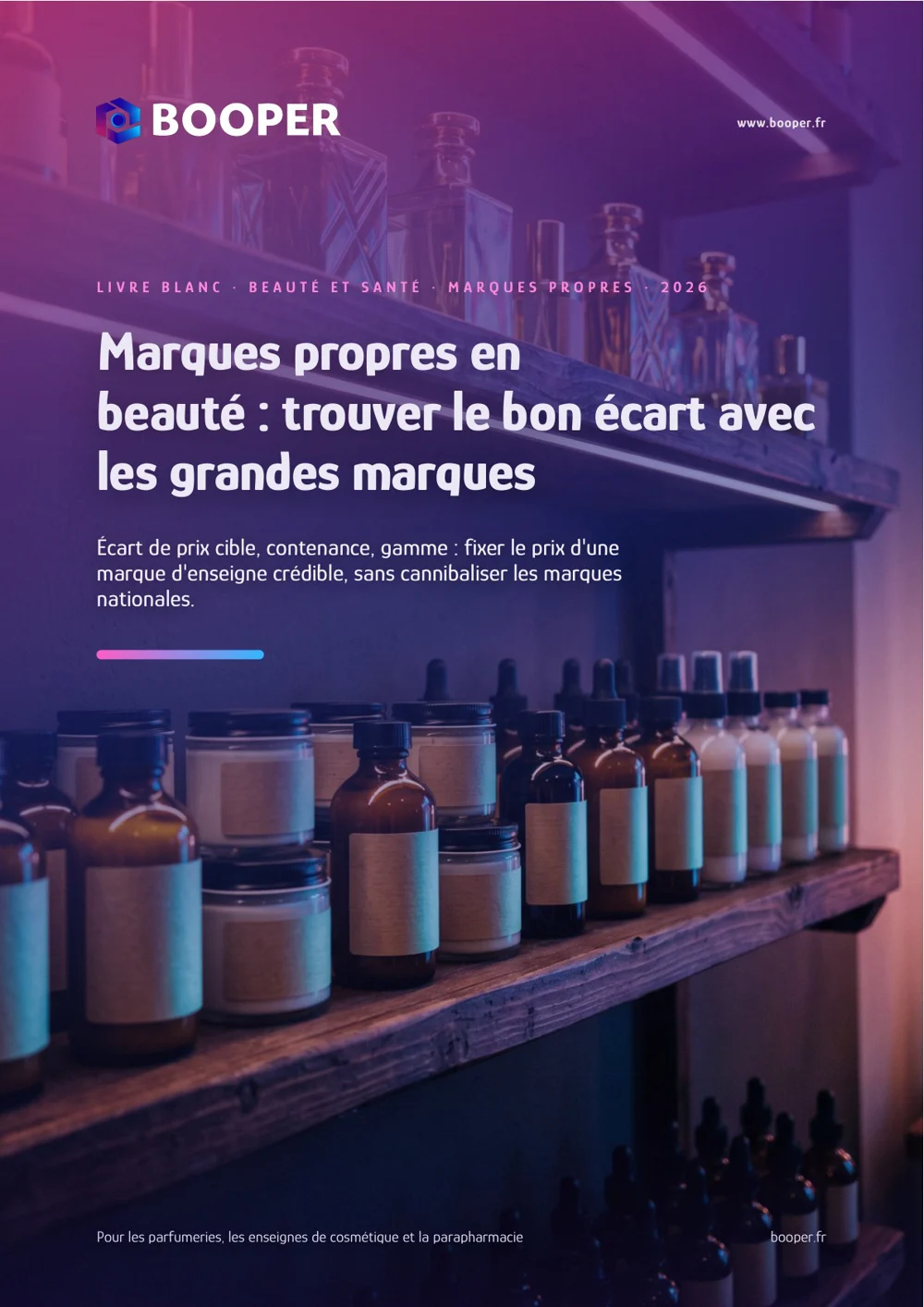
Private-label beauty brands: Finding the right balance with major brands
This white paper explains how to set the price for a leading beauty brand on a product-by-product basis: a role (entry-level, alternative, signature), a benchmark brand per segment, a price differential calculated per milliliter, and a margin expressed in euros across the entire shelf. Figures verified and dated 2025 and 2026 (BoF and McKinsey, Kantar, NielsenIQ, Le Moniteur des pharmacies, and IQVIA, FEBEA).
By downloading it, you will discover
- Why a single percentage rate under the umbrella brand does not constitute a pricing strategy
- How to Set a Target Spread by Role: Price Entry, Alternative, or Signature
- How to choose the benchmark brand against which to measure the gap
- Why must the difference be calculated in milliliters, when makeup and perfume samples are not priced by the liter?
- How a private label with a 40% margin can cause the department to lose margin, and when the shift in sales becomes costly
Free download
Get the white paper by email.
Thank you! We'll send you the white paper by email very soon.
Oops! Something went wrong while submitting the form.
By downloading, you agree to be contacted by Booper regarding this content. Your data will never be shared with third parties.