
Price Traceability: to find out who set this price, when, and why

November 16, 2026
The history shows what price was listed. Traceability shows who decided it, when, on what basis, and with what approval.
It is used to provide evidence during an audit, to justify a price to a supplier, a franchisee, or management, and, above all, to link each decision to its outcome. With AI, it distinguishes between what the machine suggests and what a human decides.
A price tag displays a price. Behind it lies a decision: a rule, a recommendation, a correction, or sometimes an exception granted over the phone.
This article is intended for pricing, sales, and compliance departments. It explains what price decision traceability entails and why it serves to prove, defend, and drive progress.
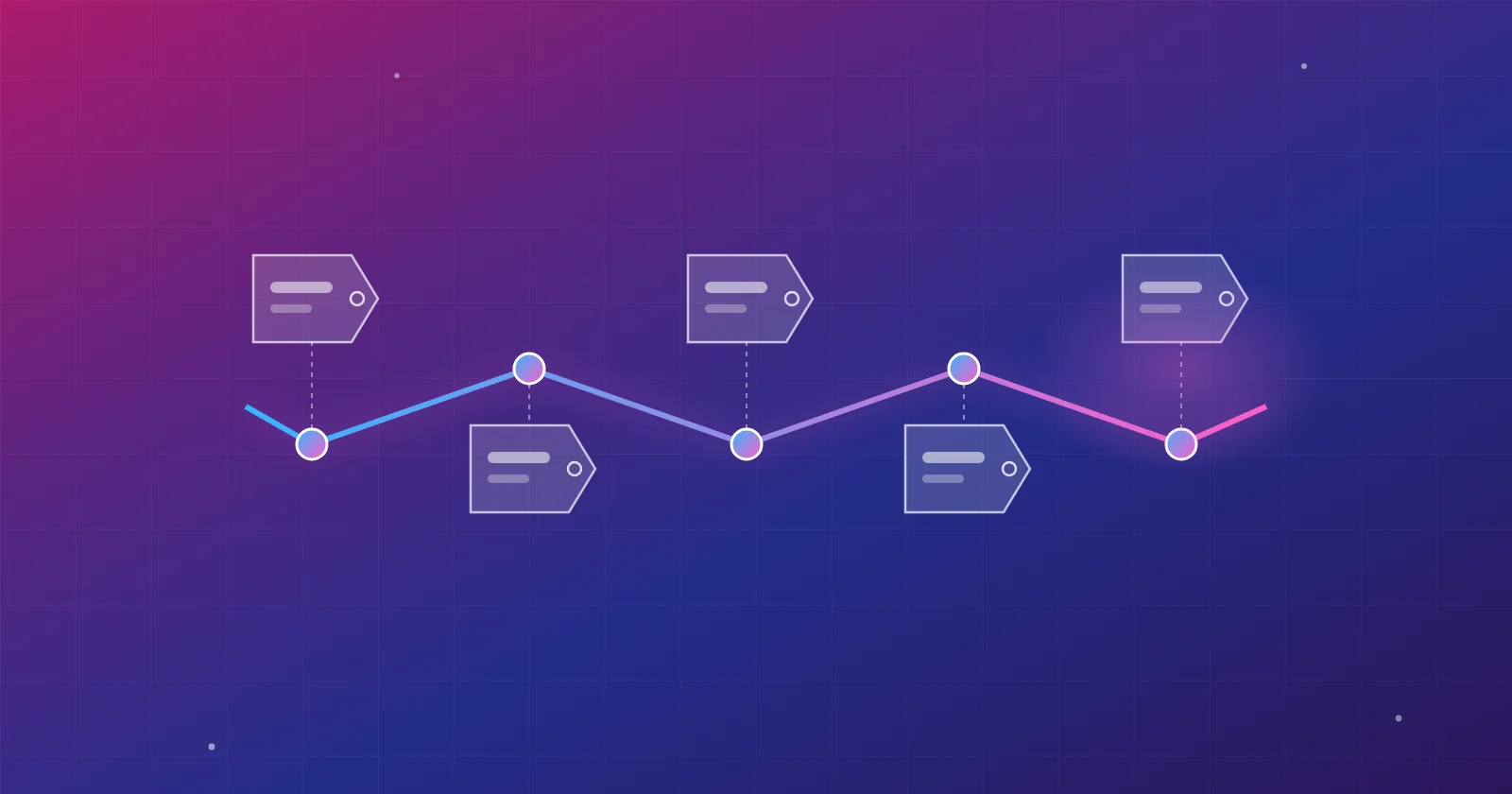
Price history and traceability: two different things
Almost all retailers can tell you what price a product was on a given date. This is the price history: it answers the question “what?”
Price traceability goes a step further. It makes it possible to determine, for each change, who decided it, when, on what basis, and with what approval.
The difference may seem small. But it becomes crucial when you need to justify a price, refute a criticism, or understand why a margin has slipped.
Why the "why" Gets Lost
A selling price is rarely determined in just one place. Part of it comes from the pricing tool, another part from an Excel file, and yet another part from an email exchange or a meeting.
Manual adjustments cause the most problems. A buyer adjusts a recommendation, a regional manager sets a local price, a promotion overrides a list price: the price changes, and the reason disappears.
Verbal exemptions round out the picture. They resolve a problem in the moment, then outlive those who granted them. We have described this mechanism in the context of exceptions and exemptions.
The more decision-making sources there are, the more the thread breaks. This is one of the least obvious limitations of spreadsheets: they record the numbers, but rarely the reasoning behind them.
Prove it: A check doesn't wait
The primary purpose of traceability is defensive. In the event of an audit, it must be possible to demonstrate that a price reduction complies with the 30-day reference price, or that a price does not fall below the break-even point.
Some of the inspected businesses that offered price reductions were found to be in violation of regulations in 2024. 10% of the inspected businesses were issued a compliance order or a citation.
(DGCCRF, “Black Friday: Beware of False Promises,” 2024 Inspection Report)
Proving something requires quickly retrieving the prices charged, their dates, and the rules that applied. When this information is scattered, piecing it together takes days and leaves gaps.
For prices calculated by algorithms, the requirement for proof is even stricter. We have detailed the legal framework for this in our article on algorithmic pricing. But proof is only one of the uses of traceability—and not the most profitable one.
Defend: in front of a supplier, a franchisee, or management
A supplier disputes a shelf price. A franchisee wonders about the price difference compared to the neighboring store. Management asks why a particular product category's margin has declined.
In all three cases, the nature of the discussion changes when the decision and its rationale can be demonstrated. We move away from opinion and toward facts: the rule applied, the competitor’s price observed, and the objective pursued.
This is particularly true in a mixed network, where company-owned stores and franchisees do not have the same pricing flexibility. And this is the basis for any price arbitrage raised with management.
Learning: Connecting Each Decision to Its Outcome
The third use is the most underestimated. A pricing decision can be evaluated based on its results: sales volume, profit margin, and competitors' reactions.
Without this connection, a pricing team keeps repeating the same decisions without knowing which ones worked. It remembers the spectacular successes but forgets the price increases that cost it volume.
With him, every decision becomes an experience from which we can learn a lesson. This is the principle behind a well-executed price test, applied to all of life's daily decisions.
| What We Draw | What is it used for? | What's Most Often Missing |
|---|---|---|
| The price before and after | Reconstruct the history | Rarely absent |
| Author and Date | Knowing Who to Ask | Changes made outside the tool |
| The source: rule, recommendation, correction | Distinguishing Machines from Humans | The percentage of corrected recommendations |
| The motif | Defend and Learn | Almost always, for manual corrections |
| Validation | Find out who hired the company | Exemptions Granted Verbally |
This analysis of past decisions often serves as the starting point for a pricing assessment. It reveals where pricing policy is being followed, where it is being circumvented, and the cost of each deviation.
What AI Is Changing: Distinguishing Between What the Machine Suggests and What Humans Decide
With AI, a single price change can have three sources: a recommendation accepted as is, a recommendation corrected by a human, or a decision made without a recommendation.
Confusing the two makes it impossible to manage the process. It becomes unclear whether the tool is making mistakes, whether the teams are circumventing it, or whether human corrections are actually improving the results.
Only a small percentage of respondents were working to reduce the risk of explainability in generative AI, while 40% cited it as a key risk.
(McKinsey, “Building AI Trust: The Key Role of Explainability,” based on the State of AI 2024 survey)
Tracing the origin of each price answers these questions. It is also what makes a recommendation explainable and auditable, beyond just how the model works.
With agents, the stakes rise even higher. A system that operates continuously, within set limits, must keep a record of every action and the rule that authorized it.
The more we delegate execution, the more the record of our choices becomes the means of retaining responsibility for them, as demonstrated byagentic pricing.
A matter of governance before it is a tool
Software can record every price change. It cannot decide for you what reasons to require, who approves what, or what to do with decisions that lack justification.
These decisions are part of pricing policy. They are aligned with all pricing compliance rules, but their purpose is broader: to make the pricing decision transparent to the company itself.
But the policy itself must be clear. We explain why in our article on the risksof automating a vague pricing policy.
Price traceability is often viewed from the perspective of monitoring. While this is useful, it is the least cost-effective use of the system.
Its true value lies in linking each decision to its impact on margins and volumes. A team that knows which decisions have worked progresses faster than a team that merely records them.
Effective traceability doesn't make day-to-day work more burdensome. The reason for a change can be understood in a matter of seconds when the tool presents it at the right moment, and it's useless if you have to piece it together after the fact.
If the response takes several days or depends on a single person, the pricing decision is not yet clear.
Would you like to make your pricing decisions traceable?
Our experts work with you to identify where your decisions are made, where their rationale is lost, and what needs to be prioritized.
Let's discuss your pricing decisionsFrequently Asked Questions About Price Traceability
Price traceability is the ability to determine, for each price change, who decided it, when, on what basis, and with what approval. It goes beyond price history, which only shows the price displayed on a given date.
It covers all sources of decision-making: automatic rules, tool recommendations, manual corrections, promotions, and exceptions.
The history answers the question “What price?”: it records the displayed value and its date. Traceability answers the questions “Who?” and “Why?”: it records the author, origin, reason, and approval of each decision.
A transaction history is sufficient to reconstruct a discount. Traceability is necessary to justify a decision, refute a complaint, or understand the cause of a margin deviation.
No law specifically requires a log of pricing decisions. However, a retailer must be able to demonstrate that it complies with the rules governing its prices: reference prices for discounts, the threshold for selling at a loss, and regulations on promotions.
Without traceability, this demonstration becomes lengthy and incomplete. For prices calculated by an algorithm, the requirement for proof is even greater.
The key points can be summarized as follows: the price before and after, the author and the date, the basis for the decision, the reason, and the approval.
The source is particularly important when using a pricing tool: it is necessary to distinguish between an accepted recommendation, a revised recommendation, and a decision made without a recommendation.
The reason is often overlooked, especially when it comes to manual corrections and verbal exceptions.
Because it allows you to link each decision to its outcome: volume, margin, and competitors’ reactions. A team that knows which price increases held up and which price cuts paid off can adjust its strategies with full knowledge of the facts.
Without this connection, choices are repeated out of habit. Traceability turns everyday decisions into learning opportunities and reveals where pricing policies are being circumvented.
For each price, you must record the tool's recommendation, the final decision, and the difference between the two, along with the reason for the difference.
This is what allows us to determine whether the model is making mistakes, whether teams are circumventing it, or whether human corrections are improving the results. With agents operating continuously, each action must also be linked to the rule that authorized it.

The floor price is the price below which a sale cannot be finalized without approval. Together with a target price and a ceiling price, it forms a range that guides the negotiation without locking it in.
The sales rep retains their autonomy, the company maintains its margin, and sales that fall below the threshold become transparent. AI helps set these thresholds by customer segment, provided that the sales rep understands where they come from.

A vague pricing policy works as long as a human makes decisions on a case-by-case basis. When automated, it applies a set of priorities that no one has chosen, across the entire catalog and with every recalculation.
Conflicting objectives, implicit rules, and exceptions that have become the norm must be resolved beforehand. With AI, the stakes are even higher: a poorly defined objective is optimized with formidable precision.
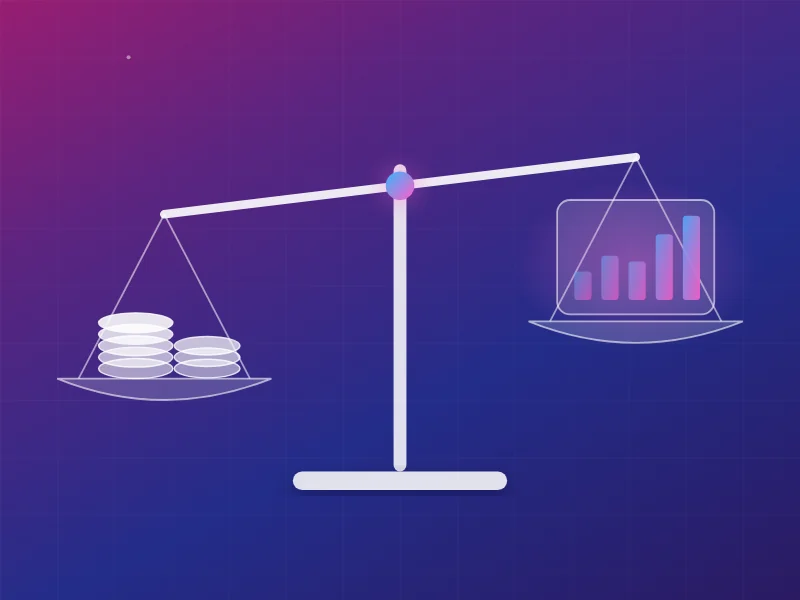
Paying for access, usage, or results does not distribute risk in the same way. A subscription leaves the risk with the customer; usage shifts the budgetary risk; and results share the risk, provided the gain can be measured.
When it comes to pricing, it’s difficult to attribute margin gains to the tool, since your teams retain the final say. Regardless of the model, you need to establish the metrics, safeguards, and exit conditions from the outset.